
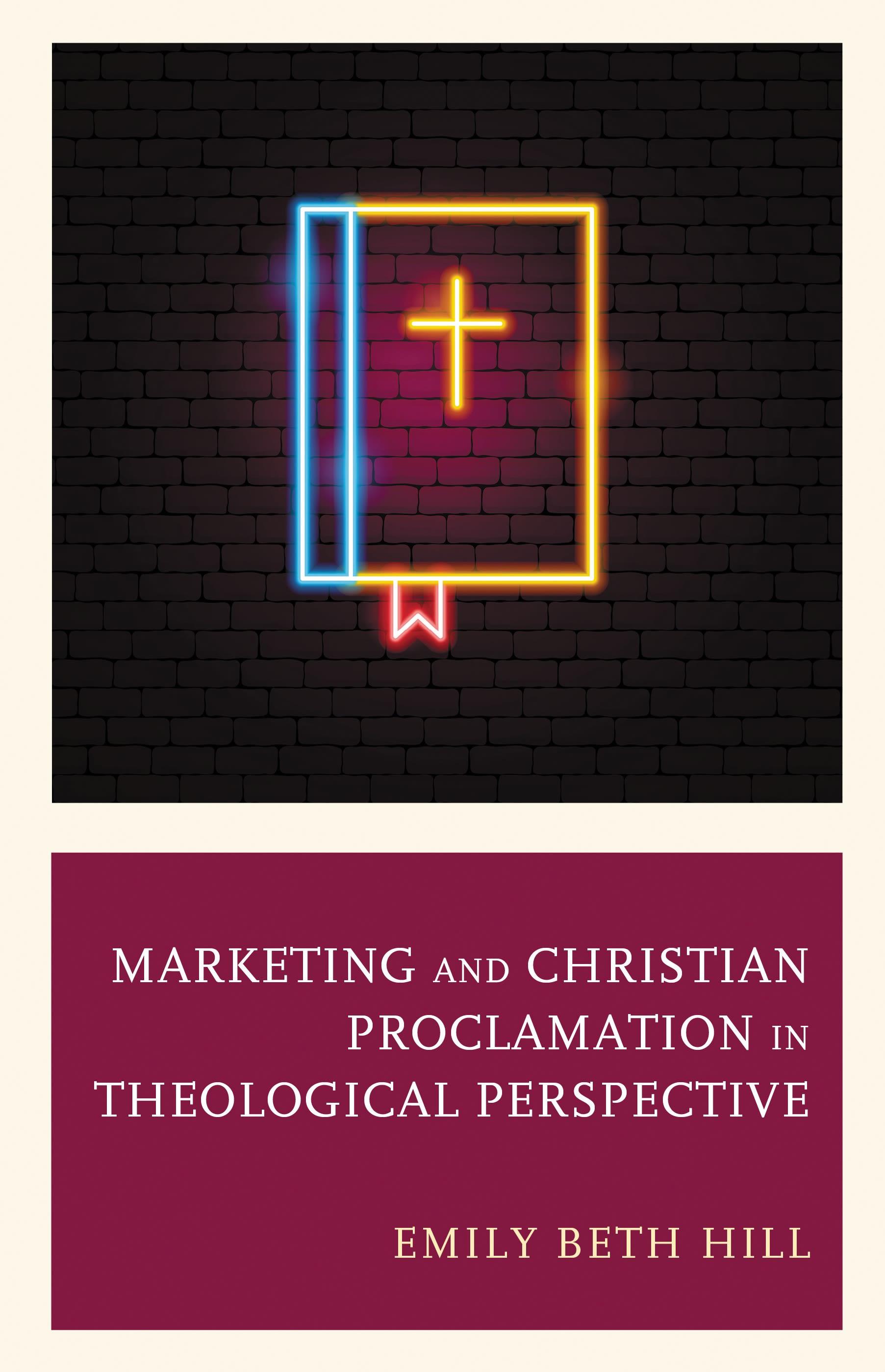
In today’s market-driven world, the contemporary church faces pressing questions as it continues to be formed by the powerful forces of neoliberal capitalism. This book builds on theological examinations of capitalism and consumerism to develop a theology of marketing that addresses two key questions. First, even though church marketing seems to help churches grow amidst a climate of declining church affiliation, should the church use it? Second, considering the church’s indistinguishability from culture in relation to consumption, how should Christians relate to material goods?
To address these questions, Emily Beth Hill develops a framework that draws on the concrete practices of marketing (such as focus groups, big data, branding, and advertising) and the trajectory of their use over time, along with Martin Luther’s theology of the Word. Combining Martin Luther’s pro me (“for me”) theology with marketing concepts, Hill shows that while marketing and the gospel have formal pro me similarities, materially they are quite different: marketing operates as a word of law distinct from the effective, liberating word of the gospel proclaimed for us, and thus the two produce different human identities. While existing examinations of capitalism primarily rely on theologies and discourses of desire, Hill reveals that a theology of the Word illuminates a fruitful new area for reflection on how the church can resist the deformations of capitalism.
To address these questions, Emily Beth Hill develops a framework that draws on the concrete practices of marketing (such as focus groups, big data, branding, and advertising) and the trajectory of their use over time, along with Martin Luther’s theology of the Word. Combining Martin Luther’s pro me (“for me”) theology with marketing concepts, Hill shows that while marketing and the gospel have formal pro me similarities, materially they are quite different: marketing operates as a word of law distinct from the effective, liberating word of the gospel proclaimed for us, and thus the two produce different human identities. While existing examinations of capitalism primarily rely on theologies and discourses of desire, Hill reveals that a theology of the Word illuminates a fruitful new area for reflection on how the church can resist the deformations of capitalism.
Strony: 248
Kategoria: Religion & Teologi
e-ISBN: 9781978710122
Waga przesyłki: 1.2 kg
Wysyłka w ciągu: 1-2 dni
Płać wygodnie kartą, Klarną, Apple Pay lub Google Pay. Nie jesteś zadowolony? Zawsze masz 14-dniową gwarancję zwrotu pieniędzy. Więcej przeczytasz w naszych warunkach. Masz pytania? Napisz do nas na hello@memmo.org.
Memmo ułatwia naukę – gdziekolwiek jesteś na świecie. U nas znajdziesz podręczniki i sprytne narzędzia do nauki w jednym miejscu: streszczenia, quizy, podcasty i fiszki. A do tego Ted, Twój kumpel do nauki, który odpowie na wszystko, co Cię nurtuje. Ponad 50 000 studentów już tu się uczy – stworzone, byś uczył się szybciej i mniej stresował.