
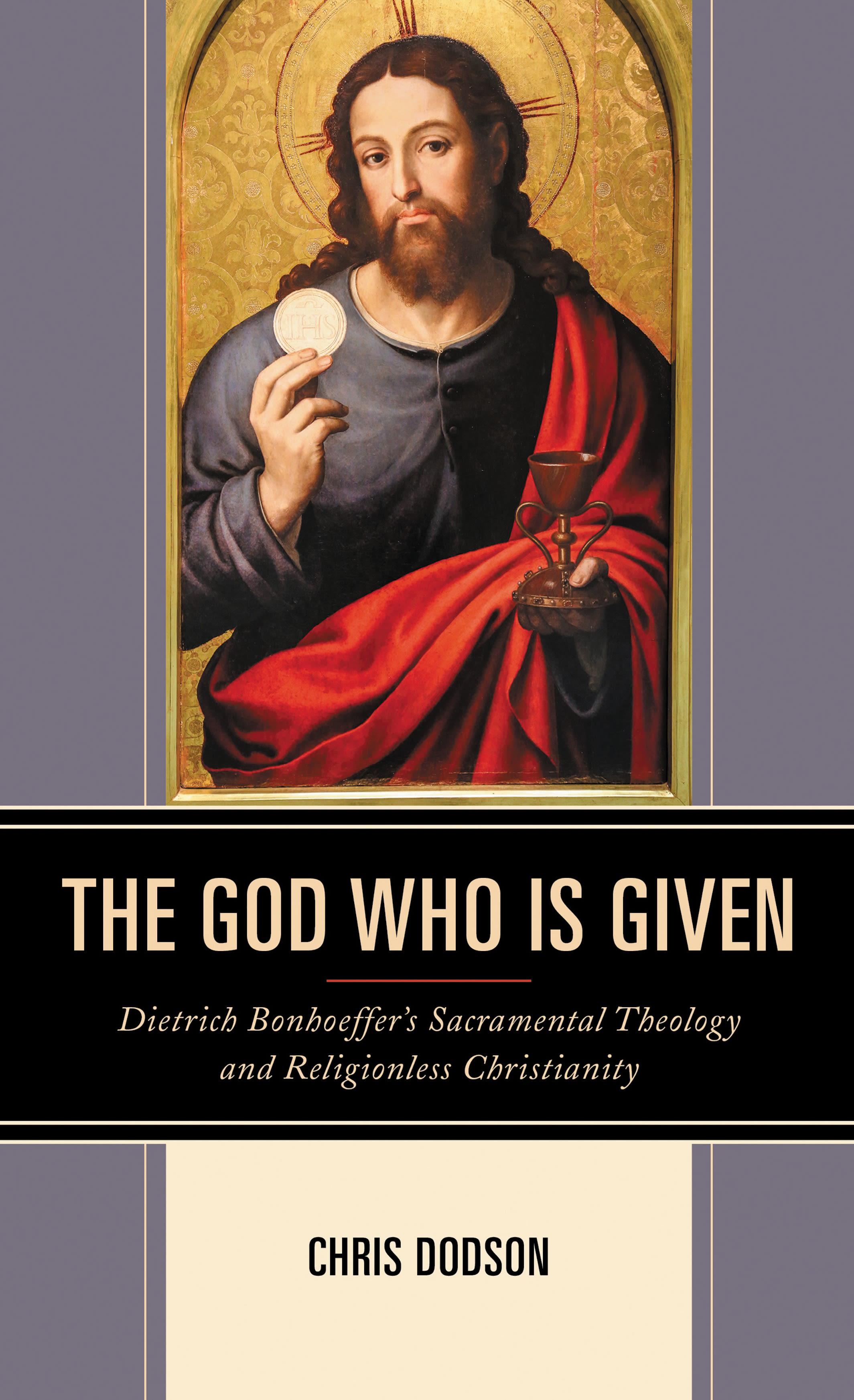
Dietrich Bonhoeffer's notions of religionless Christianity have provoked a great deal of theological inquiry, much of which has hindered evangelical reception of Bonhoeffer's work. By setting religionless Christianity in the context of Bonhoeffer's Lutheran sacramental theology, Chris Dodson furthers Bonhoeffer's belief that receiving the God given in the sacraments both resists Christians' proclivity towards religious, self-serving ends and draws Christians into a life of robust faith and love. Receiving Christ in baptism, the Eucharist, and confession serves to instill, sustain, locate, and vitalize the form of life that Bonhoeffer calls “religionless.” The church and its core practices are not abandoned in Bonhoeffer’s prison letters; they are reengaged with a more proper disposition: faithful love of God and neighbor. In this way, common evangelical skepticisms about Bonhoeffer’s later theology can be assuaged. Bonhoeffer’s theology, rightly construed, provokes evangelicals, and particularly American evangelicals, to reconsider and restructure their worship along the lines of a religionless Christianity that promotes a deeper faith resulting from a more vigorous encounter with Christ as he gives himself over to his people.
Płać wygodnie kartą, Klarną, Apple Pay lub Google Pay. Nie jesteś zadowolony? Zawsze masz 14-dniową gwarancję zwrotu pieniędzy. Więcej przeczytasz w naszych warunkach. Masz pytania? Napisz do nas na hello@memmo.org.
Memmo ułatwia naukę – gdziekolwiek jesteś na świecie. U nas znajdziesz podręczniki i sprytne narzędzia do nauki w jednym miejscu: streszczenia, quizy, podcasty i fiszki. A do tego Ted, Twój kumpel do nauki, który odpowie na wszystko, co Cię nurtuje. Ponad 50 000 studentów już tu się uczy – stworzone, byś uczył się szybciej i mniej stresował.