
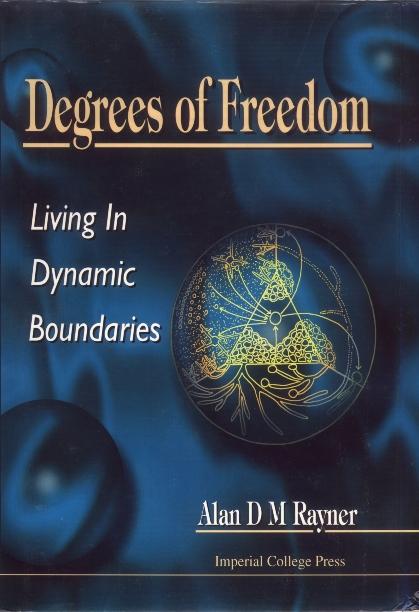
Drawing especially on insights emerging from studies of the cellular networks formed by fungi, this book describes the fundamental indeterminacy that enables life forms to thrive in and create inconstant circumstances. It explains how indeterminacy arises from counteraction between associative and dissociative processes at the reactive interfaces between living systems and their surroundings. It stresses the relevance of these processes to understanding the dynamic contexts within which living systems of all kinds — including human societies-explore for, use up, conserve and recycle sources of energy.By focusing on dynamic boundaries, the book counterbalances the discretist view that living systems are assembled entirely from building-block-like units — individuals and genes — that can be freely sifted, as opposed to channeled, by natural selection. It also shows how the versatility that enables life forms to proliferate in rich environments, whilst minimizing losses in restrictive environments, depends on capacities for error and co-operation within a fluid, non-hierarchical power structure. Understanding this point yields a more compassionate, less competitive and less self-centred outlook on life's successes and failures.
Płać wygodnie kartą, Klarną, Apple Pay lub Google Pay. Nie jesteś zadowolony? Zawsze masz 14-dniową gwarancję zwrotu pieniędzy. Więcej przeczytasz w naszych warunkach. Masz pytania? Napisz do nas na hello@memmo.org.
Memmo ułatwia naukę – gdziekolwiek jesteś na świecie. U nas znajdziesz podręczniki i sprytne narzędzia do nauki w jednym miejscu: streszczenia, quizy, podcasty i fiszki. A do tego Ted, Twój kumpel do nauki, który odpowie na wszystko, co Cię nurtuje. Ponad 50 000 studentów już tu się uczy – stworzone, byś uczył się szybciej i mniej stresował.
Może Ci się spodobać
Kup książkę0