
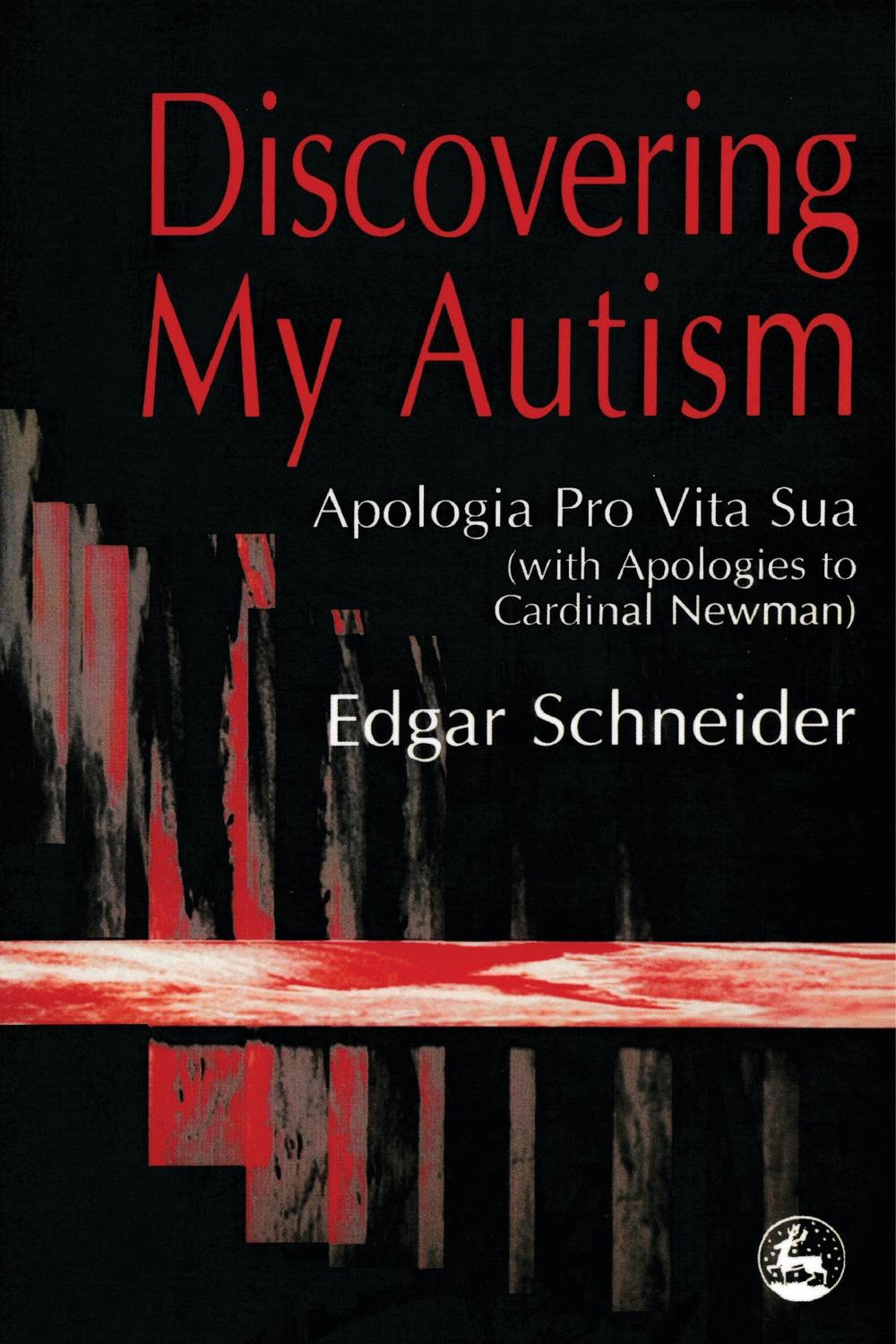
In 1978, under immense pressure at work, Edgar Schneider suffered a nervous breakdown. After convalescing, he returned to work, but within a few months he was again suffering from problems involving short-term memory and concentration. He was described as eccentric, tangential, illogical and hallucinatory; and misdiagnosed as schizophrenic.
Sixteen years later, the chance reading of an article on autistic savants alerted Schneider to the possibility that he had been misdiagnosed. This proved to be the case: he is believed to be a high-functioning autistic, with attention deficit disorder (ADD). Suddenly, many apparently paradoxical or inexplicable elements of Schneider's life made sense. He calls the discovery of his autism 'liberating'. Schneider attributes his autism to brain damage caused by infectious diseases in early childhood. In Discovering My Autism, he reflects on his experiences and his memories of his childhood and teenage years as a clever and artistic loner. He explains how in order to experience 'emotions' such as grief, sympathy or desire, he must intellectualise or aestheticise them. Dispassionately, he examines his difficulties with relationships, his high pain threshold, his lack of concentration and his highly absorbant intelligence, all of which are related to his autism. He also describes the pleasure he derives from art, music and literature; the importance to him of his religious beliefs; and his work with parents' support groups. As an account of how it feels to be a high-functioning autistic, this book should be read by parents of autistic children, professionals working with them, and people with autism, Asperger's Syndrome, or ADD themselves.
Płać wygodnie kartą, Klarną, Apple Pay lub Google Pay. Nie jesteś zadowolony? Zawsze masz 14-dniową gwarancję zwrotu pieniędzy. Więcej przeczytasz w naszych warunkach. Masz pytania? Napisz do nas na hello@memmo.org.
Memmo ułatwia naukę – gdziekolwiek jesteś na świecie. U nas znajdziesz podręczniki i sprytne narzędzia do nauki w jednym miejscu: streszczenia, quizy, podcasty i fiszki. A do tego Ted, Twój kumpel do nauki, który odpowie na wszystko, co Cię nurtuje. Ponad 50 000 studentów już tu się uczy – stworzone, byś uczył się szybciej i mniej stresował.