
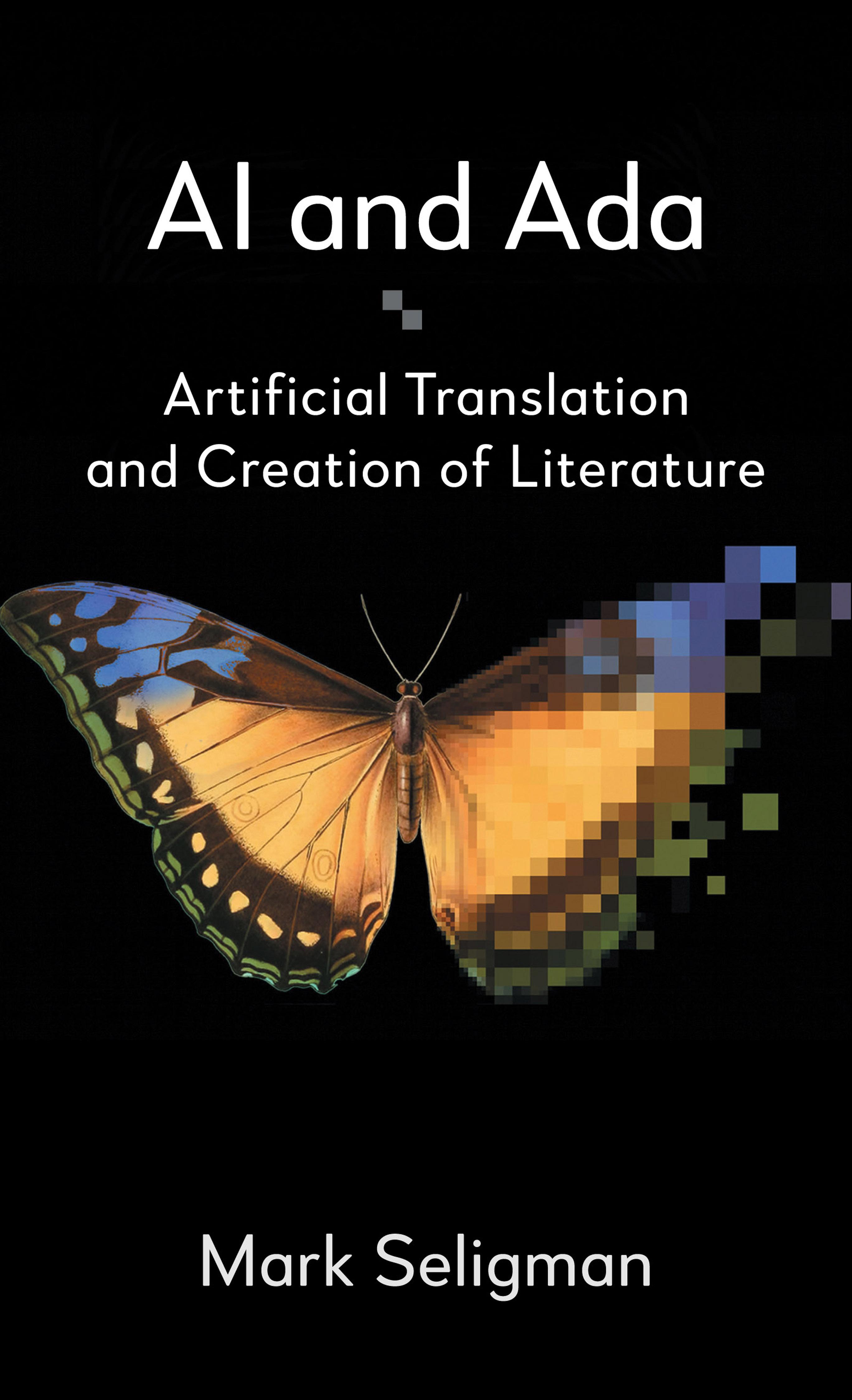
The book’s Preface places the current AI explosion in the context of other technological cataclysms and recounts the author’s personal (and not always deadly serious) AI journey. Chapter One (“Extracting the Essence”) assesses the potential of machine translation of literature, exploiting Vladimir Nabokov’s hyperconscious literary art as a reference point. Chapter Two (“Toward an Artificial Nabokov”) goes on to speculate on possibilities for actual artificial creation of literature. Chapter Three (“Large Literary Models? Intelligence and Language in the LLM Era”) explains recent spectacular progress in Generative Artificial Intelligence (GenAI), as exemplified by Large Language Models like ChatGPT. On the way, the chapter ventures to tackle perennial questions (“What is intelligence?” “What is language?”) and culminates in an assortment of striking demos. The volume’s Sendoff considers whether machines, while now arguably intelligent, can ever also gain sufficient sensation and emotion to create language art with other than borrowed depth – and, while viewing this development as likely all too soon, declines to despair on that account.
Płać wygodnie kartą, Klarną, Apple Pay lub Google Pay. Nie jesteś zadowolony? Zawsze masz 14-dniową gwarancję zwrotu pieniędzy. Więcej przeczytasz w naszych warunkach. Masz pytania? Napisz do nas na hello@memmo.org.
Memmo ułatwia naukę – gdziekolwiek jesteś na świecie. U nas znajdziesz podręczniki i sprytne narzędzia do nauki w jednym miejscu: streszczenia, quizy, podcasty i fiszki. A do tego Ted, Twój kumpel do nauki, który odpowie na wszystko, co Cię nurtuje. Ponad 50 000 studentów już tu się uczy – stworzone, byś uczył się szybciej i mniej stresował.