
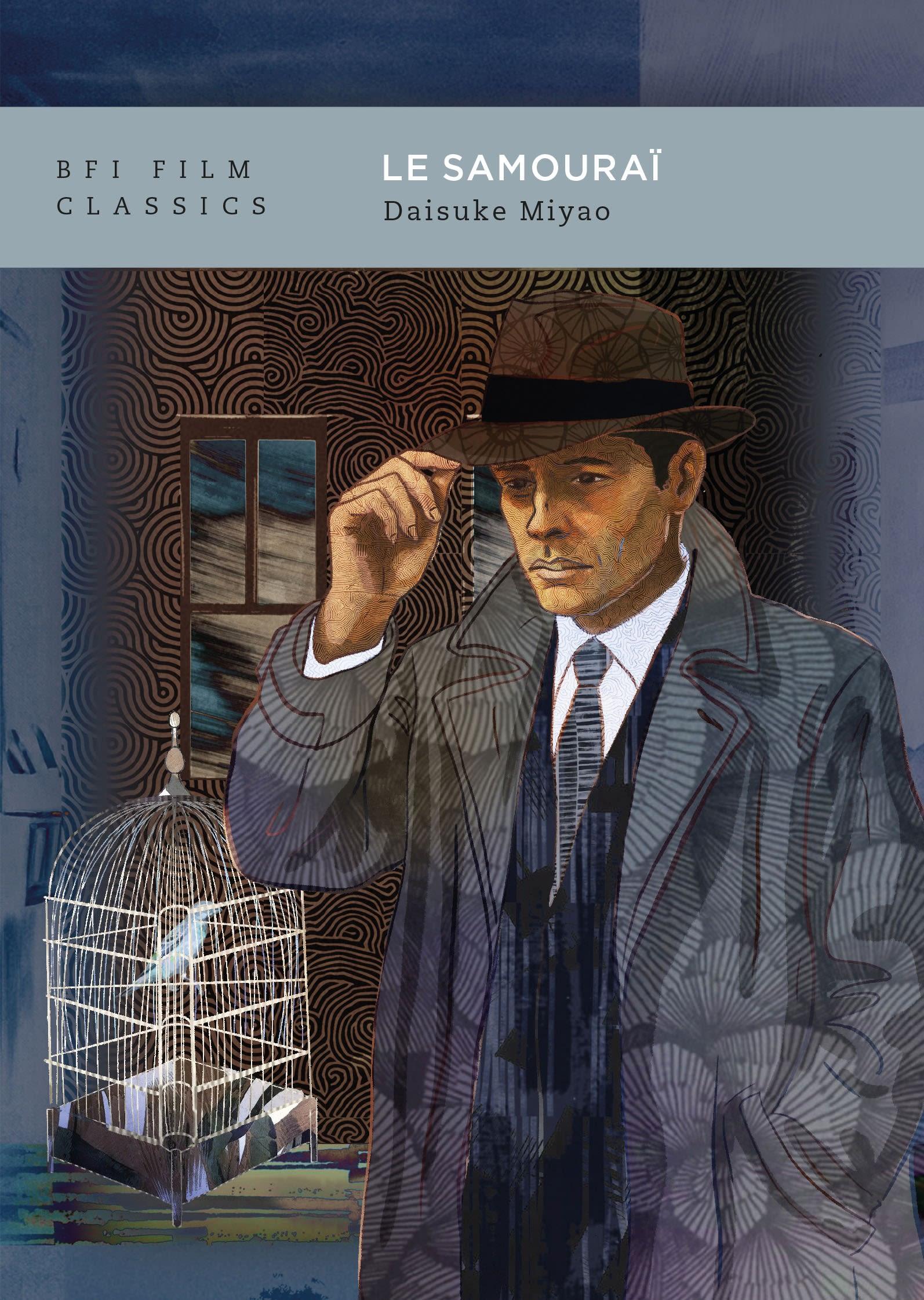
In this compelling study, Daisuke Miyao explores Jean-Pierre Melville's cult 1967 thriller Le Samouraï, a film that unfolds in a coolly stylised Paris where the paths of a contract killer, Jef Costello (Alain Delon), and the police commissaire pursuing him (François Périer) fatally intersect.
Despite its title, Le Samouraï, is not a sword-clashing tale of feudal Japan. Rather, Miyao suggests that the film's philosophical framework draws on both existentialism and the samurai moral philosophy of bushido, or 'the way of the warrior', and considers how these philosophies may help explain Jef Costello's identity crisis and his concluding act of self-annihilation. In a close analysis of Melville's technical and aesthetic decisions, Miyao highlights the film's use of close-ups to convey or mask emotion, the play of light and shadow, and the function of flashbacks and dream sequences in the narrative, as well as the meanings of Costello's pet bullfinch.
Setting Le Samouraï within the shifting landscape of post-war French cinema, Miyao traces its dialogue with Hollywood film noir and Japanese art cinema, particularly Kurosawa's Rashomon (1950), suggesting that both genres informed and influenced Melville's film-making.
Finally, Miyao discusses the film's enduring legacy, from Jim Jarmusch's Ghost Dog: The Way of the Samurai (1999) to Yoko M.'s 2020 novella Jef, a prequel to the film.
Despite its title, Le Samouraï, is not a sword-clashing tale of feudal Japan. Rather, Miyao suggests that the film's philosophical framework draws on both existentialism and the samurai moral philosophy of bushido, or 'the way of the warrior', and considers how these philosophies may help explain Jef Costello's identity crisis and his concluding act of self-annihilation. In a close analysis of Melville's technical and aesthetic decisions, Miyao highlights the film's use of close-ups to convey or mask emotion, the play of light and shadow, and the function of flashbacks and dream sequences in the narrative, as well as the meanings of Costello's pet bullfinch.
Setting Le Samouraï within the shifting landscape of post-war French cinema, Miyao traces its dialogue with Hollywood film noir and Japanese art cinema, particularly Kurosawa's Rashomon (1950), suggesting that both genres informed and influenced Melville's film-making.
Finally, Miyao discusses the film's enduring legacy, from Jim Jarmusch's Ghost Dog: The Way of the Samurai (1999) to Yoko M.'s 2020 novella Jef, a prequel to the film.
Płać wygodnie kartą, Klarną, Apple Pay lub Google Pay. Nie jesteś zadowolony? Zawsze masz 14-dniową gwarancję zwrotu pieniędzy. Więcej przeczytasz w naszych warunkach. Masz pytania? Napisz do nas na hello@memmo.org.
Memmo ułatwia naukę – gdziekolwiek jesteś na świecie. U nas znajdziesz podręczniki i sprytne narzędzia do nauki w jednym miejscu: streszczenia, quizy, podcasty i fiszki. A do tego Ted, Twój kumpel do nauki, który odpowie na wszystko, co Cię nurtuje. Ponad 50 000 studentów już tu się uczy – stworzone, byś uczył się szybciej i mniej stresował.