
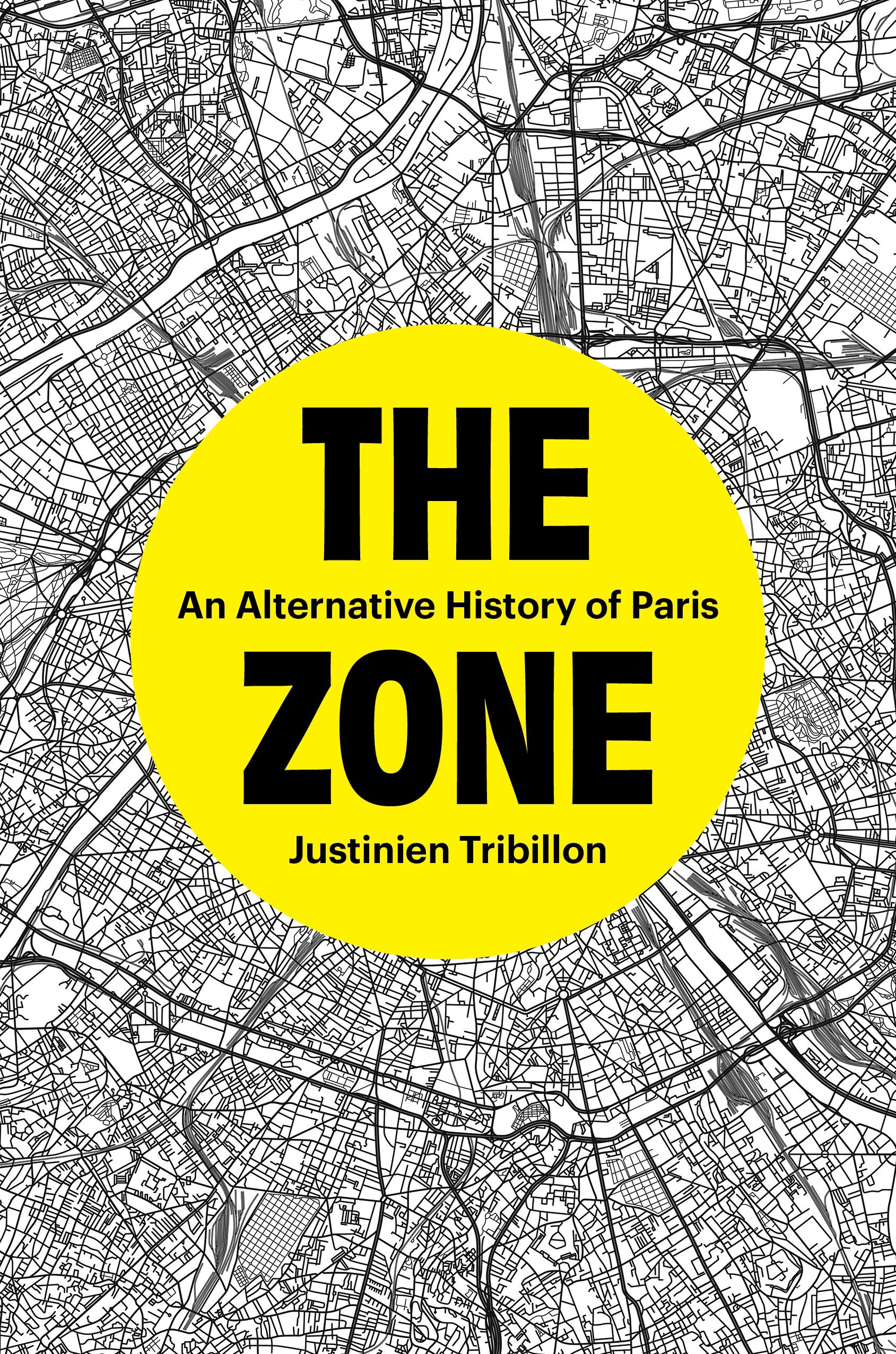
In The Zone, Justinien Tribillon takes the reader on a tour of an eponymous Parisian hinterland. The site of dreams and nightmares, from Van Gogh's paintings to the cinematic violence of La Haine, the Zone, so often misun- derstood, is the key to understanding today's Paris, and even France itself.
Originally the site of defensive walls, alongside which mushroomed makeshift housing, allotments, and dancehalls in the nineteenth century, the Zone has performed many functions and been a place of contention for two centuries. Dismantled in the 1920s, the fortifications were first replaced with gardens, stadia and homes. After the war came the Boulevard P�riph�rique, a ring road promising seamless travel in a futuristic car-centric Paris. With the ring road came new dreams of modernity in reinvented suburbs: new towns, high-rise architecture and social housing built at record speed. Yesterday's Paris made way for tomorrow's banlieue.
But the metropolitan dream was never realised. The Zone became a symbol of division: between inner and outer cities; between the bourgeois centre and the working-class immigrant outskirts; between 'us' and 'them'. The Zone, both a physical space and a powerful myth, came to crystallise the social, spatial and ethno-racial differences between Paris and the banlieue.
The Zone is a brilliant anatomy of the true heart of Paris. An essential book for urbanists and historians.
Originally the site of defensive walls, alongside which mushroomed makeshift housing, allotments, and dancehalls in the nineteenth century, the Zone has performed many functions and been a place of contention for two centuries. Dismantled in the 1920s, the fortifications were first replaced with gardens, stadia and homes. After the war came the Boulevard P�riph�rique, a ring road promising seamless travel in a futuristic car-centric Paris. With the ring road came new dreams of modernity in reinvented suburbs: new towns, high-rise architecture and social housing built at record speed. Yesterday's Paris made way for tomorrow's banlieue.
But the metropolitan dream was never realised. The Zone became a symbol of division: between inner and outer cities; between the bourgeois centre and the working-class immigrant outskirts; between 'us' and 'them'. The Zone, both a physical space and a powerful myth, came to crystallise the social, spatial and ethno-racial differences between Paris and the banlieue.
The Zone is a brilliant anatomy of the true heart of Paris. An essential book for urbanists and historians.
Płać wygodnie kartą, Klarną, Apple Pay lub Google Pay. Nie jesteś zadowolony? Zawsze masz 14-dniową gwarancję zwrotu pieniędzy. Więcej przeczytasz w naszych warunkach. Masz pytania? Napisz do nas na hello@memmo.org.
Memmo ułatwia naukę – gdziekolwiek jesteś na świecie. U nas znajdziesz podręczniki i sprytne narzędzia do nauki w jednym miejscu: streszczenia, quizy, podcasty i fiszki. A do tego Ted, Twój kumpel do nauki, który odpowie na wszystko, co Cię nurtuje. Ponad 50 000 studentów już tu się uczy – stworzone, byś uczył się szybciej i mniej stresował.
Może Ci się spodobać
Kup książkę0