
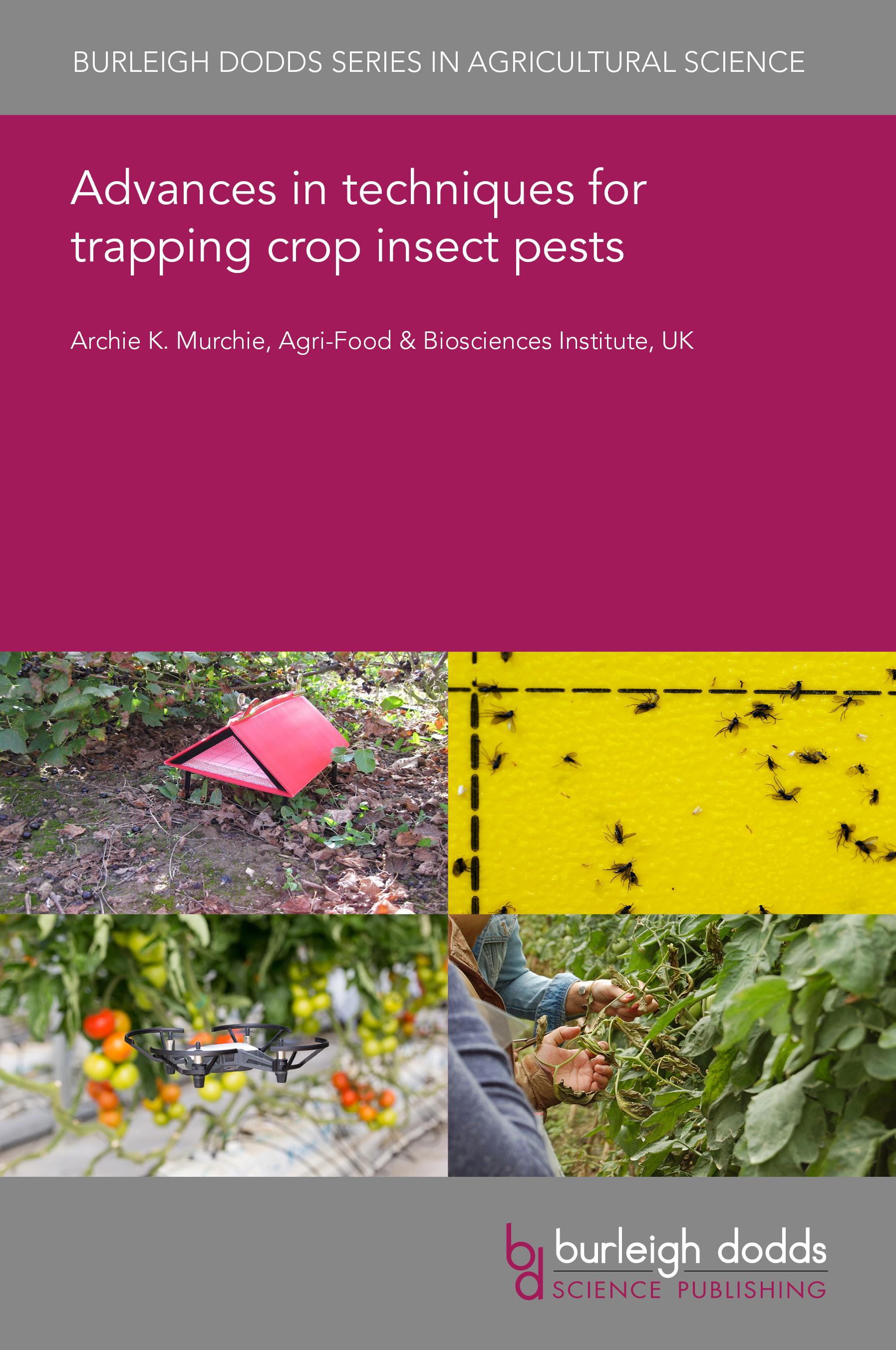
Pest monitoring is a fundamental requirement of integrated pest management. To minimise and target the use of pesticides, it is necessary to know when insect pests are present within the crop and whether their densities warrant control. There are many designs of trap to monitor insect pests. This chapter gives an overview of the principles of trap design, including the requirements of selectivity, accuracy, processing time and cost. Attracting insects to traps is key, and visual and olfactory responses to traps are explained. The following trap categories are described: water, sticky, suction, interception, funnel and cone traps; along with case studies of their usage and an evaluation of their merits and limitations. Sorting and identification of catches can be time-consuming. Automation of counting and identification of trap catches using image and wingbeat analyses is an exciting prospect with many recent advances using developments in electronic sensors, machine learning and cloud technology.
Płać wygodnie kartą, Klarną, Apple Pay lub Google Pay. Nie jesteś zadowolony? Zawsze masz 14-dniową gwarancję zwrotu pieniędzy. Więcej przeczytasz w naszych warunkach. Masz pytania? Napisz do nas na hello@memmo.org.
Memmo ułatwia naukę – gdziekolwiek jesteś na świecie. U nas znajdziesz podręczniki i sprytne narzędzia do nauki w jednym miejscu: streszczenia, quizy, podcasty i fiszki. A do tego Ted, Twój kumpel do nauki, który odpowie na wszystko, co Cię nurtuje. Ponad 50 000 studentów już tu się uczy – stworzone, byś uczył się szybciej i mniej stresował.