
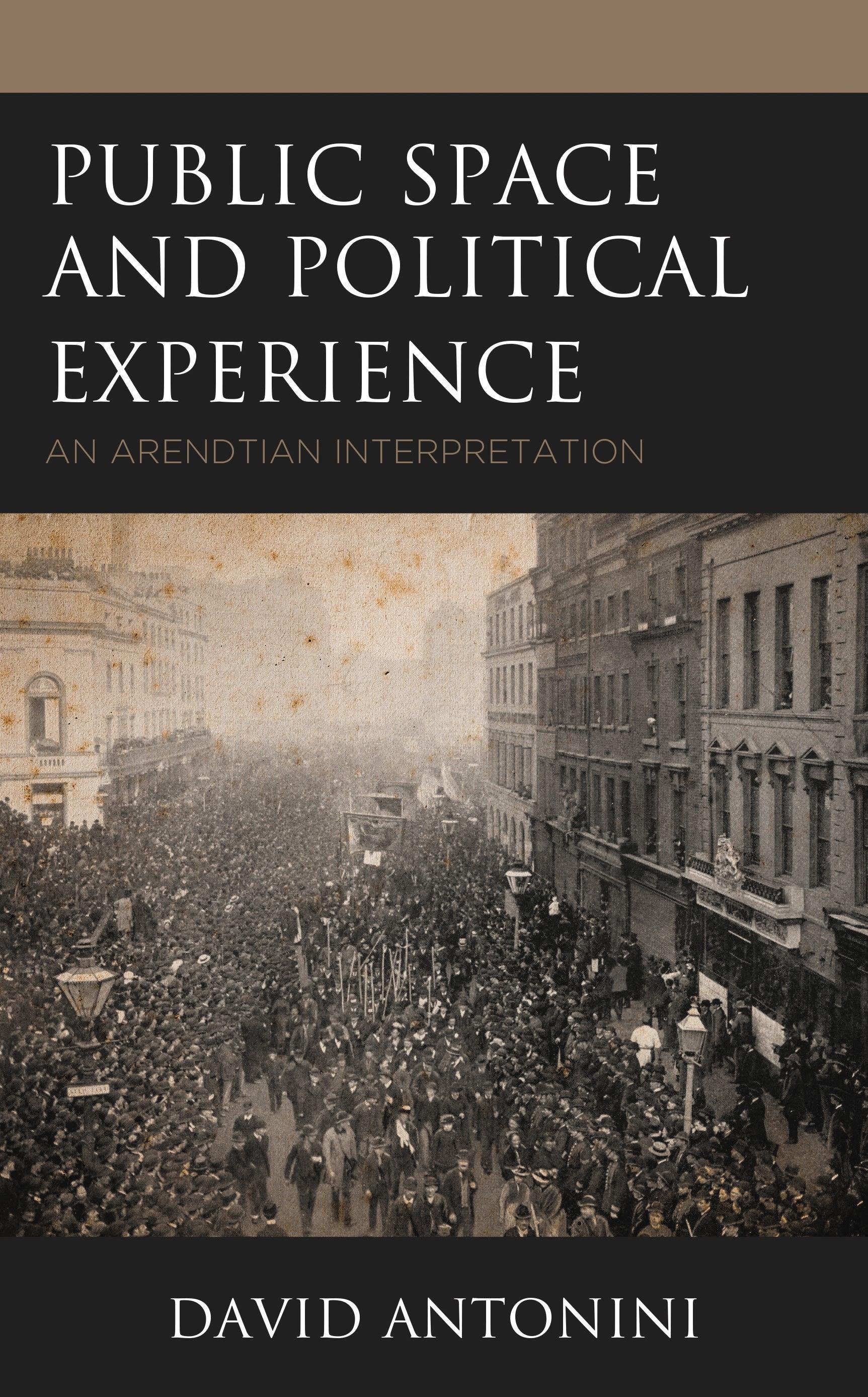
Contemporary politics is dominated by discussions of rights and liberties as the proper subjects about which citizens should be concerned in the political sphere. In Public Space and Political Experience: An Arendtian Interpretation, David Antonini argues that Hannah Arendt conceived of politics differently and that her thought can help us retrieve a more authentic sense of politics as the site where citizens can speak and act together about matters of shared concern. Antonini shows that citizens can experience politics together if they approach it not as a realm where privately interested individuals compete for their rights or liberties but instead as a space where plural human beings come together as distinct yet equal creatures. Antonini argues that if we read Arendt as primarily concerned with political experience, we can reimagine common political concepts such as freedom, power, revolution, and civil disobedience. The book posits that politics should be considered a fundamental form of human experience, one rooted in what Arendt refers to as the existential condition of politics—human plurality. If plurality is the existential condition out of which our political life emerges, we can enliven and reimagine the possibilities that political life can provide for contemporary citizens.
Płać wygodnie kartą, Klarną, Apple Pay lub Google Pay. Nie jesteś zadowolony? Zawsze masz 14-dniową gwarancję zwrotu pieniędzy. Więcej przeczytasz w naszych warunkach. Masz pytania? Napisz do nas na hello@memmo.org.
Memmo ułatwia naukę – gdziekolwiek jesteś na świecie. U nas znajdziesz podręczniki i sprytne narzędzia do nauki w jednym miejscu: streszczenia, quizy, podcasty i fiszki. A do tego Ted, Twój kumpel do nauki, który odpowie na wszystko, co Cię nurtuje. Ponad 50 000 studentów już tu się uczy – stworzone, byś uczył się szybciej i mniej stresował.