
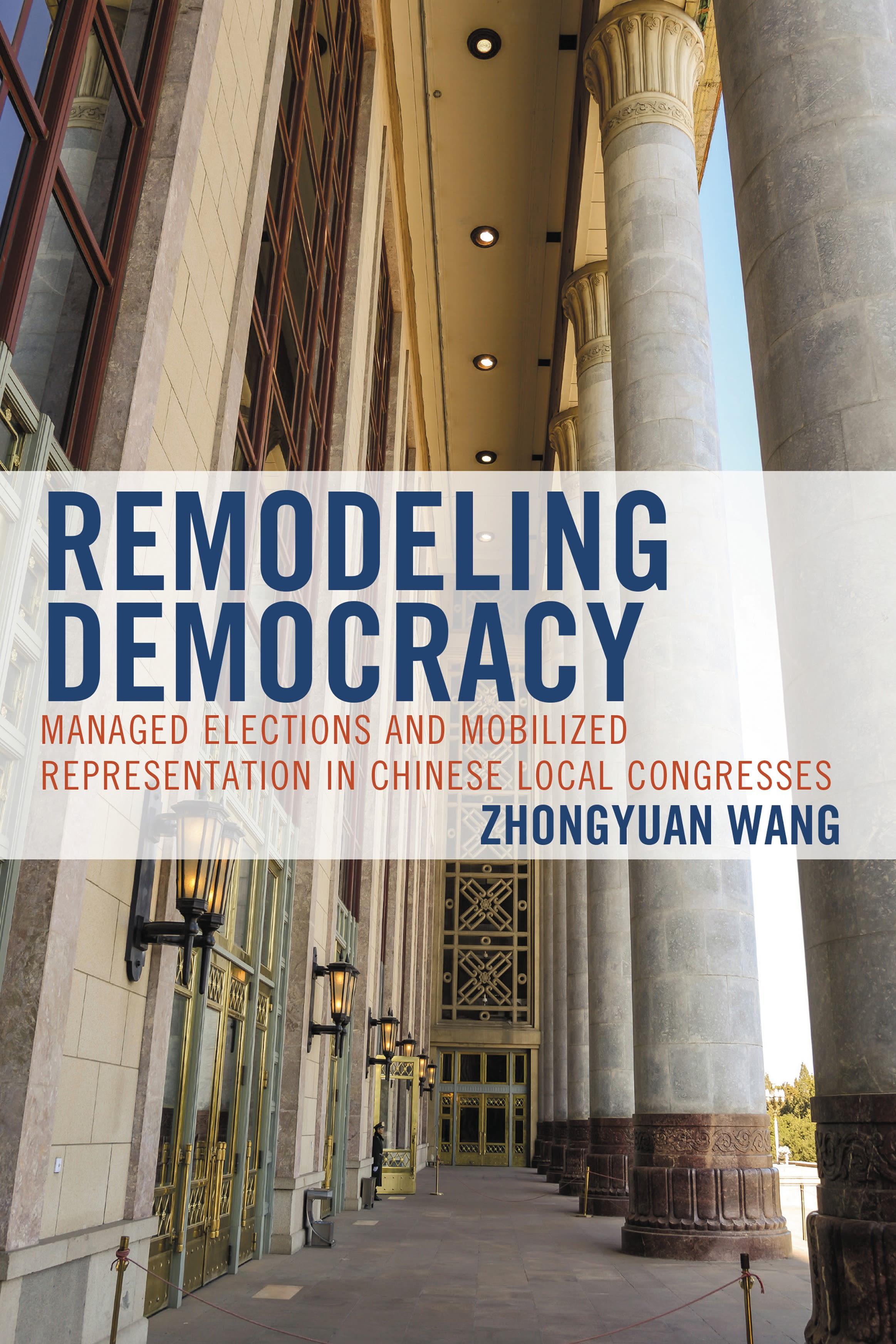
This book explores why, how, and under what conditions a single-party regime uses formal democratic institutions to strengthen its rule. Zhongyuan Wang challenges the traditional perceptions that the Chinese congress acts either as mere window dressing or as an immediate catalyst for democratization. He argues that managed elections and mobilized representation are two strategic cards of China’s one-party regime. By downplaying input electoral competition but promoting output congressional representation, the Chinese Communist Party has been committed to remodeling its unique brand of “socialist democracy” as an alternative to liberal democracy. Such a model of democracy with Chinese characteristics features the “Leninist trinity” of the Party’s leadership, the rule of law, and people’s sovereignty, as well as a new form of mobilized representation that relies heavily on non-electoral accountability from the top down. Remodeling democracy enables China’s one-party regime to enhance its resilience and consolidate and sustain its rule.
Płać wygodnie kartą, Klarną, Apple Pay lub Google Pay. Nie jesteś zadowolony? Zawsze masz 14-dniową gwarancję zwrotu pieniędzy. Więcej przeczytasz w naszych warunkach. Masz pytania? Napisz do nas na hello@memmo.org.
Memmo ułatwia naukę – gdziekolwiek jesteś na świecie. U nas znajdziesz podręczniki i sprytne narzędzia do nauki w jednym miejscu: streszczenia, quizy, podcasty i fiszki. A do tego Ted, Twój kumpel do nauki, który odpowie na wszystko, co Cię nurtuje. Ponad 50 000 studentów już tu się uczy – stworzone, byś uczył się szybciej i mniej stresował.