
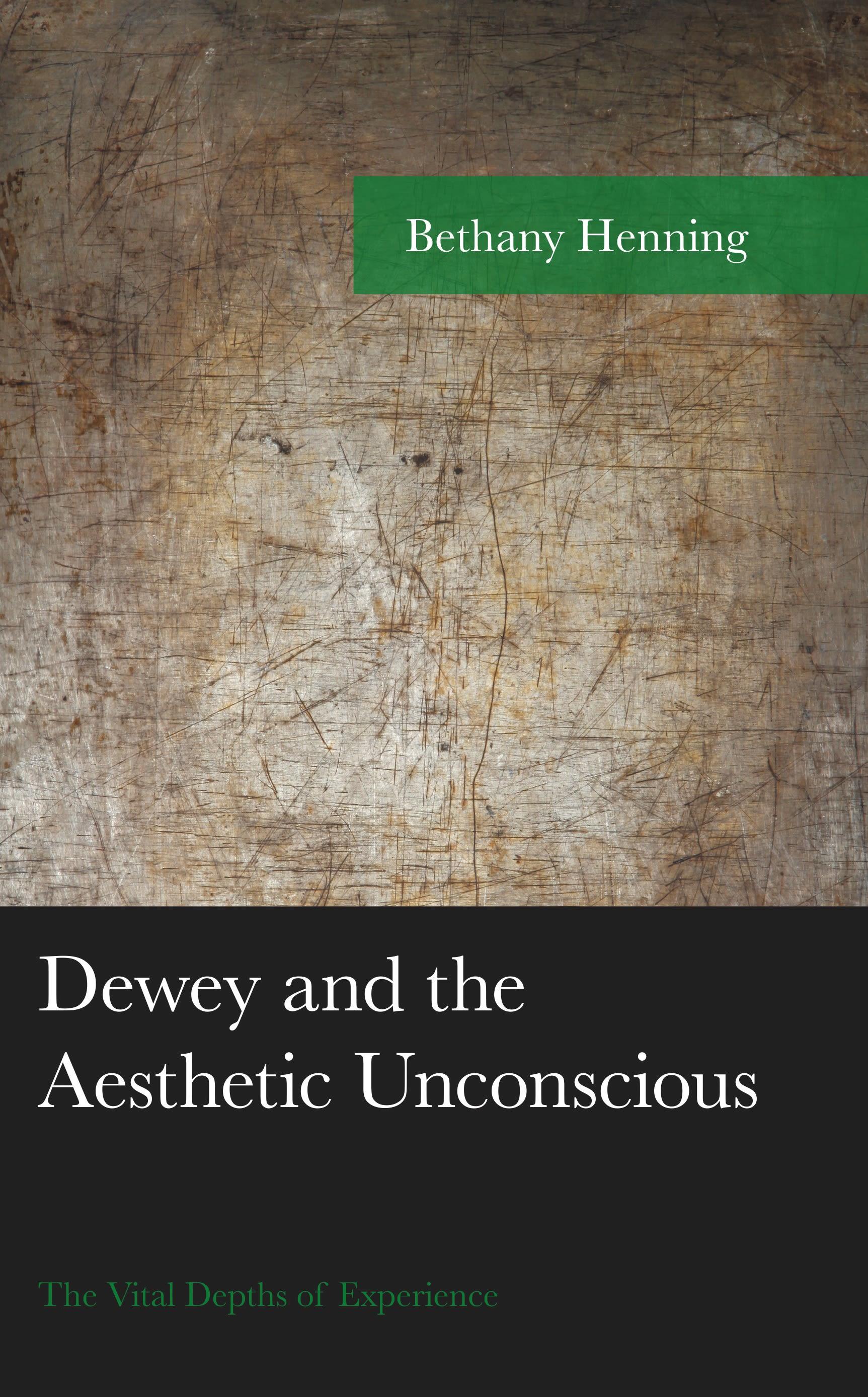
John Dewey was the most celebrated and publicly engaged American philosopher in the twentieth century. His naturalistic theory of “experience” generated new approaches to education and democracy and re-grounded philosophy’s search for truth in the needs of life as it is shared and lived. However, interpretations of Dewey after the linguistic turn have either obscured or rejected the considerable role that he gives to the non-discursive dimension of experience. In Dewey and the Aesthetic Unconscious: The Vital Depths of Experience, Bethany Henning argues that much classical American philosophy implicitly recognizes an unconscious dimension of mind that is distinct from Freud’s theory. Although the unconscious that emerges within American thought has never been treated systematically, it found its fullest expression in Dewey’s work, particularly in his theory of aesthetic experience. This dimension of mind illuminates the continuity between nature and culture, and it provides us with an account of why artwork is often successful at communicating meanings from the ecological and intimate dimensions of life, where discourse often fails. If the relationship between the human and the organic world has emerged as the definitive question of twenty-first century life, then the aesthetic unconscious stands as a resource for our ecological and intimate well-being.
Płać wygodnie kartą, Klarną, Apple Pay lub Google Pay. Nie jesteś zadowolony? Zawsze masz 14-dniową gwarancję zwrotu pieniędzy. Więcej przeczytasz w naszych warunkach. Masz pytania? Napisz do nas na hello@memmo.org.
Memmo ułatwia naukę – gdziekolwiek jesteś na świecie. U nas znajdziesz podręczniki i sprytne narzędzia do nauki w jednym miejscu: streszczenia, quizy, podcasty i fiszki. A do tego Ted, Twój kumpel do nauki, który odpowie na wszystko, co Cię nurtuje. Ponad 50 000 studentów już tu się uczy – stworzone, byś uczył się szybciej i mniej stresował.