
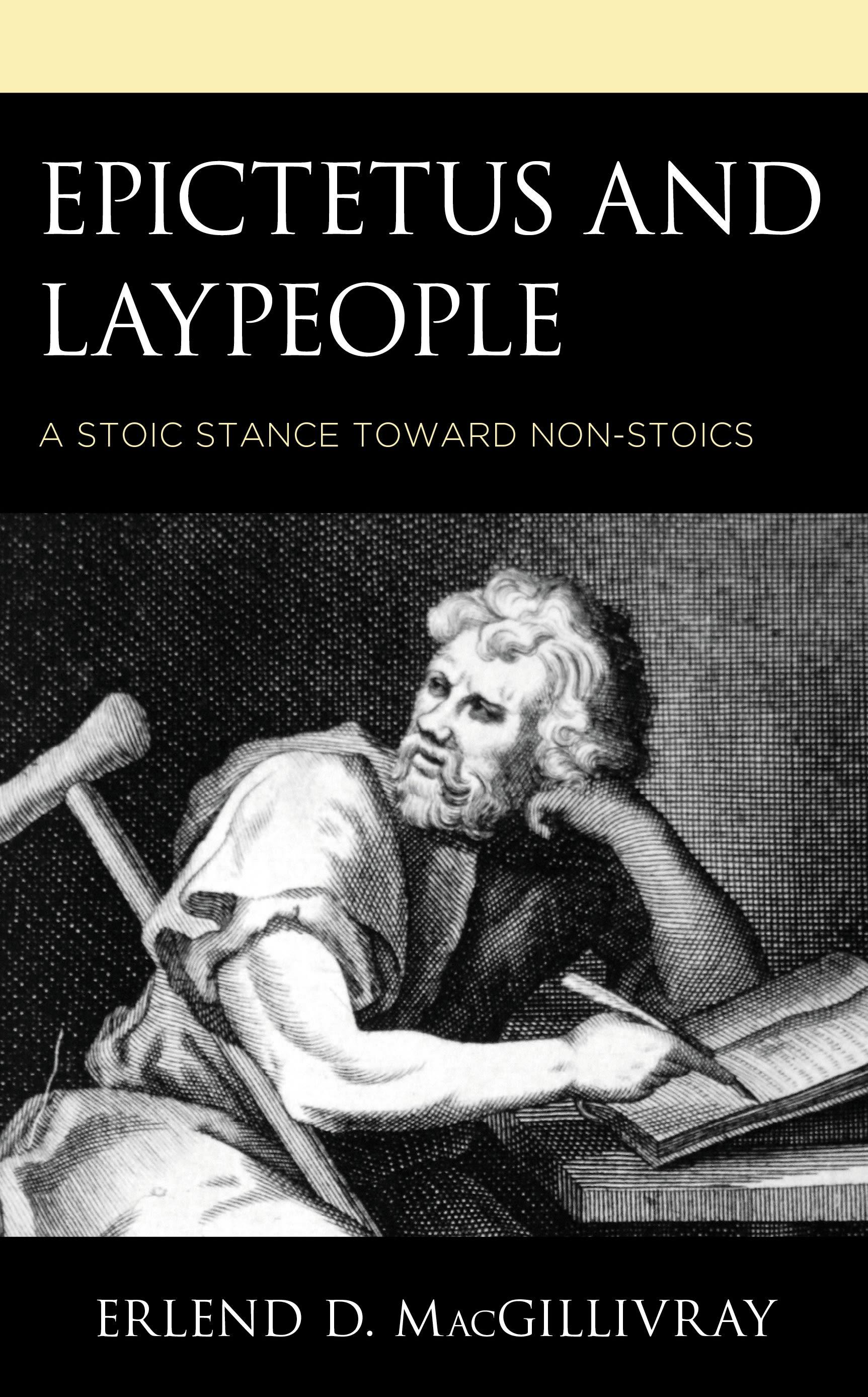
Erlend D. MacGillivray’s Epictetus and Laypeople: A Stoic Stance toward the Rest of Humanity explores the understanding that ancient philosophers had towards the vast majority of people at the time, those who had no philosophical knowledge or adherence—laypeople. After exploring how philosophical identity was established in antiquity, this book examines the Stoic philosopher Epictetus, who reflected upon laypeople with remarkable frequency. MacGillivray shows that Epictetus maintained his stance that a small and distinguishable group of philosophically aware individuals existed, alongside his conviction that most of humanity can be inclined to act in accordance with virtuous principles by their dependence upon preconceptions, civic law, popular religion, exempla, and the adoption of primitive conditions, among other means. This book also highlights other Stoics and their commentators to show that the means of lay reform that MacGillivray explores were not just implicitly understood in antiquity, but reveal a well-developed system of thought in the school which has, until now, evaded the notice of modern scholars.
Płać wygodnie kartą, Klarną, Apple Pay lub Google Pay. Nie jesteś zadowolony? Zawsze masz 14-dniową gwarancję zwrotu pieniędzy. Więcej przeczytasz w naszych warunkach. Masz pytania? Napisz do nas na hello@memmo.org.
Memmo ułatwia naukę – gdziekolwiek jesteś na świecie. U nas znajdziesz podręczniki i sprytne narzędzia do nauki w jednym miejscu: streszczenia, quizy, podcasty i fiszki. A do tego Ted, Twój kumpel do nauki, który odpowie na wszystko, co Cię nurtuje. Ponad 50 000 studentów już tu się uczy – stworzone, byś uczył się szybciej i mniej stresował.