
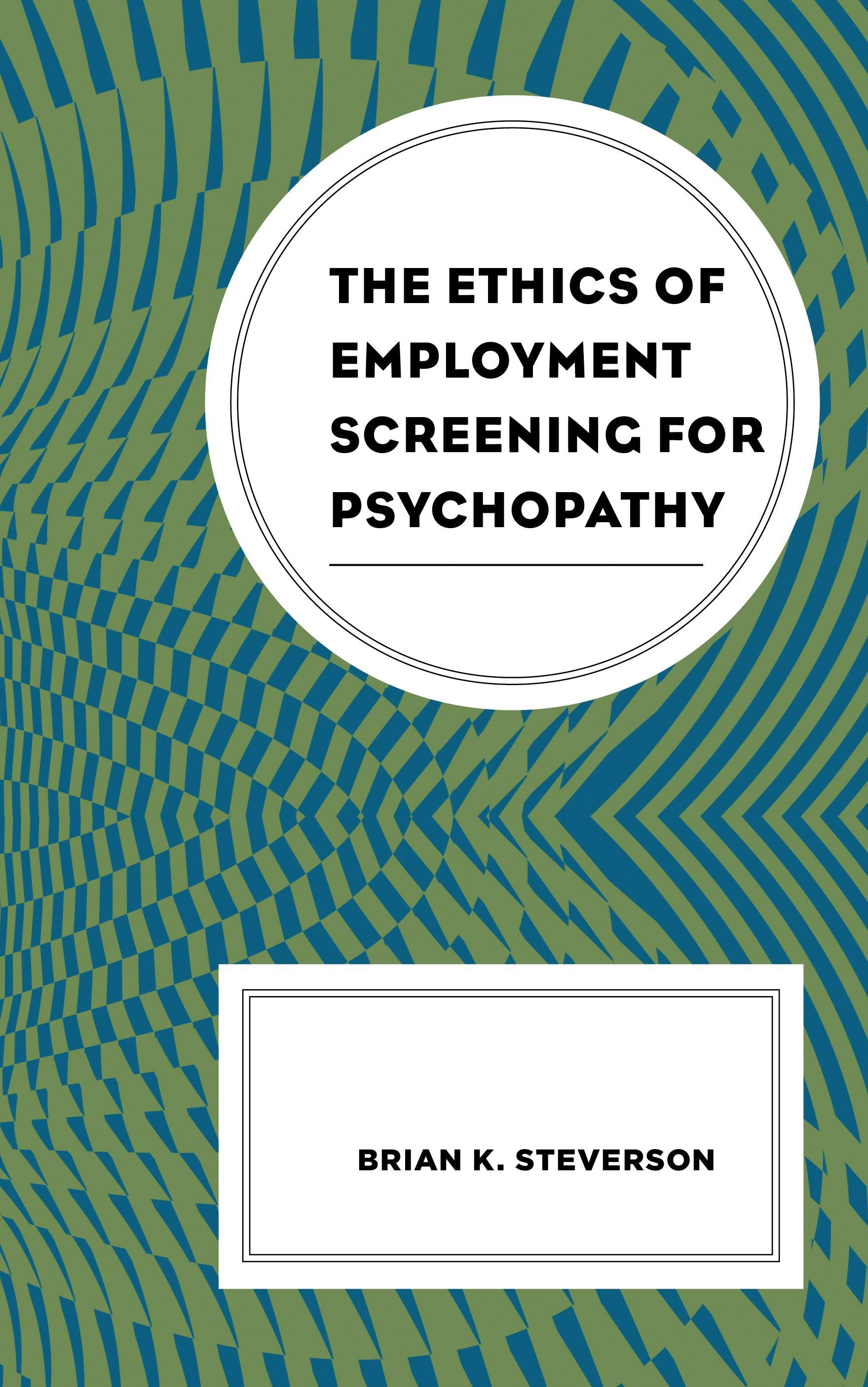
In 2006, Babiak and Hare alerted the public to the danger of “corporate psychopaths,” psychopathic individuals occupying positions of power in business organizations. Since then, academicians and the public media have advertised their presence, documented the harm they can cause, and issued a call to arms to identify corporate psychopaths and eliminate their presence in the workplace. Very little attention has been paid, however, to the ethics of such a “seek and destroy” mission. The Ethics of Employment Screening for Psychopathy argues that employment screening for psychopathy would be illegal and unethical. On legal grounds, Brian K Steverson argues that psychopathy would qualify as a protected disability under the Americans with Disabilities Act, and, hence, medical screening to identify potential corporate psychopaths would be in violation of the ADA. On ethical grounds, the case is made that such screening would violate a social commitment to equal opportunity, would constitute a morally unjustified violation of personal privacy, and would, in practice, not produce the intended benefits, while at the same time inflicting harm on the subjects of the screening.
Płać wygodnie kartą, Klarną, Apple Pay lub Google Pay. Nie jesteś zadowolony? Zawsze masz 14-dniową gwarancję zwrotu pieniędzy. Więcej przeczytasz w naszych warunkach. Masz pytania? Napisz do nas na hello@memmo.org.
Memmo ułatwia naukę – gdziekolwiek jesteś na świecie. U nas znajdziesz podręczniki i sprytne narzędzia do nauki w jednym miejscu: streszczenia, quizy, podcasty i fiszki. A do tego Ted, Twój kumpel do nauki, który odpowie na wszystko, co Cię nurtuje. Ponad 50 000 studentów już tu się uczy – stworzone, byś uczył się szybciej i mniej stresował.