
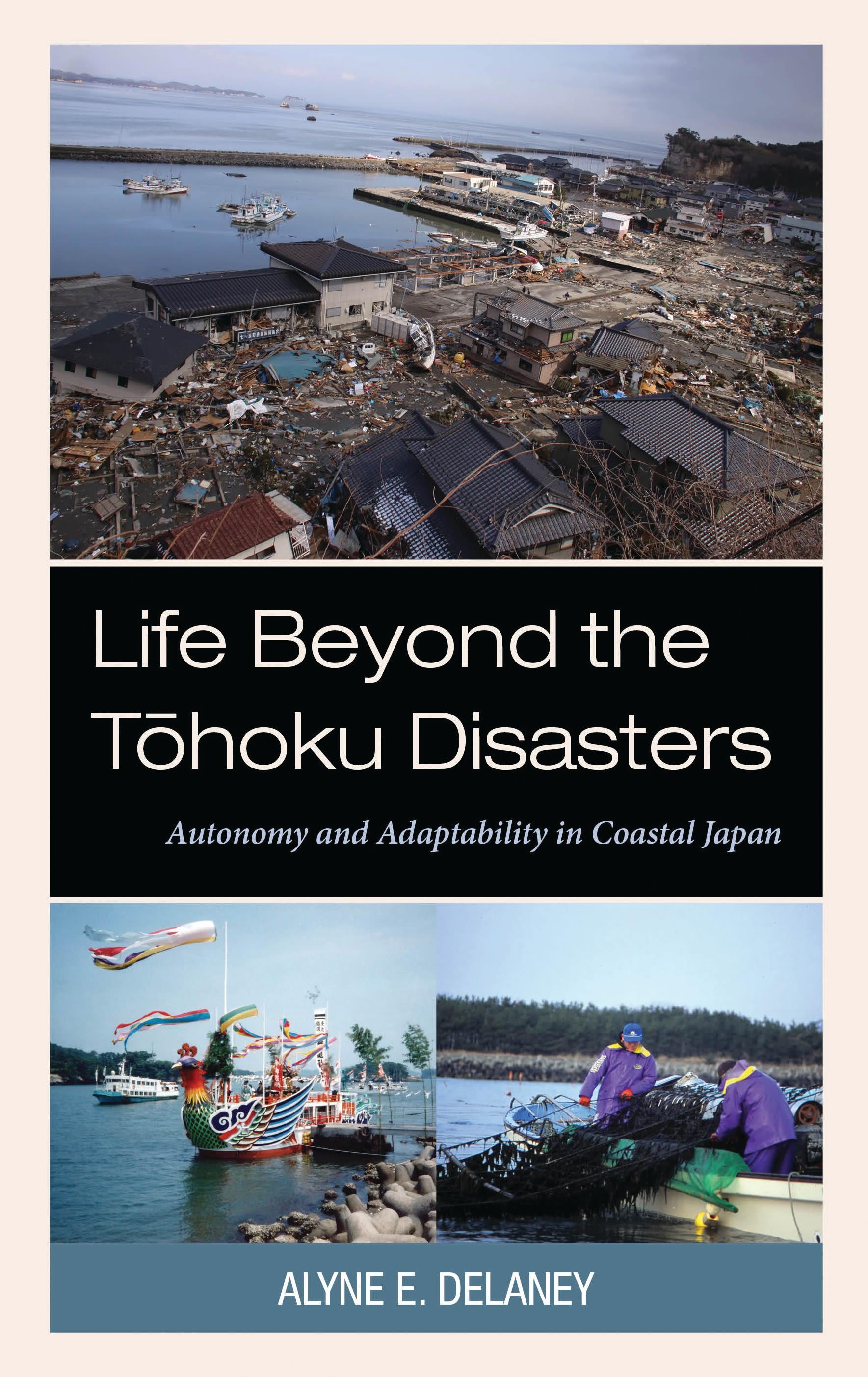
This book explores, in rich, ethnographic detail, the lives of a group of Japanese fishers and community residents in coastal Japan in the aftermath of the tsunami generated from the 2011 Great East Japan Earthquake. Focused on one town in Miyagi Prefecture near the epicenter of the 2011 quake, the text provides a singularly unique opportunity to hear, in their own voices, individuals’ reflections and experiences on life after the disasters while also drawing upon anthropological fieldwork data from many of the same individuals 10 years prior to the disaster.
Alyne E. Delaney skillfully contextualizes local culture and fishing livelihoods and lays out key impacts of disaster reconstruction policies on local society, illustrating the importance of people’s attachment to their places and seascapes, their connections with one another and shared traditions, and their sea-connected working ways of life.
Delaney reveals not only the heartbreak of the disasters and the strain placed on individuals and coastal communities when national policymakers fail to use good governance when rebuilding, but also provides insights into how some have managed to recover and learn the wisdom of knowing what real happiness is, offering readers an enlightening discourse of the potency of the local cultural traits of autonomy and adaptability.
Alyne E. Delaney skillfully contextualizes local culture and fishing livelihoods and lays out key impacts of disaster reconstruction policies on local society, illustrating the importance of people’s attachment to their places and seascapes, their connections with one another and shared traditions, and their sea-connected working ways of life.
Delaney reveals not only the heartbreak of the disasters and the strain placed on individuals and coastal communities when national policymakers fail to use good governance when rebuilding, but also provides insights into how some have managed to recover and learn the wisdom of knowing what real happiness is, offering readers an enlightening discourse of the potency of the local cultural traits of autonomy and adaptability.
Płać wygodnie kartą, Klarną, Apple Pay lub Google Pay. Nie jesteś zadowolony? Zawsze masz 14-dniową gwarancję zwrotu pieniędzy. Więcej przeczytasz w naszych warunkach. Masz pytania? Napisz do nas na hello@memmo.org.
Memmo ułatwia naukę – gdziekolwiek jesteś na świecie. U nas znajdziesz podręczniki i sprytne narzędzia do nauki w jednym miejscu: streszczenia, quizy, podcasty i fiszki. A do tego Ted, Twój kumpel do nauki, który odpowie na wszystko, co Cię nurtuje. Ponad 50 000 studentów już tu się uczy – stworzone, byś uczył się szybciej i mniej stresował.