
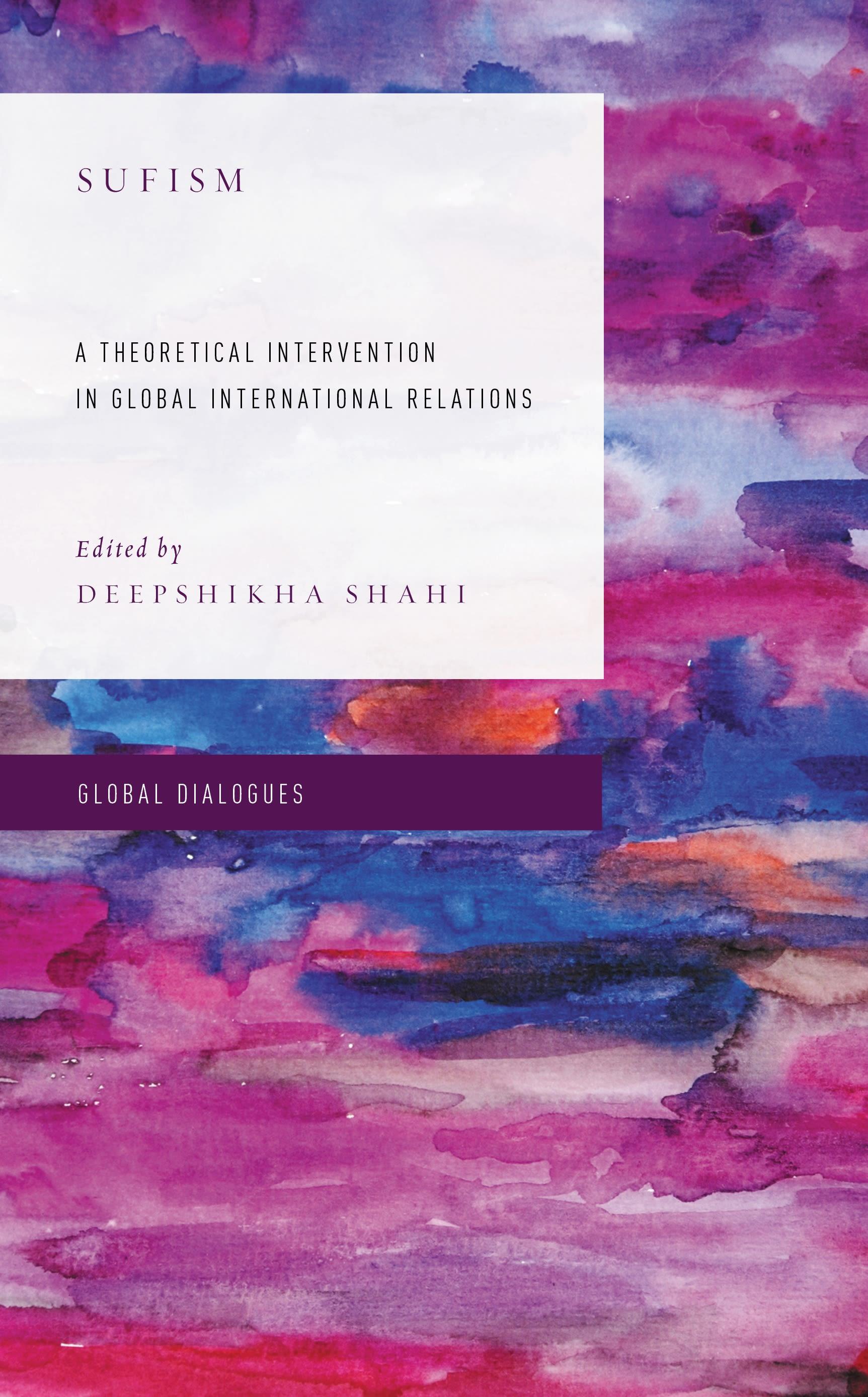
In an effort to attain a ‘global’ character, the contemporary academic discipline of International Relations (IR) increasingly seeks to surpass its Eurocentric limits, thereby opening up pathways to incorporate non-Eurocentric worldviews. Lately, many of the non-Eurocentric worldviews have emerged which either engender a ‘derivative’ discourse of the same Eurocentric IR theories, or construct an ‘exceptionalist’ discourse which is particularly applicable to the narrow experiential realities of a native time-space zone: as such, they fall short of the ambition to produce a genuinely ‘non-derivative’ and ‘non-exceptionalist’ Global IR theory.
Against this backdrop, Sufism: A Theoretical Intervention in Global International Relations performs a multidisciplinary research to explore how ‘Sufism’ – as an established non-Western philosophy with a remarkable temporal-spatial spread across the globe – facilitates a creative intervention in the theoretical understanding of Global IR.
Against this backdrop, Sufism: A Theoretical Intervention in Global International Relations performs a multidisciplinary research to explore how ‘Sufism’ – as an established non-Western philosophy with a remarkable temporal-spatial spread across the globe – facilitates a creative intervention in the theoretical understanding of Global IR.
Płać wygodnie kartą, Klarną, Apple Pay lub Google Pay. Nie jesteś zadowolony? Zawsze masz 14-dniową gwarancję zwrotu pieniędzy. Więcej przeczytasz w naszych warunkach. Masz pytania? Napisz do nas na hello@memmo.org.
Memmo ułatwia naukę – gdziekolwiek jesteś na świecie. U nas znajdziesz podręczniki i sprytne narzędzia do nauki w jednym miejscu: streszczenia, quizy, podcasty i fiszki. A do tego Ted, Twój kumpel do nauki, który odpowie na wszystko, co Cię nurtuje. Ponad 50 000 studentów już tu się uczy – stworzone, byś uczył się szybciej i mniej stresował.