
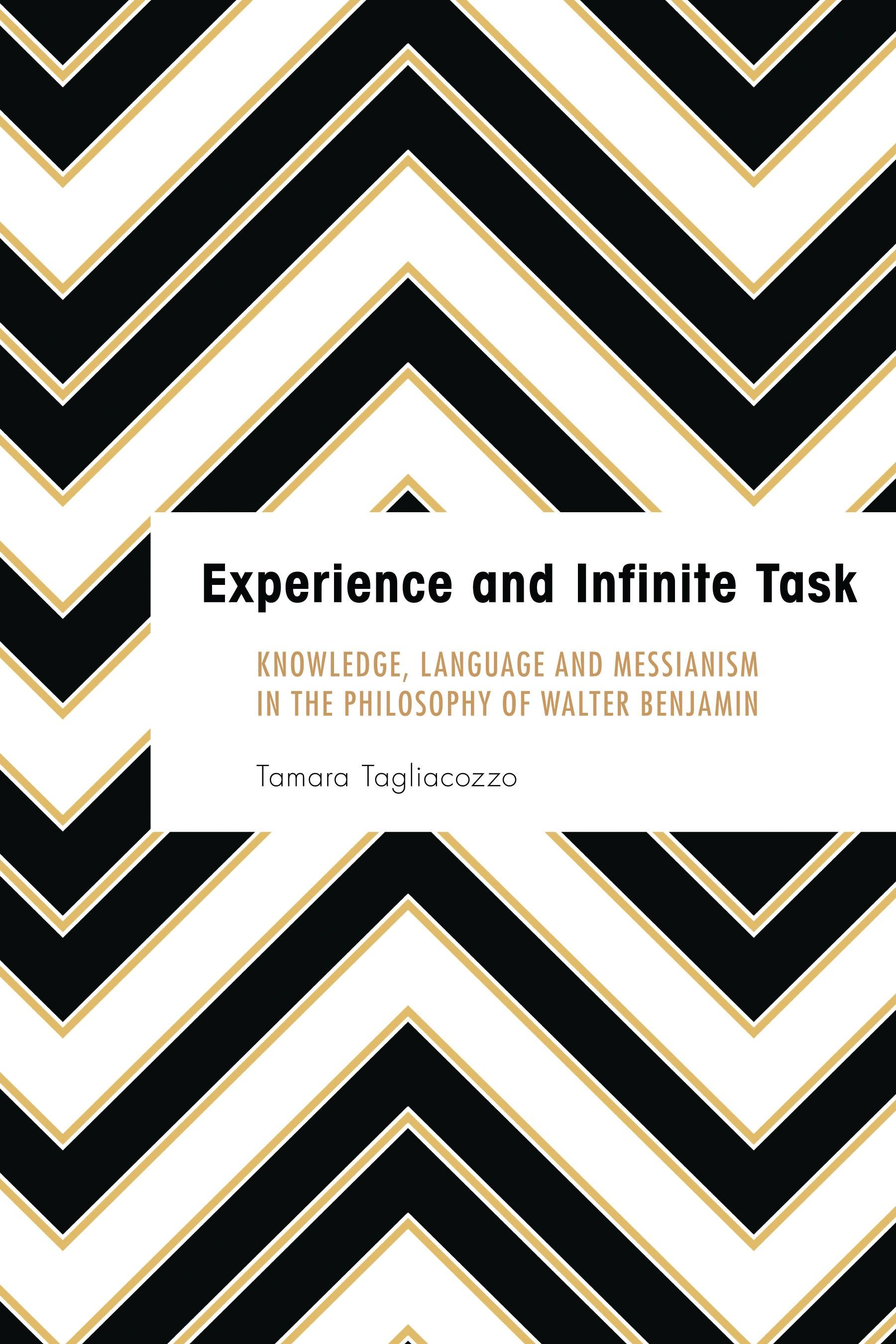
This book examines the philosophical thought of the young Walter Benjamin and its development in his later work. Starting from his critique of the philosophy of Immanuel Kant and Hermann Cohen, the author traces the relationships among Benjamin’s theories — developed in tandem with his friend Gershom Scholem — of knowledge, language, ethics, politics, the philosophy of history and aesthetics, all linked to the Judaic theme of messianism and language as a realm of redemption. She delineates a horizon in which the concept of experience as structure, philosophical system and “infinite task” (On the Program of the Coming Philosophy, 1917/18) evolves into a concept of the origin as monad (The Origin of German Tragic Drama, 1925), merging finally into the historical concept as monad and dialectical image (On the Concept of History, 1940). Tagliacozzo asserts that the concept of experience as structure and symbolic system, derived from his critical interpretation of Kant and Neo-Kantianism, develops into a conception of thought founded on a theological language of revelation.
Płać wygodnie kartą, Klarną, Apple Pay lub Google Pay. Nie jesteś zadowolony? Zawsze masz 14-dniową gwarancję zwrotu pieniędzy. Więcej przeczytasz w naszych warunkach. Masz pytania? Napisz do nas na hello@memmo.org.
Memmo ułatwia naukę – gdziekolwiek jesteś na świecie. U nas znajdziesz podręczniki i sprytne narzędzia do nauki w jednym miejscu: streszczenia, quizy, podcasty i fiszki. A do tego Ted, Twój kumpel do nauki, który odpowie na wszystko, co Cię nurtuje. Ponad 50 000 studentów już tu się uczy – stworzone, byś uczył się szybciej i mniej stresował.