
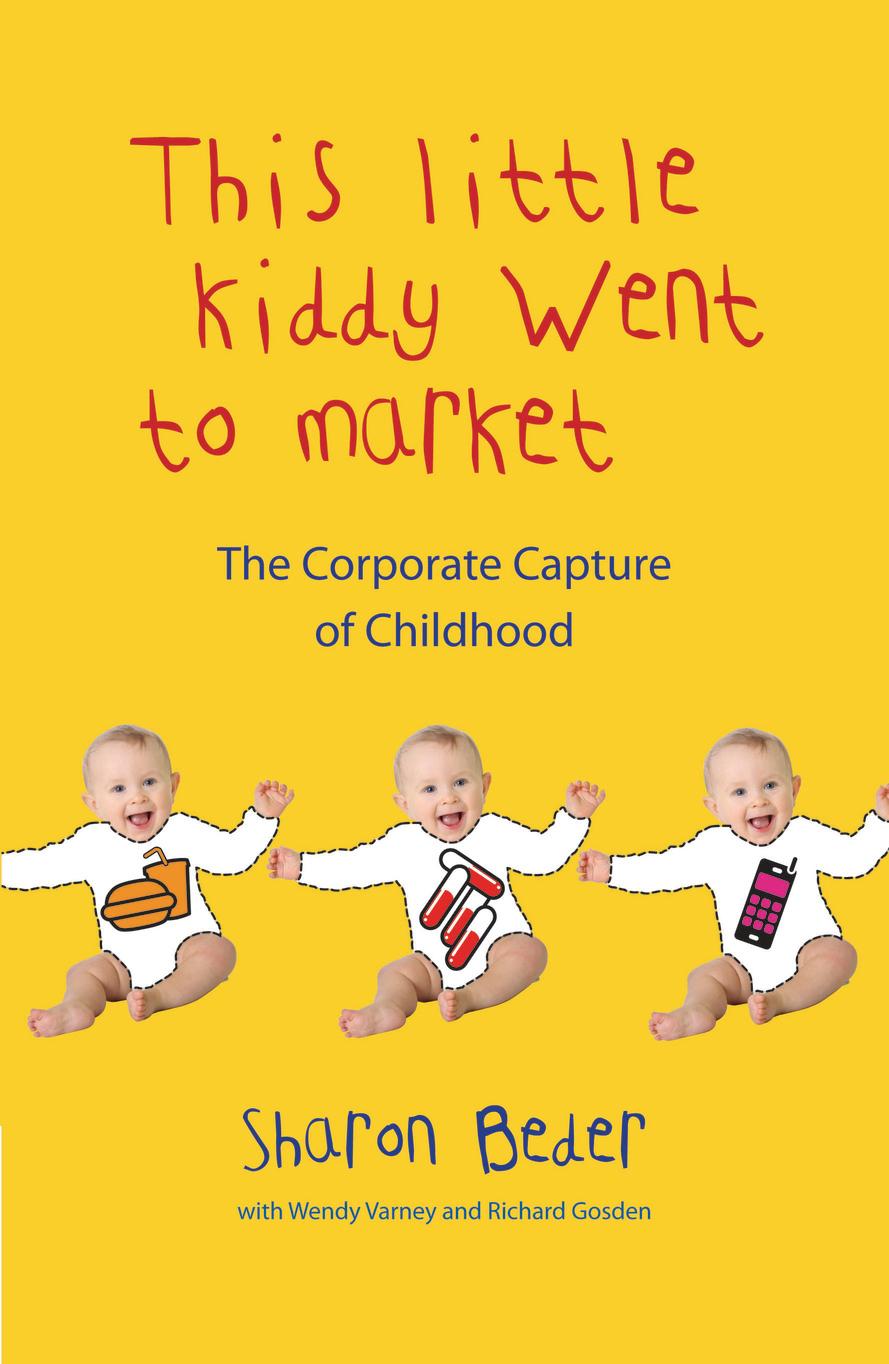
This book investigates the way that corporations are strategically shaping children to be hyper-consumers as well as the submissive employees and uncritical citizens of the future.
Sharon Beder shows how marketers and advertisers are targeting ever younger children in a relentless campaign, transforming children's play into a commercial opportunity and taking advantage of childish anxieties.
She presents an alarming picture of how a child's social development - through education, health care and nutrition - has become an ordered conveyor belt of consumerist conditioning. Focusing on education in particular, she also shows how 'difficult' children are taught from an early age that pharmaceuticals can be used to discipline them or to make them 'happy'.
Sharon Beder shows how marketers and advertisers are targeting ever younger children in a relentless campaign, transforming children's play into a commercial opportunity and taking advantage of childish anxieties.
She presents an alarming picture of how a child's social development - through education, health care and nutrition - has become an ordered conveyor belt of consumerist conditioning. Focusing on education in particular, she also shows how 'difficult' children are taught from an early age that pharmaceuticals can be used to discipline them or to make them 'happy'.
Płać wygodnie kartą, Klarną, Apple Pay lub Google Pay. Nie jesteś zadowolony? Zawsze masz 14-dniową gwarancję zwrotu pieniędzy. Więcej przeczytasz w naszych warunkach. Masz pytania? Napisz do nas na hello@memmo.org.
Memmo ułatwia naukę – gdziekolwiek jesteś na świecie. U nas znajdziesz podręczniki i sprytne narzędzia do nauki w jednym miejscu: streszczenia, quizy, podcasty i fiszki. A do tego Ted, Twój kumpel do nauki, który odpowie na wszystko, co Cię nurtuje. Ponad 50 000 studentów już tu się uczy – stworzone, byś uczył się szybciej i mniej stresował.
Może Ci się spodobać
Kup książkę0