
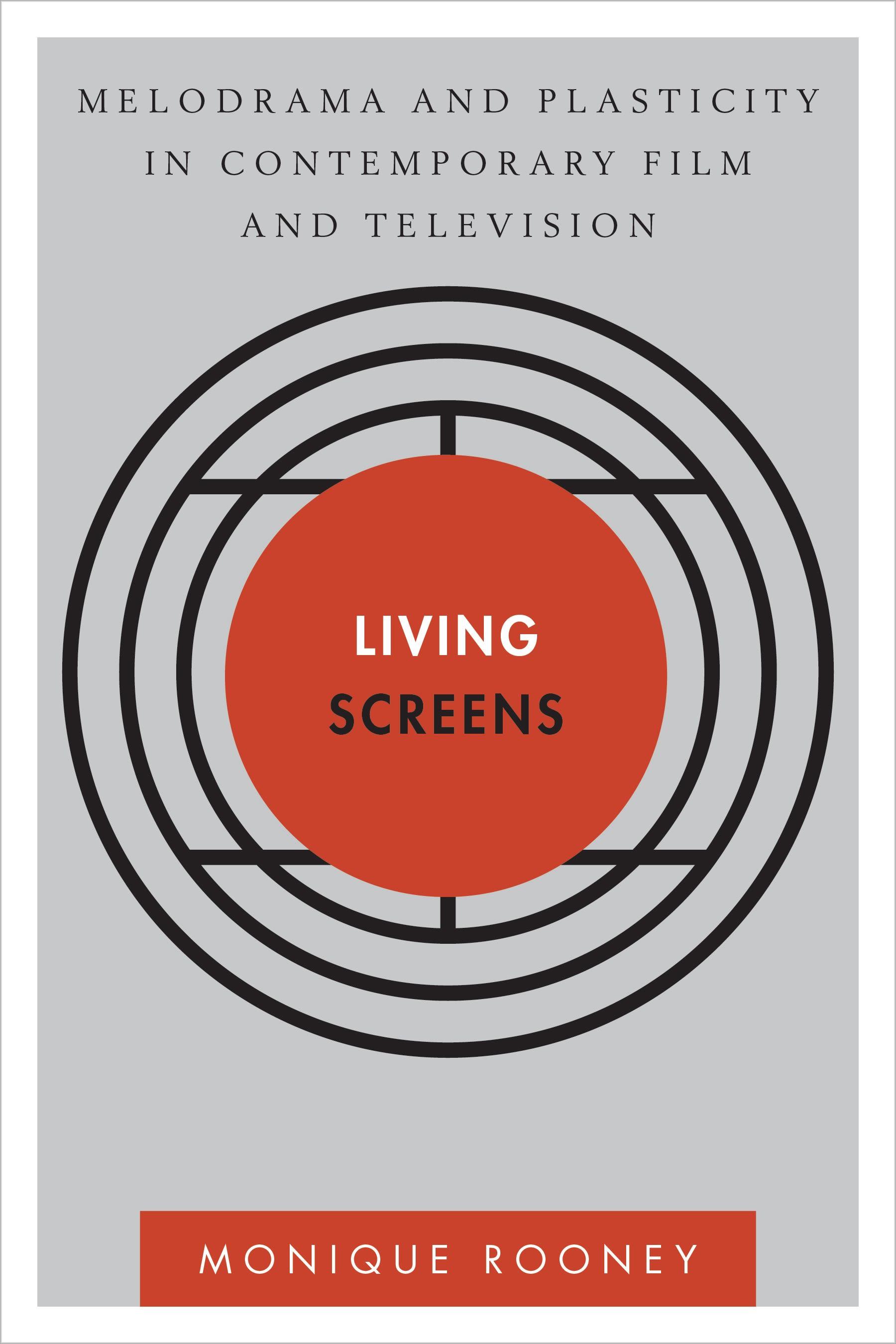
Through original analysis of three contemporary, auteur-directed melodramas (Matthew Weiner’s Mad Men, Lars von Trier’s Melancholia and Todd Haynes’s Mildred Pierce), Living Screens reconceives and renovates the terms in which melodrama has been understood. Returning to Jean-Jacques Rousseau’s foundational, Enlightenment-era melodrama Pygmalion with its revival of an old story about sculpted objects that spring to life, it contends that this early production prefigures the structure of contemporary melodramas and serves as a model for the way we interact with media today. Melodrama is conceptualized as a “plastic” form with the capacity to mould and be moulded and that speaks to fundamental processes of mediation.
Living Screens evokes the thrills, anxieties, and uncertainties accompanying our attachment to technologies that are close-at-hand yet have far-reaching effects. In doing so, it explores the plasticity of our current situation, in which we live with screens that melodramatically touch our lives.
Living Screens evokes the thrills, anxieties, and uncertainties accompanying our attachment to technologies that are close-at-hand yet have far-reaching effects. In doing so, it explores the plasticity of our current situation, in which we live with screens that melodramatically touch our lives.
Płać wygodnie kartą, Klarną, Apple Pay lub Google Pay. Nie jesteś zadowolony? Zawsze masz 14-dniową gwarancję zwrotu pieniędzy. Więcej przeczytasz w naszych warunkach. Masz pytania? Napisz do nas na hello@memmo.org.
Memmo ułatwia naukę – gdziekolwiek jesteś na świecie. U nas znajdziesz podręczniki i sprytne narzędzia do nauki w jednym miejscu: streszczenia, quizy, podcasty i fiszki. A do tego Ted, Twój kumpel do nauki, który odpowie na wszystko, co Cię nurtuje. Ponad 50 000 studentów już tu się uczy – stworzone, byś uczył się szybciej i mniej stresował.