
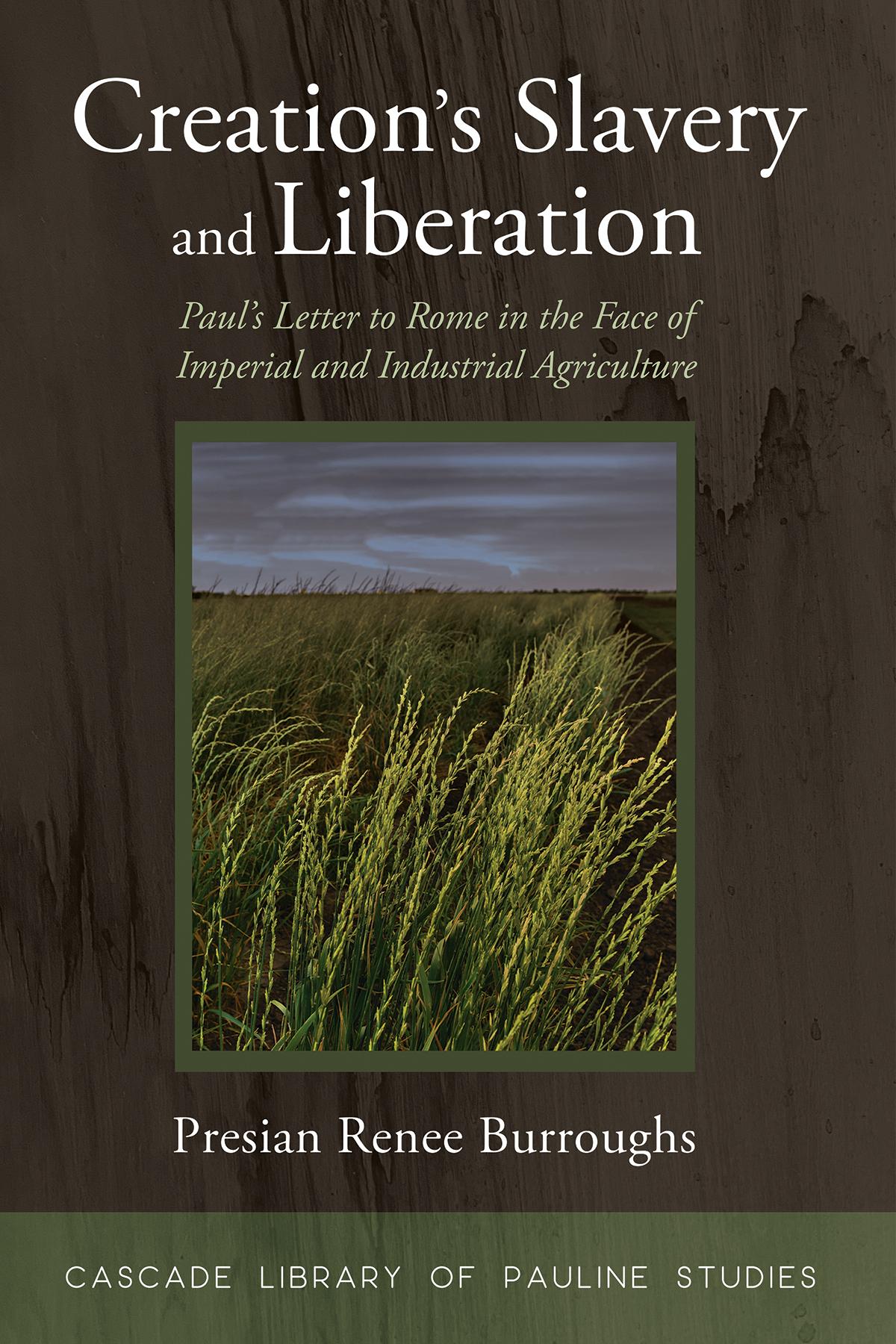
What did the apostle Paul mean when he portrayed the creation as subjected to frustration and enslaved to destruction? What forms of frustration and destruction might he have seen throughout the Roman Empire? And how would he describe creation's condition today?
Creation's Slavery and Liberation addresses these questions by tracing the story of creation as it appears in Paul's own Scriptures (the Tanakh), Roman imperial propaganda, Paul's letter to Rome, and U.S. industrial agriculture. This story reveals God to be the Creator who makes right (justifies) and makes alive through Jesus Christ and the Spirit. Because God liberates, justifies, and vivifies the entire creation and since--according to Paul--creation's liberation is linked to humanity's glorification, Paul expects Christians to pursue justice and nourish life. Burroughs encapsulates key justice-oriented and life-supporting practices in seven eco-ethical principles. To make these principles come alive, she describes the ways in which Roman imperial and American industrial regimes have caused injustice and destruction and, instead, she proposes more regenerative approaches to growing, enjoying, and sharing our daily bread.
Płać wygodnie kartą, Klarną, Apple Pay lub Google Pay. Nie jesteś zadowolony? Zawsze masz 14-dniową gwarancję zwrotu pieniędzy. Więcej przeczytasz w naszych warunkach. Masz pytania? Napisz do nas na hello@memmo.org.
Memmo ułatwia naukę – gdziekolwiek jesteś na świecie. U nas znajdziesz podręczniki i sprytne narzędzia do nauki w jednym miejscu: streszczenia, quizy, podcasty i fiszki. A do tego Ted, Twój kumpel do nauki, który odpowie na wszystko, co Cię nurtuje. Ponad 50 000 studentów już tu się uczy – stworzone, byś uczył się szybciej i mniej stresował.
Może Ci się spodobać
Kup książkę0