
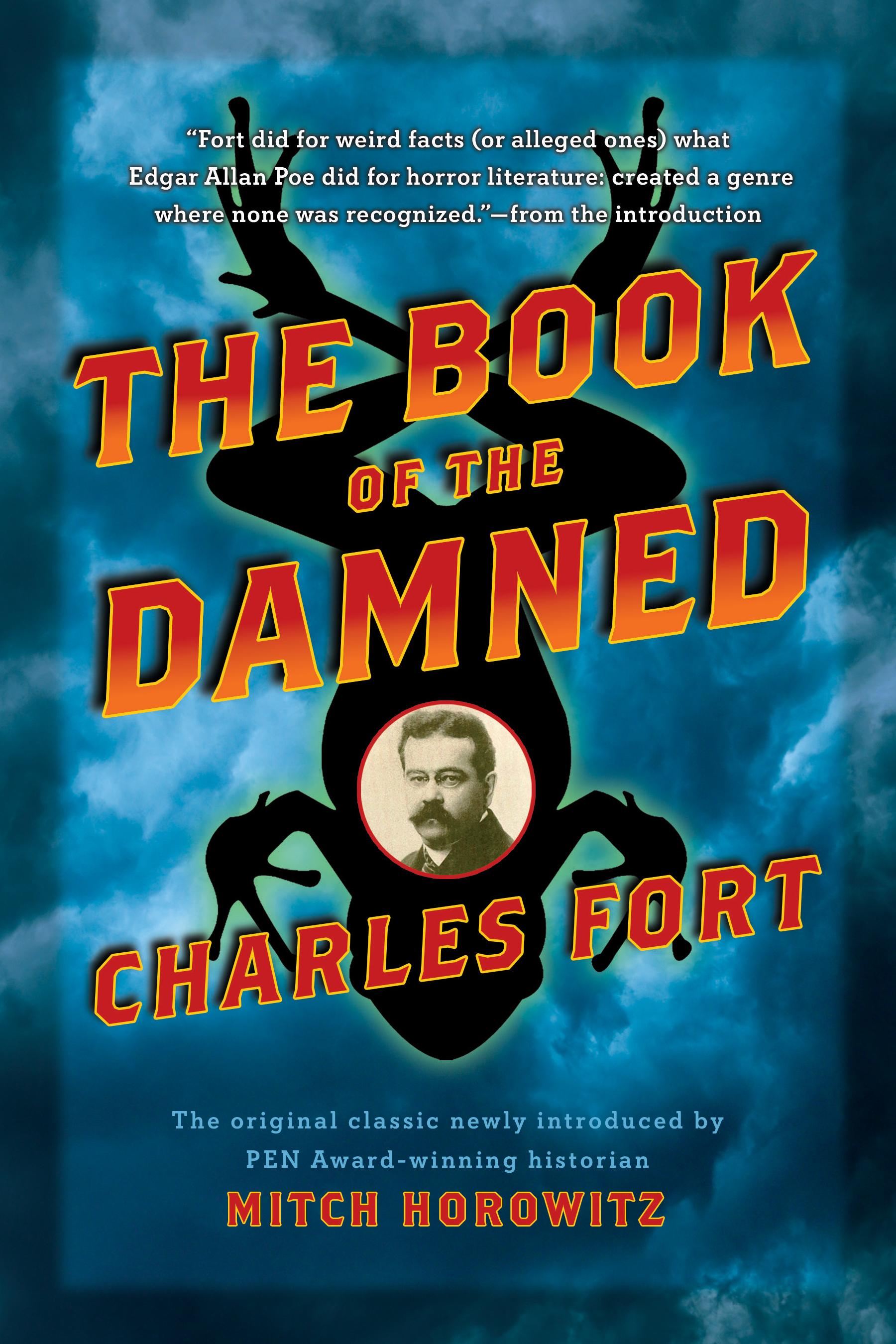
Charles Fort’s founding classic of the paranormal
newly introduced by esoteric scholar Mitch Horowitz
The Book of the Damned shot like a comet—or something unknown in the sky—across the horizon of a complacent industrial world and its new faith in orthodox science in post-World War I America.
Author Charles Fort (1874-1932) curated a registry of damned data: reports that philosophical materialism had excluded, such as strange airships in an era before UFOs; unknown beasts; blood, frogs, fishes, and stones falling to earth; floating islands; meteorites containing fossils; tools dropping from the skies; fairy coffins; lights on the moon; and strange figures moving across the sun.
Fort revealed how dogmas and orthodoxies once associated with religion were reemerging within triumphant science itself. Whatever authorities could not explain, they condemned, ridiculed, or ignored. But philosopher-compiler Fort illuminated enduring nether-realms that modern man, secure in his manufactured certainties, insisted did not exist.
With a new introductory essay, “Philosopher of the Damned,” historian of the esoteric Mitch Horowitz situates Fort in literary history as a figure who, like Edgar Allan Poe, defined a genre—one so unclassifiable, yet omnipresent, that it bears the author’s name: Fortean.
Mitch further explores how Fort’s insights into categories that physicalist science rejected presaged our own era—one of both new mysteries and new modes of insight. “Fort’s work,” he writes, “has not only endured into our age, but the outcast intellect influenced our quantum-entangled, binary-coded, multiversed conceptions of reality.”
newly introduced by esoteric scholar Mitch Horowitz
The Book of the Damned shot like a comet—or something unknown in the sky—across the horizon of a complacent industrial world and its new faith in orthodox science in post-World War I America.
Author Charles Fort (1874-1932) curated a registry of damned data: reports that philosophical materialism had excluded, such as strange airships in an era before UFOs; unknown beasts; blood, frogs, fishes, and stones falling to earth; floating islands; meteorites containing fossils; tools dropping from the skies; fairy coffins; lights on the moon; and strange figures moving across the sun.
Fort revealed how dogmas and orthodoxies once associated with religion were reemerging within triumphant science itself. Whatever authorities could not explain, they condemned, ridiculed, or ignored. But philosopher-compiler Fort illuminated enduring nether-realms that modern man, secure in his manufactured certainties, insisted did not exist.
With a new introductory essay, “Philosopher of the Damned,” historian of the esoteric Mitch Horowitz situates Fort in literary history as a figure who, like Edgar Allan Poe, defined a genre—one so unclassifiable, yet omnipresent, that it bears the author’s name: Fortean.
Mitch further explores how Fort’s insights into categories that physicalist science rejected presaged our own era—one of both new mysteries and new modes of insight. “Fort’s work,” he writes, “has not only endured into our age, but the outcast intellect influenced our quantum-entangled, binary-coded, multiversed conceptions of reality.”
Płać wygodnie kartą, Klarną, Apple Pay lub Google Pay. Nie jesteś zadowolony? Zawsze masz 14-dniową gwarancję zwrotu pieniędzy. Więcej przeczytasz w naszych warunkach. Masz pytania? Napisz do nas na hello@memmo.org.
Memmo ułatwia naukę – gdziekolwiek jesteś na świecie. U nas znajdziesz podręczniki i sprytne narzędzia do nauki w jednym miejscu: streszczenia, quizy, podcasty i fiszki. A do tego Ted, Twój kumpel do nauki, który odpowie na wszystko, co Cię nurtuje. Ponad 50 000 studentów już tu się uczy – stworzone, byś uczył się szybciej i mniej stresował.
Może Ci się spodobać
Kup książkę0