
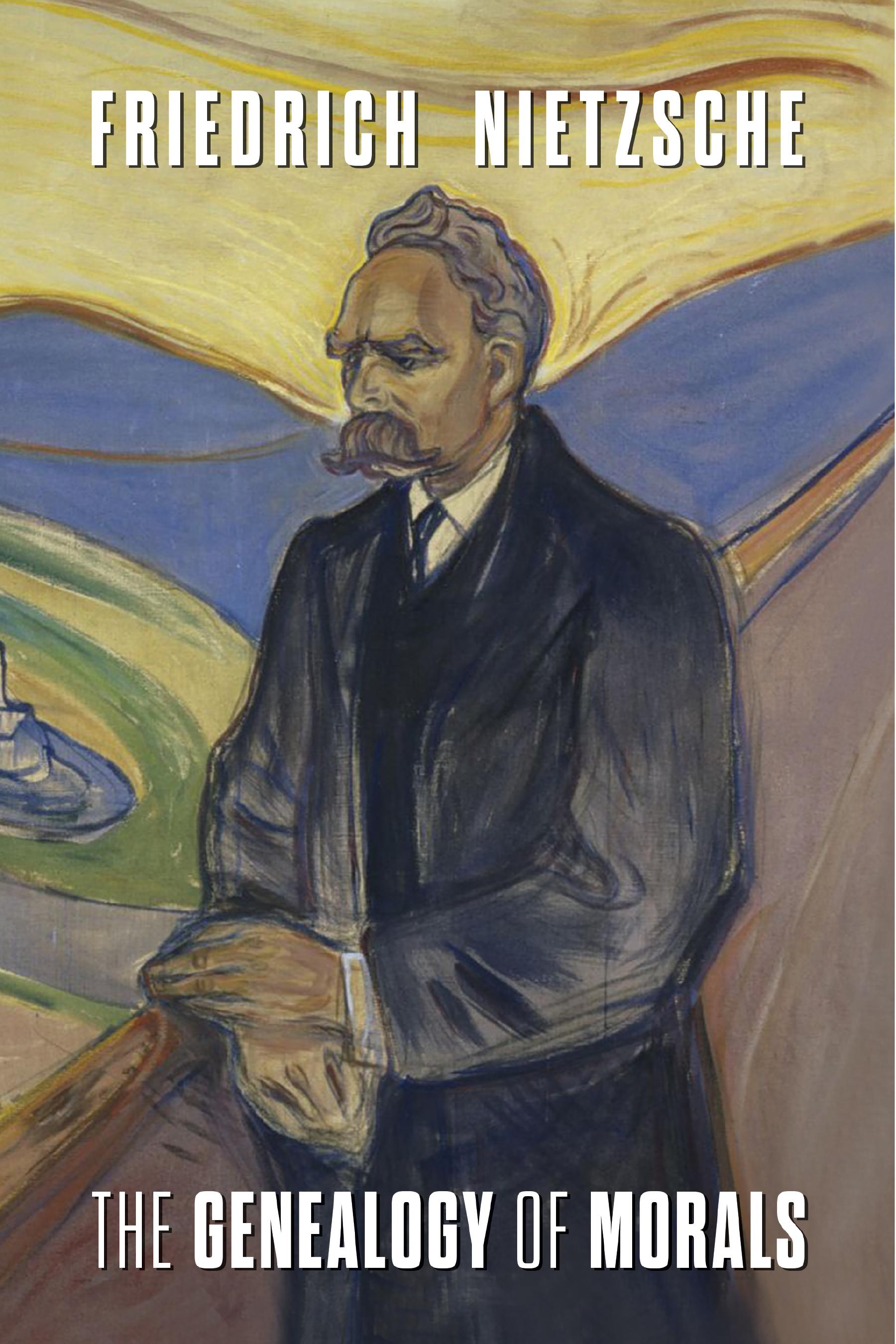
"Human history would be noting but a record of stupidity save for the cunning contributions of the weak."
The Genealogy of Morals is a collection of essays by Friedrich Nietzsche, one of the most interesting philosophers of the 19th century. His three interrelated treatises expand and follow through on concepts Nietzsche sketched out in Beyond Good and Evil. Important works on ethics and politics, the essays contain the author's "thoughts on the origin of our moral prejudices". It was written in response to his friend Paul Rée’s genealogical hypothesis of morality put forth in his work "The Origin of the Moral Sensations".
Finding Rée’s theory unsatisfactory, Nietzsche calls for an examination of moral values themselves.
The three essays are among Nietzsche's most sustained, cohesive and important works as they offer an interpretation and history of ethics which raises profoundly disquieting issues about the violence of both.
The Genealogy of Morals is a collection of essays by Friedrich Nietzsche, one of the most interesting philosophers of the 19th century. His three interrelated treatises expand and follow through on concepts Nietzsche sketched out in Beyond Good and Evil. Important works on ethics and politics, the essays contain the author's "thoughts on the origin of our moral prejudices". It was written in response to his friend Paul Rée’s genealogical hypothesis of morality put forth in his work "The Origin of the Moral Sensations".
Finding Rée’s theory unsatisfactory, Nietzsche calls for an examination of moral values themselves.
The three essays are among Nietzsche's most sustained, cohesive and important works as they offer an interpretation and history of ethics which raises profoundly disquieting issues about the violence of both.
- In the first essay Nietzsche sets up a contrast between what he calls "master" morality and "slave" morality and shows how strength and action have often been replaced by passivity and pessimism.
- The second essay, looks into the origins of guilt and punishment, and how the concept of justice was born.
- In the third essay, Nietzsche dissects the meaning of ascetic ideals showing that culture and morality, rather than being eternal truths, are human-made.
Płać wygodnie kartą, Klarną, Apple Pay lub Google Pay. Nie jesteś zadowolony? Zawsze masz 14-dniową gwarancję zwrotu pieniędzy. Więcej przeczytasz w naszych warunkach. Masz pytania? Napisz do nas na hello@memmo.org.
Memmo ułatwia naukę – gdziekolwiek jesteś na świecie. U nas znajdziesz podręczniki i sprytne narzędzia do nauki w jednym miejscu: streszczenia, quizy, podcasty i fiszki. A do tego Ted, Twój kumpel do nauki, który odpowie na wszystko, co Cię nurtuje. Ponad 50 000 studentów już tu się uczy – stworzone, byś uczył się szybciej i mniej stresował.
Może Ci się spodobać
Kup książkę0