
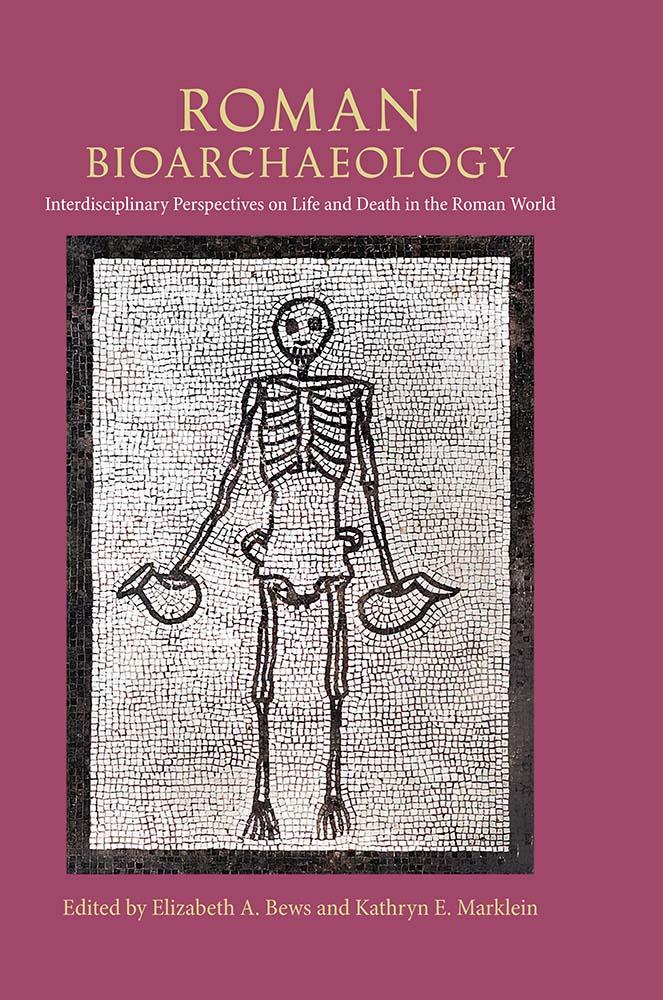
How bioarchaeology can illuminate the lived experiences of people in the Roman Empire
Research on the Roman Empire has long focused on Rome’s legendary leaders, culture, and conquest. But at the empire’s peak, tens of millions of ordinary people coexisted in its territories—people who built the structures, wrote the literature, and transformed the landscapes we study today. In Roman Bioarchaeology, researchers use human skeletal remains recovered from throughout the Roman world to portray how individuals lived and died, spanning the empire’s vast geography and 1,000 years of ancient history.
This volume brings together scholarship from archaeological sites in Europe, the Eastern Mediterranean, and Africa, featuring new and advanced scientific approaches including DNA studies, stable isotope analysis, paleoparasitology, paleopathology, biodistance, and more. Throughout, contributors prioritize the ethical treatment of the deceased by highlighting individual narratives and working with local descendants where possible. From rural homes in Britannia to bustling cities in Phoenicia, these essays showcase the diversity of Roman lives and illuminate the experiences of the most vulnerable in these societies. This book demonstrates how bioarchaeology can enrich our understanding of many facets of life in the Roman world.
Płać wygodnie kartą, Klarną, Apple Pay lub Google Pay. Nie jesteś zadowolony? Zawsze masz 14-dniową gwarancję zwrotu pieniędzy. Więcej przeczytasz w naszych warunkach. Masz pytania? Napisz do nas na hello@memmo.org.
Memmo ułatwia naukę – gdziekolwiek jesteś na świecie. U nas znajdziesz podręczniki i sprytne narzędzia do nauki w jednym miejscu: streszczenia, quizy, podcasty i fiszki. A do tego Ted, Twój kumpel do nauki, który odpowie na wszystko, co Cię nurtuje. Ponad 50 000 studentów już tu się uczy – stworzone, byś uczył się szybciej i mniej stresował.