
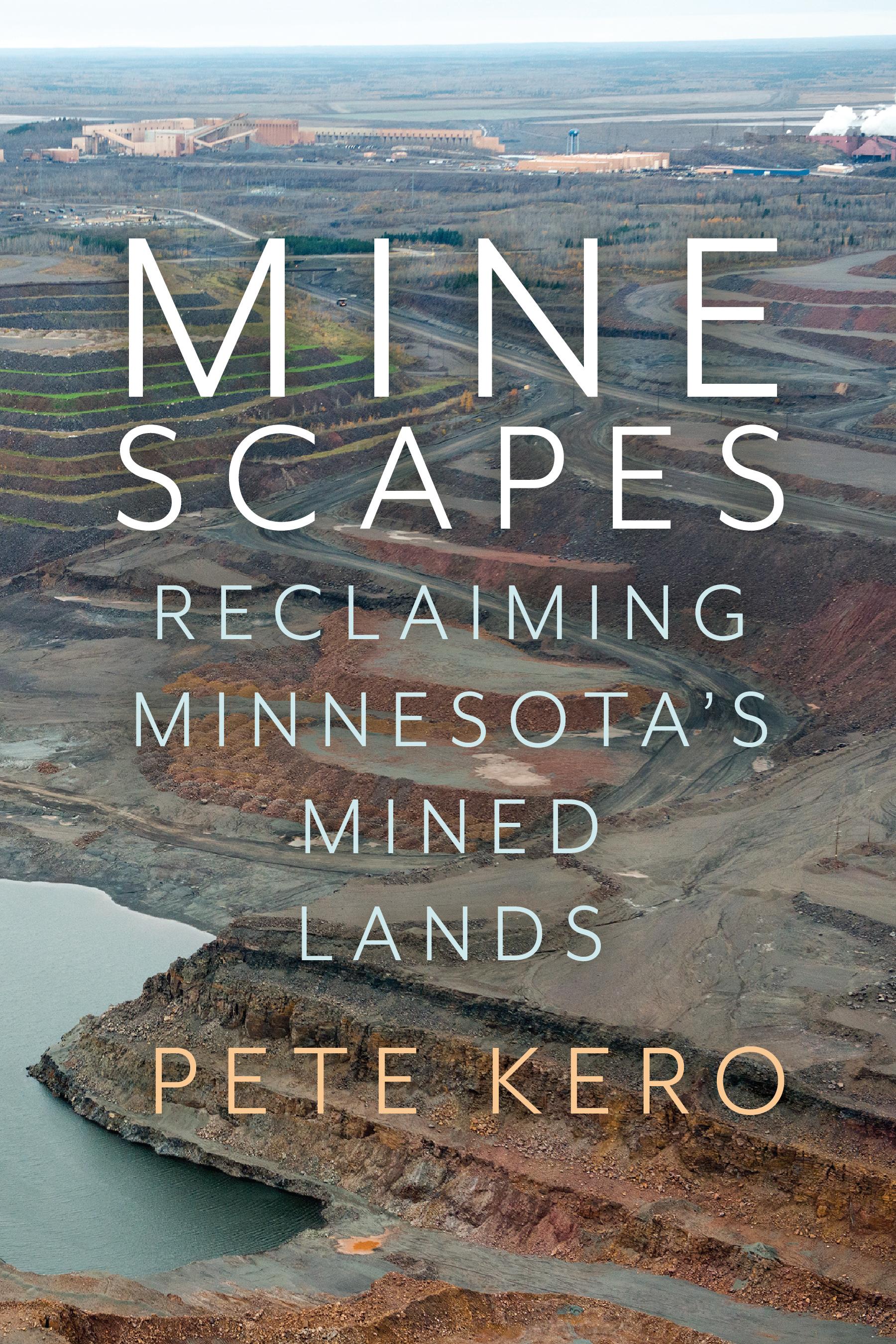
Stories from Minnesota’s Iron Range highlight the challenges of competing needs on lands that offer opportunities for both mining and recreation.
The Mesabi Iron Range in northeastern Minnesota conjures dramatic visuals of open pit mines and ore piles, enormous earthmoving equipment, and once-booming towns with aging architecture. But now many of these towns are busy with tourists. There are biking and ATV trails, forests and lakes. And yes, continued mining.
Over the decades, people have approached the iron lands with differing perspectives. Early miners opened the Mesabi Range to extract its ore, but key players also upheld conservation principles by setting aside lower-quality rock for use by later generations with better technology. Nature found its way into the cracks and crevices of these rock piles, and within fifty years, groves of aspen and other successional plants had transformed the red rock into vibrant green. As early as the 1950s, residents were repurposing minelands by building ski jumps and cultivating grouse-friendly habitat. These impulses were codified in the 1980 Mine Reclamation Rules, which specified how mining companies should care for the land both during and after extraction. In the early 2000s, the Laurentian Vision Project brought together landscape architects, engineers, and residents to dream up possibilities for the landscape—and then to make those dreams real by building bridges, creating wildlife sanctuaries, and opening former minelands for fishing and mountain biking.
In Minescapes, environmental engineer Pete Kero explores the record that is written on Minnesota’s mined lands—and the value systems of each generation that created, touched, and lived among these landscapes. His narratives reveal ways in which the mining industry and Iron Range residents coexist and support each other today, just as they have for more than a century.
The Mesabi Iron Range in northeastern Minnesota conjures dramatic visuals of open pit mines and ore piles, enormous earthmoving equipment, and once-booming towns with aging architecture. But now many of these towns are busy with tourists. There are biking and ATV trails, forests and lakes. And yes, continued mining.
Over the decades, people have approached the iron lands with differing perspectives. Early miners opened the Mesabi Range to extract its ore, but key players also upheld conservation principles by setting aside lower-quality rock for use by later generations with better technology. Nature found its way into the cracks and crevices of these rock piles, and within fifty years, groves of aspen and other successional plants had transformed the red rock into vibrant green. As early as the 1950s, residents were repurposing minelands by building ski jumps and cultivating grouse-friendly habitat. These impulses were codified in the 1980 Mine Reclamation Rules, which specified how mining companies should care for the land both during and after extraction. In the early 2000s, the Laurentian Vision Project brought together landscape architects, engineers, and residents to dream up possibilities for the landscape—and then to make those dreams real by building bridges, creating wildlife sanctuaries, and opening former minelands for fishing and mountain biking.
In Minescapes, environmental engineer Pete Kero explores the record that is written on Minnesota’s mined lands—and the value systems of each generation that created, touched, and lived among these landscapes. His narratives reveal ways in which the mining industry and Iron Range residents coexist and support each other today, just as they have for more than a century.
Strony: 224
Kategoria: Miljövetenskap & Klimat
e-ISBN: 9781681342252
Waga przesyłki: 1.2 kg
Wysyłka w ciągu: 1-2 dni
Płać wygodnie kartą, Klarną, Apple Pay lub Google Pay. Nie jesteś zadowolony? Zawsze masz 14-dniową gwarancję zwrotu pieniędzy. Więcej przeczytasz w naszych warunkach. Masz pytania? Napisz do nas na hello@memmo.org.
Memmo ułatwia naukę – gdziekolwiek jesteś na świecie. U nas znajdziesz podręczniki i sprytne narzędzia do nauki w jednym miejscu: streszczenia, quizy, podcasty i fiszki. A do tego Ted, Twój kumpel do nauki, który odpowie na wszystko, co Cię nurtuje. Ponad 50 000 studentów już tu się uczy – stworzone, byś uczył się szybciej i mniej stresował.
Może Ci się spodobać
Kup książkę0