
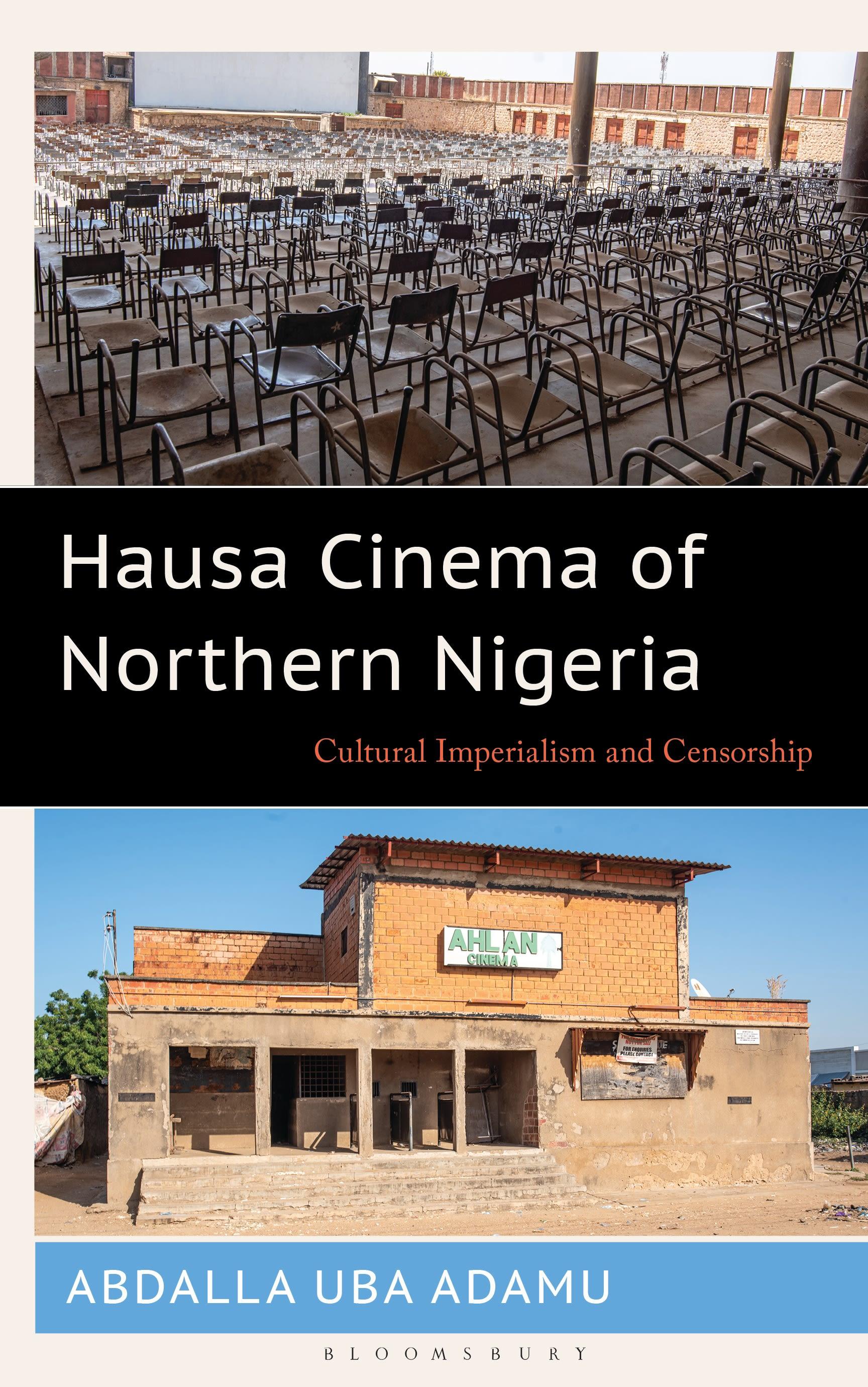
This historical account of cinema in Nigeria explores the transcultural transfer of media from India to Africa through films.
Hausa Cinema of Northern Nigeria examines how the Hindi Cinema of India became the template for storytelling in the Hausa regional cinema of Northern Nigeria and explores the emergence of Indigenous language within cinema in this region. Such emergence created points of divergence with the Islamic public culture leading to censorship both within the entertainment industry and the newly re-introduced Shari'a government of Kano. Throughout this book, Abdalla Uba Adamu explores the tension between Islamic society and the intrusion of transglobal media influences in cinema in Kano. He provides a deeper understanding of global media transnationalism and its impact on Muslim African popular culture. This book also discusses how the Muslim Hausa youth used the agencies of transglobal media technologies to transform the Hausa narrative style from a linear and didactic format to a complex configuration. By examining the Hausa film industry' s history, Adamu challenges the notion of cultural and media imperialism and the dominance of media consumption in contemporary African societies.
Hausa Cinema of Northern Nigeria examines how the Hindi Cinema of India became the template for storytelling in the Hausa regional cinema of Northern Nigeria and explores the emergence of Indigenous language within cinema in this region. Such emergence created points of divergence with the Islamic public culture leading to censorship both within the entertainment industry and the newly re-introduced Shari'a government of Kano. Throughout this book, Abdalla Uba Adamu explores the tension between Islamic society and the intrusion of transglobal media influences in cinema in Kano. He provides a deeper understanding of global media transnationalism and its impact on Muslim African popular culture. This book also discusses how the Muslim Hausa youth used the agencies of transglobal media technologies to transform the Hausa narrative style from a linear and didactic format to a complex configuration. By examining the Hausa film industry' s history, Adamu challenges the notion of cultural and media imperialism and the dominance of media consumption in contemporary African societies.
Płać wygodnie kartą, Klarną, Apple Pay lub Google Pay. Nie jesteś zadowolony? Zawsze masz 14-dniową gwarancję zwrotu pieniędzy. Więcej przeczytasz w naszych warunkach. Masz pytania? Napisz do nas na hello@memmo.org.
Memmo ułatwia naukę – gdziekolwiek jesteś na świecie. U nas znajdziesz podręczniki i sprytne narzędzia do nauki w jednym miejscu: streszczenia, quizy, podcasty i fiszki. A do tego Ted, Twój kumpel do nauki, który odpowie na wszystko, co Cię nurtuje. Ponad 50 000 studentów już tu się uczy – stworzone, byś uczył się szybciej i mniej stresował.