
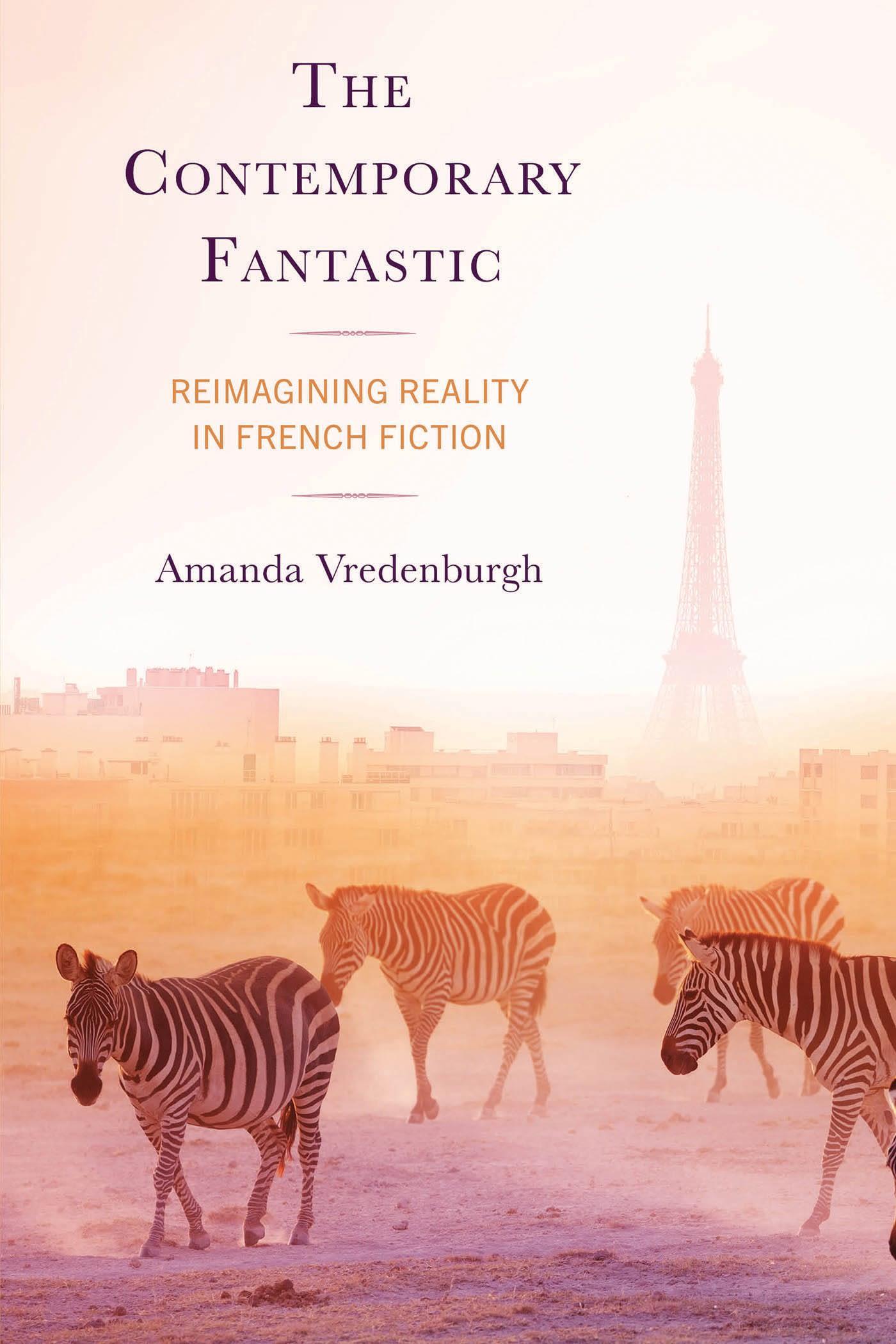
In The Contemporary Fantastic: Reimagining Reality in French Fiction, Amanda Vredenburgh identifies a contemporary shift in the use of fantastic modalities in French fiction, no longer dominated by the desire to escape the disappointments of reality nor the reader's hesitation about the reality of the novel's events, but by its innovative confrontation with the real. What could bizarre, uncanny, or supernatural literary representations have to tell us about very urgent, real issues like the environmental crisis, racism, migration, and the formation of egalitarian communities? Through close readings of a selection of novels by Marie Darrieussecq, Marie NDiaye, and Antoine Volodine, Vredenburgh argues that the ability to blur boundaries gives the fantastic both an emancipatory and reparative function in its engagement with contemporary political issues. These authors complicate categories such as human/nonhuman, French/foreign, inclusion/exclusion, and individual/community and shift the focus to the experiential and affective dimensions of these issues, ultimately allowing us to better think and feel with those that are excluded. Vredenburgh concludes that this use of the fantastic has a specific ethical stance, which encourages a community-based approach founded on compassion and inclusion.
Płać wygodnie kartą, Klarną, Apple Pay lub Google Pay. Nie jesteś zadowolony? Zawsze masz 14-dniową gwarancję zwrotu pieniędzy. Więcej przeczytasz w naszych warunkach. Masz pytania? Napisz do nas na hello@memmo.org.
Memmo ułatwia naukę – gdziekolwiek jesteś na świecie. U nas znajdziesz podręczniki i sprytne narzędzia do nauki w jednym miejscu: streszczenia, quizy, podcasty i fiszki. A do tego Ted, Twój kumpel do nauki, który odpowie na wszystko, co Cię nurtuje. Ponad 50 000 studentów już tu się uczy – stworzone, byś uczył się szybciej i mniej stresował.