
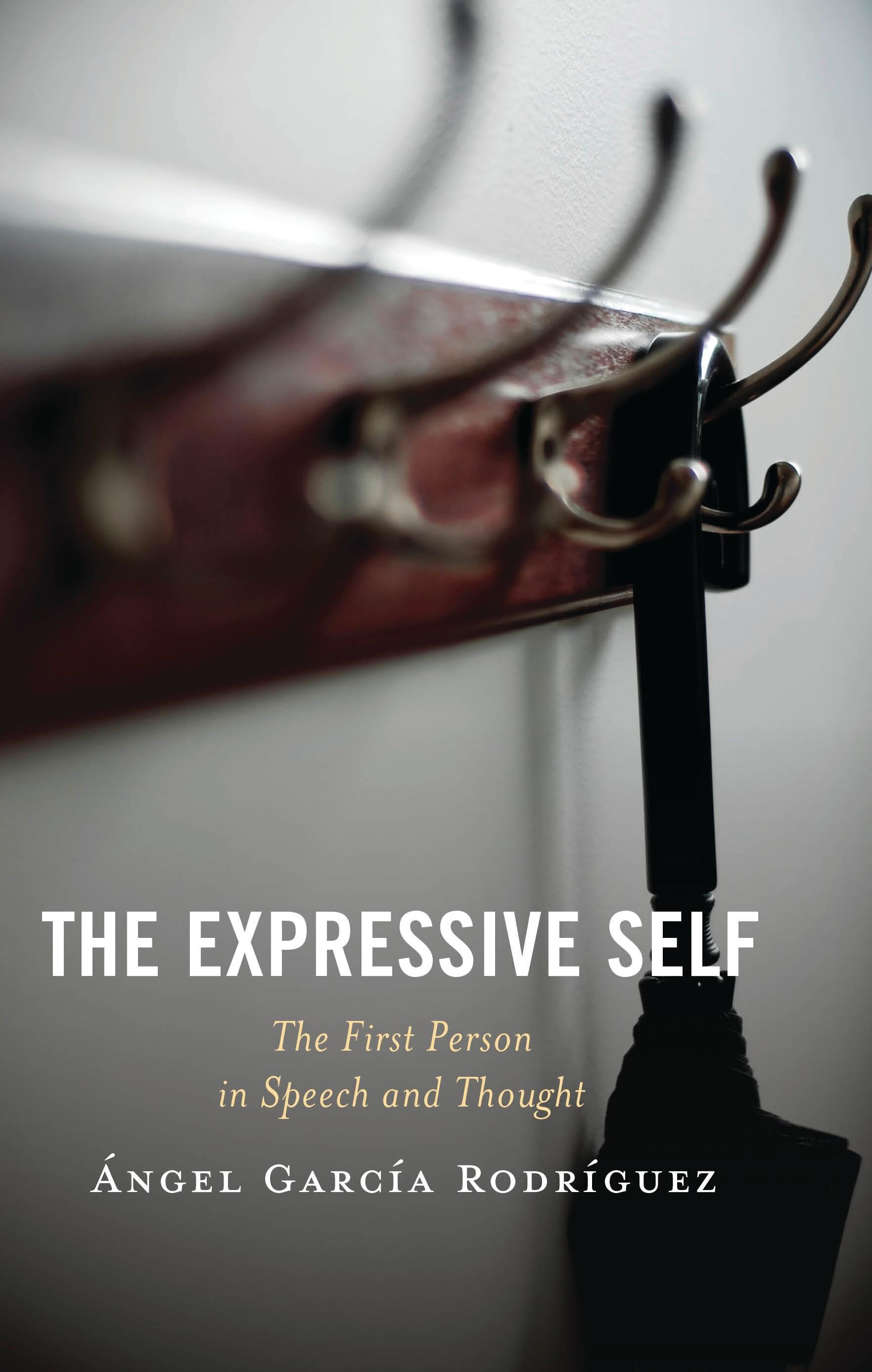
Expression is typically construed as a relation between two ontologically distinct items—namely, a vehicle and a content—but it is better construed non-relationally, since the content is an intrinsic aspect or quality of the expressive vehicle. Upon this basis, The Expressive Self: The First Person in Speech and Thought argues that the distinctive nature of the first-person perspective must be accounted for in expressive, rather than epistemic, terms. For though others can report on what one expresses, one alone is able to non-relationally express oneself; one alone is able to produce vehicles that are episodes of one’s self-consciousness.
According to Ángel García Rodríguez, the ensuing expressive model of the self provides clarity on some prominent contemporary puzzles, notably Moore’s paradox, self-deception, and McKinsey’s paradox, given the duality of non-relationally expressive and reporting uses of the underlying first-person claims. Moreover, the phenomena of self-reference and first-person authority, both psychological and bodily, pose no objection to the model.
Throughout, the author engages critically with alternative conceptions of the self, delivering a novel account that helps advance the debate about the nature of the self and of the first person.
According to Ángel García Rodríguez, the ensuing expressive model of the self provides clarity on some prominent contemporary puzzles, notably Moore’s paradox, self-deception, and McKinsey’s paradox, given the duality of non-relationally expressive and reporting uses of the underlying first-person claims. Moreover, the phenomena of self-reference and first-person authority, both psychological and bodily, pose no objection to the model.
Throughout, the author engages critically with alternative conceptions of the self, delivering a novel account that helps advance the debate about the nature of the self and of the first person.
Płać wygodnie kartą, Klarną, Apple Pay lub Google Pay. Nie jesteś zadowolony? Zawsze masz 14-dniową gwarancję zwrotu pieniędzy. Więcej przeczytasz w naszych warunkach. Masz pytania? Napisz do nas na hello@memmo.org.
Memmo ułatwia naukę – gdziekolwiek jesteś na świecie. U nas znajdziesz podręczniki i sprytne narzędzia do nauki w jednym miejscu: streszczenia, quizy, podcasty i fiszki. A do tego Ted, Twój kumpel do nauki, który odpowie na wszystko, co Cię nurtuje. Ponad 50 000 studentów już tu się uczy – stworzone, byś uczył się szybciej i mniej stresował.