
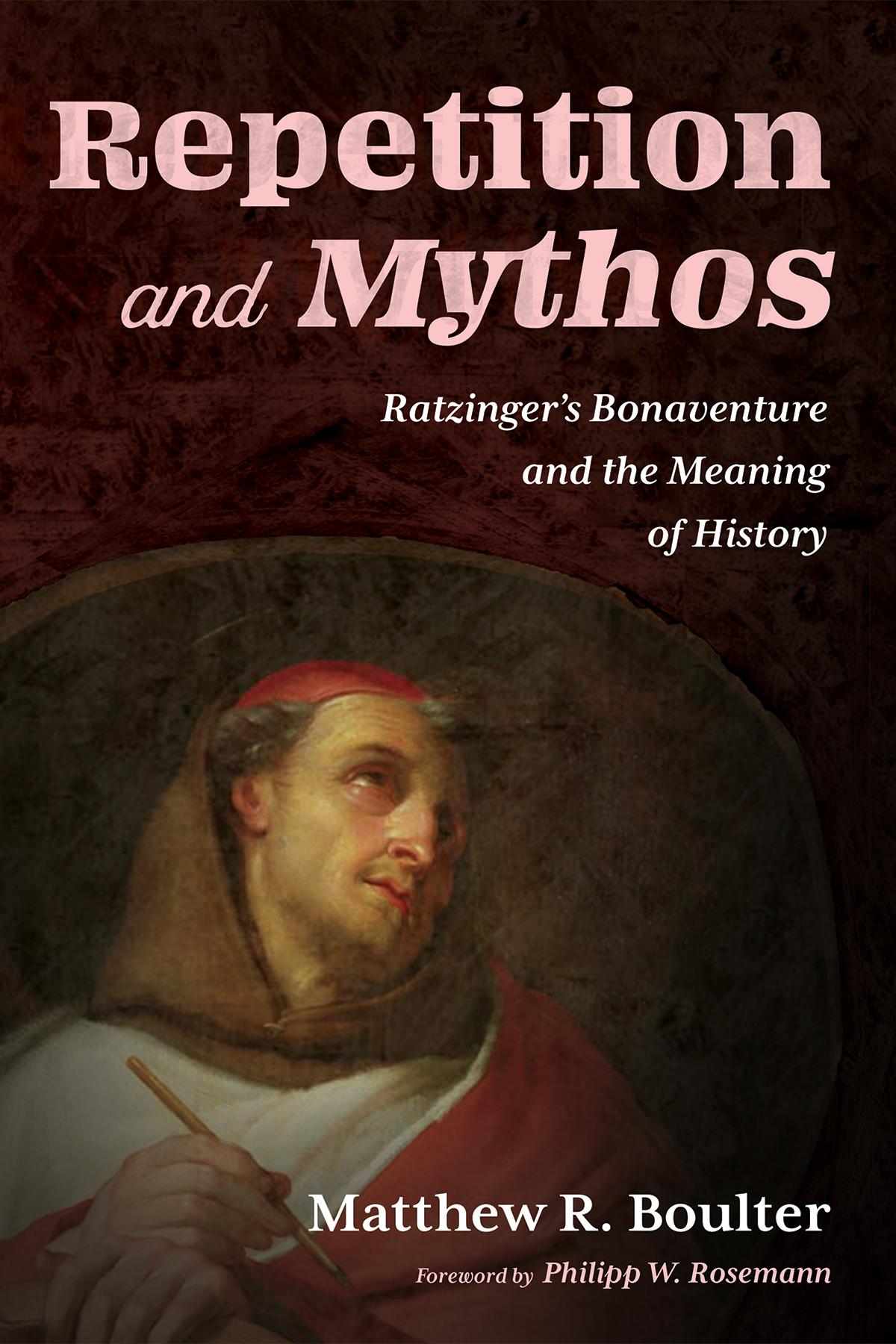
Writing his Habilitationsschrift as a young man in the late 1950s, future Pontiff Joseph Ratzinger argues that, when St. Bonaventure composed his Collationes in Hexaemeron in the spring of 1273, not since St. Augustine's De Civitate Dei contra Paganos had the world seen such a ground-breaking work on the logos of history. Indeed, for Ratzinger's Bonaventure, history is "first philosophy." The thirteenth-century Franciscan rails against the widespread assumption, rooted the newly "rediscovered" Aristotle, of history's unintelligibility. For Bonaventure, mythos mediates the difference between science and history, yielding a non-positivistic approach to the latter. Building on the dynamics of Plato's Line, Boulter show that the days of creation, narrated by Bonaventure, structure both history and thought. Because, like a story, it has beginning and end, history as a whole can be grasped. Hence, eschatological knowledge of the end of the world is possible. Yet this work also shows how the false "progress myths" of modernity are counterfeit versions of true, spiritual advancement of the kind embodied by saints such as Francis and Bonaventure himself. What is the logos of history? It turns out that it is mythos.
Płać wygodnie kartą, Klarną, Apple Pay lub Google Pay. Nie jesteś zadowolony? Zawsze masz 14-dniową gwarancję zwrotu pieniędzy. Więcej przeczytasz w naszych warunkach. Masz pytania? Napisz do nas na hello@memmo.org.
Memmo ułatwia naukę – gdziekolwiek jesteś na świecie. U nas znajdziesz podręczniki i sprytne narzędzia do nauki w jednym miejscu: streszczenia, quizy, podcasty i fiszki. A do tego Ted, Twój kumpel do nauki, który odpowie na wszystko, co Cię nurtuje. Ponad 50 000 studentów już tu się uczy – stworzone, byś uczył się szybciej i mniej stresował.
Może Ci się spodobać
Kup książkę0