
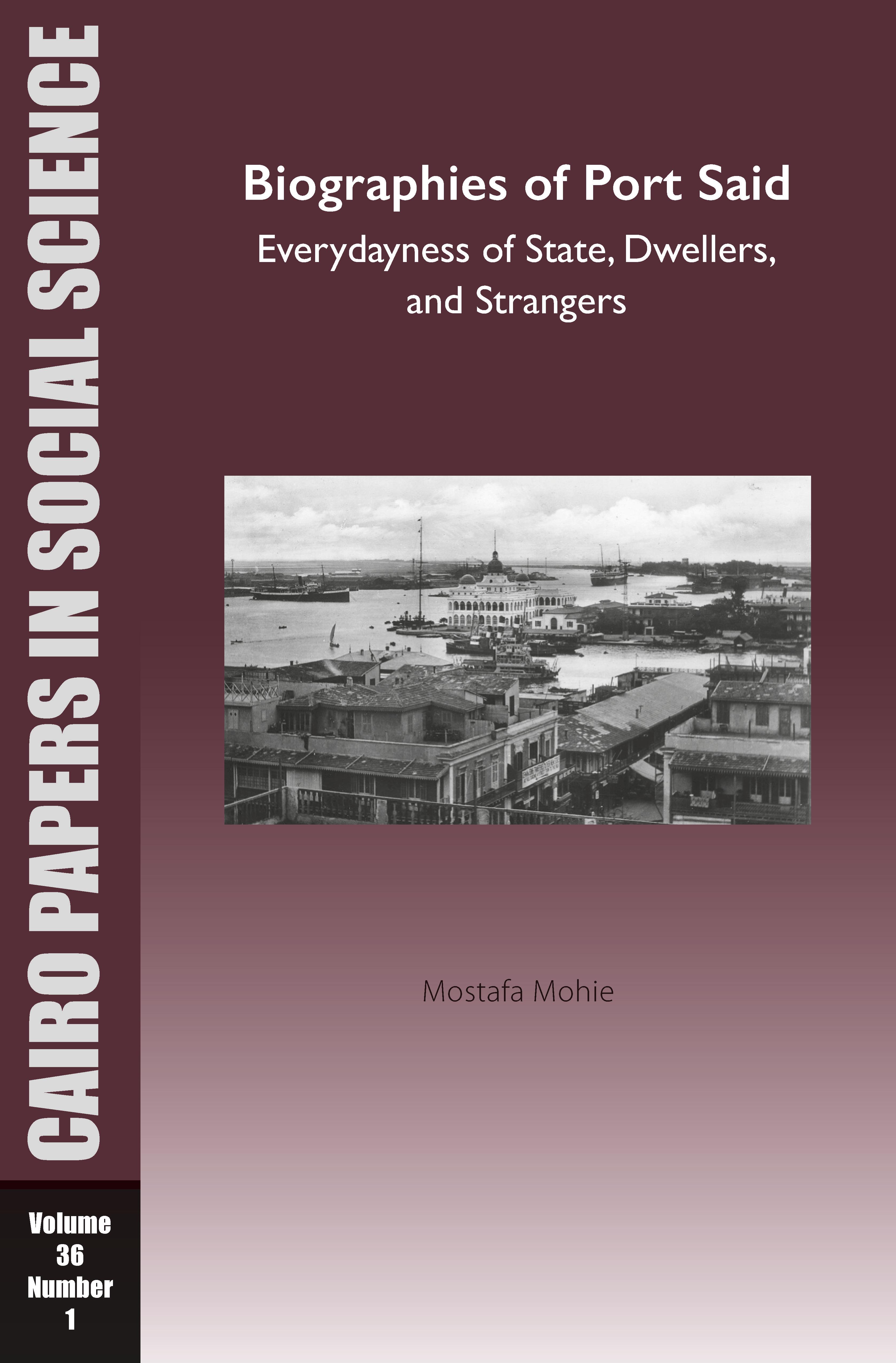
A study of how the city of Port Said was created, and its spaces mutually produced and transformed through the practices of both dwellers and the state
Founded in 1859, as part of the Suez Canal project and named after Khedive Said, the city of Port Said has always stood at the juncture of global, national, and local networks of forces, the city itself a reflection of many layers of Egypt’s modern history, from its colonial past through to the eras of national liberation and neoliberalism.
Drawing on Bruno Latour’s and Henri Lefebvre’s conceptual works, this study examines how the ‘social’ (encompassing all aspects of human life—the political, the economic, and the social) of the city of Port Said was created, and how its spaces were mutually produced and transformed through the practices of both dwellers and the state. Looking also at the temporality of these processes, Mostafa Mohie examines three key moments: al-tahgir (the forced migration that followed the outbreak of the 1967 war and remained until 1974, when Port Saidians were permitted to return to their homes following the 1973 October War); the declaration of the free trade zone in the mid-1970s; and the Port Said Stadium massacre in 2012.
Płać wygodnie kartą, Klarną, Apple Pay lub Google Pay. Nie jesteś zadowolony? Zawsze masz 14-dniową gwarancję zwrotu pieniędzy. Więcej przeczytasz w naszych warunkach. Masz pytania? Napisz do nas na hello@memmo.org.
Memmo ułatwia naukę – gdziekolwiek jesteś na świecie. U nas znajdziesz podręczniki i sprytne narzędzia do nauki w jednym miejscu: streszczenia, quizy, podcasty i fiszki. A do tego Ted, Twój kumpel do nauki, który odpowie na wszystko, co Cię nurtuje. Ponad 50 000 studentów już tu się uczy – stworzone, byś uczył się szybciej i mniej stresował.