
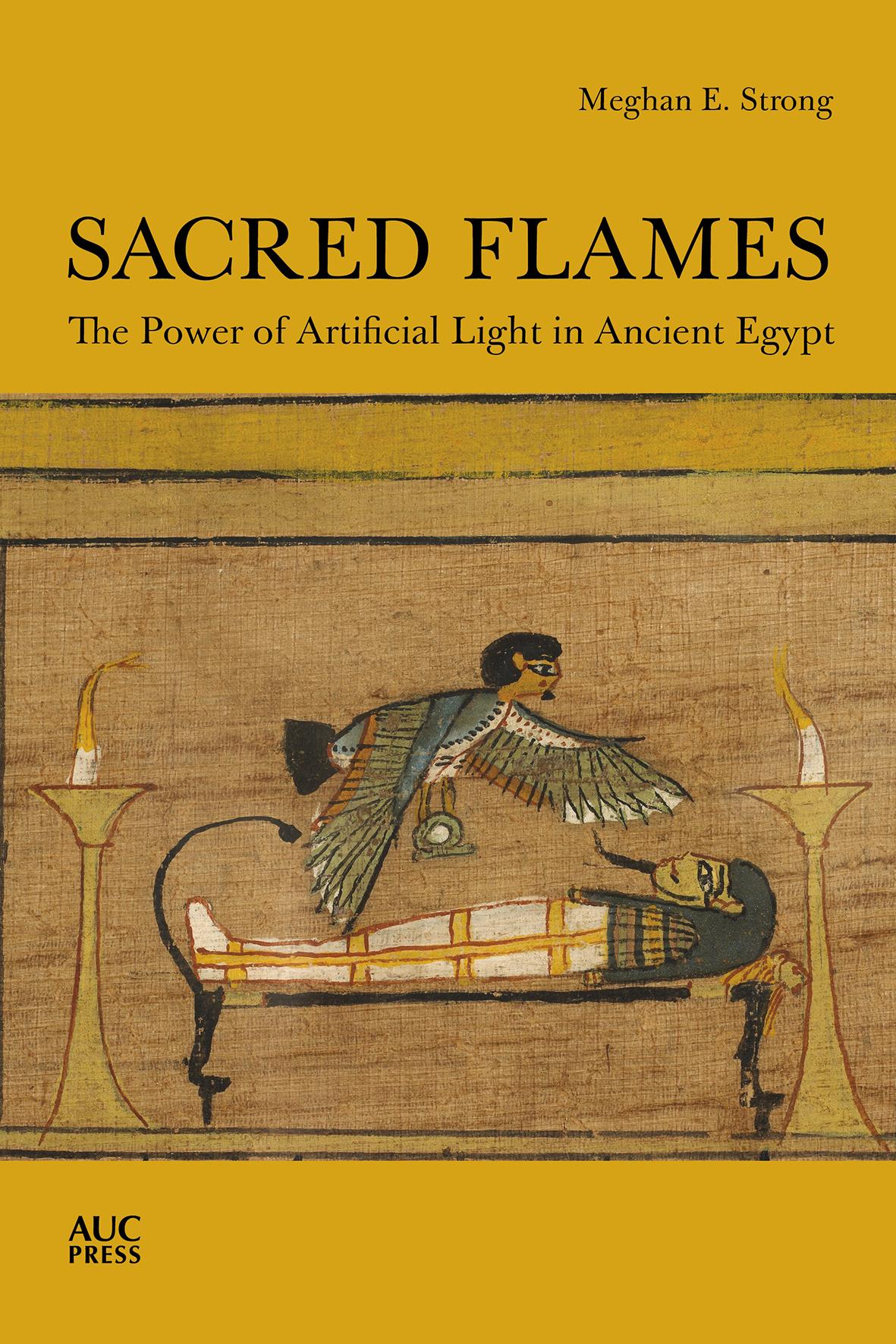
A fascinating examination of the role of lighting in ancient Egyptian culture
Artificial lighting is one of the earliest tools used by humans. By the time we began to paint cave walls, we were producing lamps consisting of an illuminant, a fat or oil, and a wick, such as a strip of fabric or a piece of reed or wood.
Drawing on archaeological, textual, and iconographic sources, Meghan Strong examines the symbolic part that artificial lighting played in religious, economic, and social spheres in ancient Egyptian culture. From the earliest identifiable examples of lighting devices to the infiltration of Hellenistic lamps in the seventh century BC, Sacred Flames explores the sensory experience of illumination in ancient Egypt, the shadows, sheen, color, and movement that resulted when lighting interacted with different spaces and surfaces. The soft, flickering light from lamps or hand-held lighting devices not only facilitated the navigation of darkened environments, such as allowing workers to see in underground chambers in the Valley of the Kings, or served as temple offerings, but also impacted upon the viewer’s perception of a space and the objects within it.
Sacred Flames illustrates the active role that lighting played in Egyptian society, providing a richer understanding of the symbolic and social value of artificial light and the role of lighting in ritual space and performance in ancient Egyptian culture, while serving as a case study of the broader impact of artificial light in the ancient world.
Płać wygodnie kartą, Klarną, Apple Pay lub Google Pay. Nie jesteś zadowolony? Zawsze masz 14-dniową gwarancję zwrotu pieniędzy. Więcej przeczytasz w naszych warunkach. Masz pytania? Napisz do nas na hello@memmo.org.
Memmo ułatwia naukę – gdziekolwiek jesteś na świecie. U nas znajdziesz podręczniki i sprytne narzędzia do nauki w jednym miejscu: streszczenia, quizy, podcasty i fiszki. A do tego Ted, Twój kumpel do nauki, który odpowie na wszystko, co Cię nurtuje. Ponad 50 000 studentów już tu się uczy – stworzone, byś uczył się szybciej i mniej stresował.