
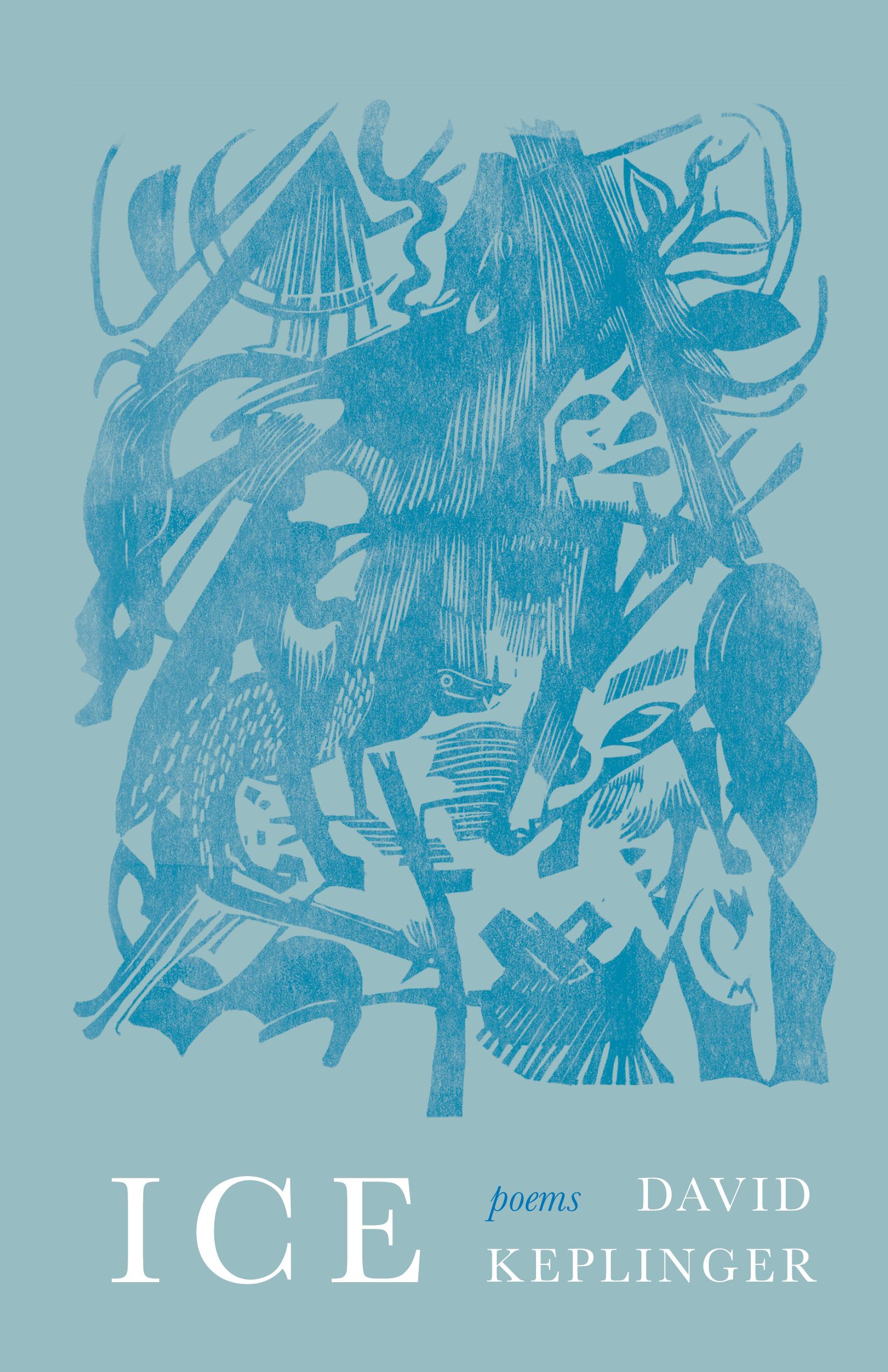
In Siberia’s Yakutia region, animal remains up to fifty thousand years old have reemerged due to climate change. Ice is an index of findings from the places most buried by time—in permafrost or in memory—and their careful excavations.
“I am asking how much more / I have to learn from this,” David Keplinger writes. “You are asking that same question.” As Earth’s ancient ephemera floats to its rapidly liquifying surface, he turns to our predecessors—animal, hominid, literary, and familial. Visitants arrive in the form of Gilgamesh, “searching for a way to stay in pain forever”; a grandmother mending socks, “her face in the dark unchanging”; Emily Dickinson, lingering at her window; a lion cub, asleep in ice for millennia.
And alongside these comes a critique of the Anthropocene, of our drive to possess, of our hubris. Ice shelves collapse. Climate change melts layers of permafrost to reveal a severed wolf’s head. A pair of grease-smudged reading glasses calls up a mother’s phantom. “I am sorry / for the parts you gave me / that I’ve misshapen,” Keplinger writes. With each discovery comes the difficult knowledge of what—and who—we’ve harmed in the discovering
So is there “a point to all this singing”? Our ancestors cannot answer. The wolf’s head can’t, either. But sometimes, “out of the snow of confusion,” something answers, “saying gorgeous things like yes.” And the flowers “open up / their small green trumpets anyway.”
Płać wygodnie kartą, Klarną, Apple Pay lub Google Pay. Nie jesteś zadowolony? Zawsze masz 14-dniową gwarancję zwrotu pieniędzy. Więcej przeczytasz w naszych warunkach. Masz pytania? Napisz do nas na hello@memmo.org.
Memmo ułatwia naukę – gdziekolwiek jesteś na świecie. U nas znajdziesz podręczniki i sprytne narzędzia do nauki w jednym miejscu: streszczenia, quizy, podcasty i fiszki. A do tego Ted, Twój kumpel do nauki, który odpowie na wszystko, co Cię nurtuje. Ponad 50 000 studentów już tu się uczy – stworzone, byś uczył się szybciej i mniej stresował.