
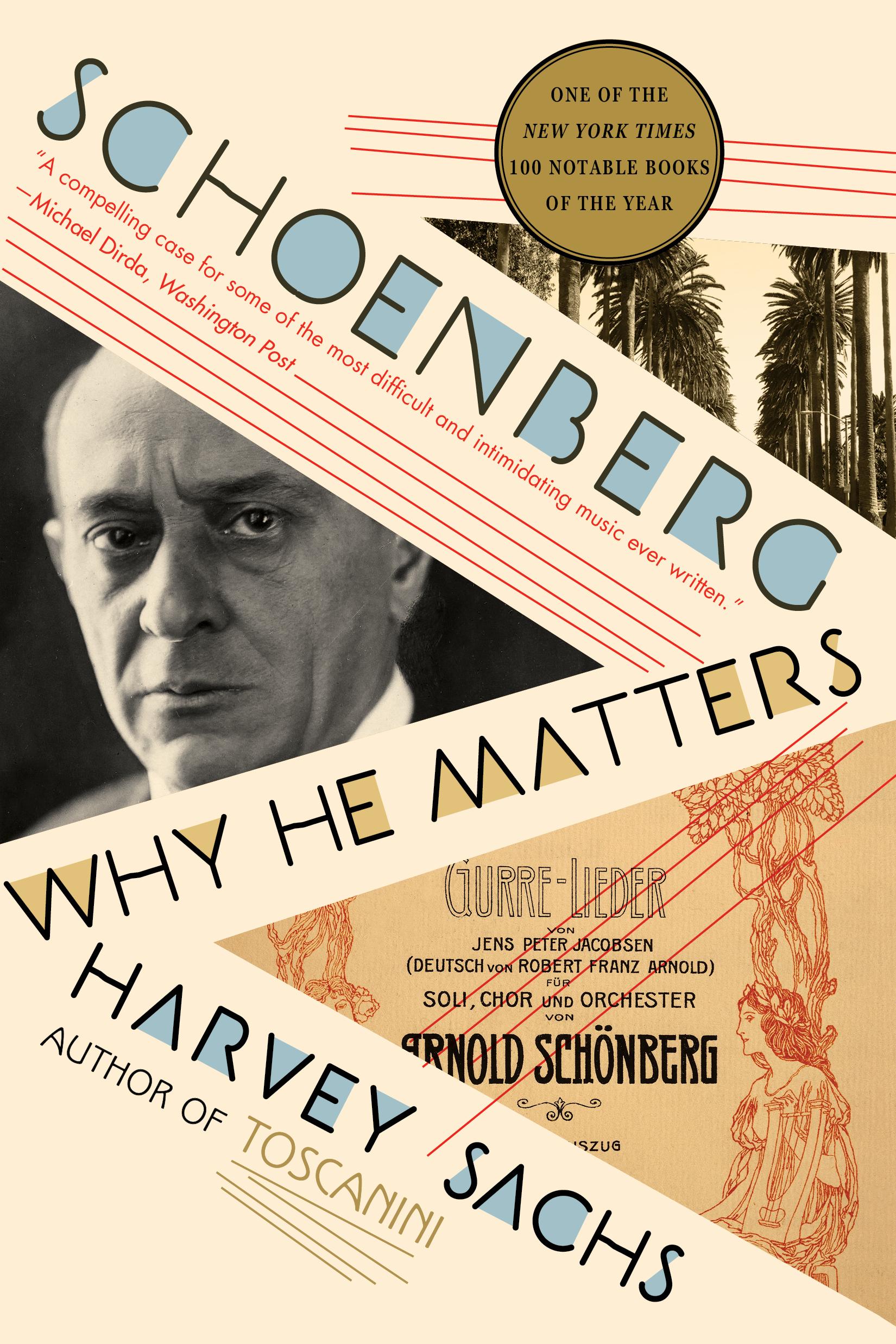
A NEW YORK TIMES NOTABLE BOOK OF 2023
A New Yorker Best Book of the Year
“[A]n immensely valuable source for anyone desiring an accessible overview of this endlessly controversial and chronically misunderstood giant of 20th-century music.” —John Adams, New York Times Book Review, cover review
An astonishingly lyrical biography that rescues Schoenberg from notoriety, restoring him to his rightful place in the pantheon of twentieth-century composers.
In his time, the Austrian American composer Arnold Schoenberg (1874–1951) was an international icon. His twelve-tone system was considered the future of music itself. Today, however, leading orchestras rarely play his works, and his name is met with apathy, if not antipathy. With this interpretative account, the acclaimed biographer of Toscanini finally restores Schoenberg to his rightful place in the canon, revealing him as one of the twentieth century’s most influential composers and teachers. Sachs shows how Schoenberg, a thorny character who composed thorny works, raged against the “Procrustean bed” of tradition. Defying his critics—among them the Nazis, who described his music as “degenerate”—he constantly battled the anti-Semitism that eventually precipitated his flight from Europe to Los Angeles. Yet Schoenberg, synthesizing Wagnerian excess with Brahmsian restraint, created a shock wave that never quite subsided, and, as Sachs powerfully argues, his compositions must be confronted by anyone interested in the past, present, or future of Western music.
Płać wygodnie kartą, Klarną, Apple Pay lub Google Pay. Nie jesteś zadowolony? Zawsze masz 14-dniową gwarancję zwrotu pieniędzy. Więcej przeczytasz w naszych warunkach. Masz pytania? Napisz do nas na hello@memmo.org.
Memmo ułatwia naukę – gdziekolwiek jesteś na świecie. U nas znajdziesz podręczniki i sprytne narzędzia do nauki w jednym miejscu: streszczenia, quizy, podcasty i fiszki. A do tego Ted, Twój kumpel do nauki, który odpowie na wszystko, co Cię nurtuje. Ponad 50 000 studentów już tu się uczy – stworzone, byś uczył się szybciej i mniej stresował.