
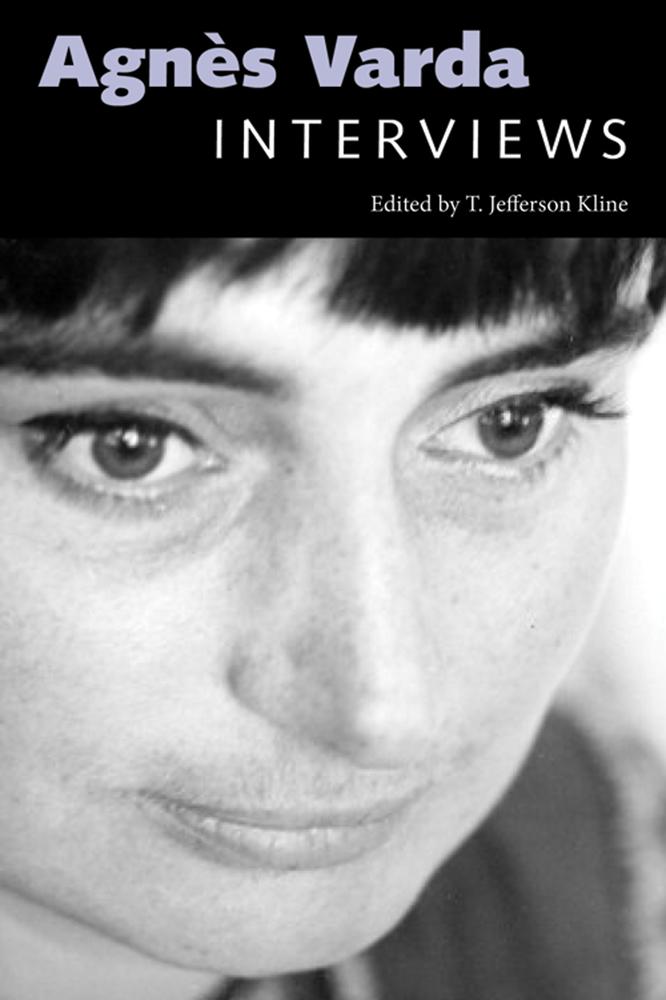
Over nearly sixty years, Agnès Varda (b. 1928) has given interviews that are revealing not only of her work, but of her remarkably ambiguous status. She has been called the “Mother of the New Wave” but suffered for many years for never having been completely accepted by the cinematic establishment in France. Varda's first film, La Pointe Courte (1954), displayed many of the characteristics of the two later films that launched the New Wave, Truffaut's 400 Blows and Godard's Breathless. In a low-budget film, using (as yet) unknown actors and working entirely outside the prevailing studio system, Varda completely abandoned the “tradition of quality” that Truffaut was at that very time condemning in the pages of Cahiers du cinema. Her work, however, was not “discovered” until after Truffaut and Godard had broken onto the scene in 1959. Varda's next film, Cleo from 5 to 7, attracted considerably more attention and was selected as France's official entry for the Festival in Cannes. Ultimately, however, this film and her work for the next fifty years continued to be overshadowed by her more famous male friends, many of whom she mentored and advised.
Her films have finally earned recognition as deeply probing and fundamental to the growing awareness in France of women's issues and the role of women in the cinema. “I'm not philosophical,” she says, “not metaphysical. Feelings are the ground on which people can be led to think about things. I try to show everything that happens in such a way and ask questions so as to leave the viewers free to make their own judgments.” The panoply of interviews here emphasizes her core belief that “we never stop learning” and reveal the wealth of ways to answer her questions.
Her films have finally earned recognition as deeply probing and fundamental to the growing awareness in France of women's issues and the role of women in the cinema. “I'm not philosophical,” she says, “not metaphysical. Feelings are the ground on which people can be led to think about things. I try to show everything that happens in such a way and ask questions so as to leave the viewers free to make their own judgments.” The panoply of interviews here emphasizes her core belief that “we never stop learning” and reveal the wealth of ways to answer her questions.
Płać wygodnie kartą, Klarną, Apple Pay lub Google Pay. Nie jesteś zadowolony? Zawsze masz 14-dniową gwarancję zwrotu pieniędzy. Więcej przeczytasz w naszych warunkach. Masz pytania? Napisz do nas na hello@memmo.org.
Memmo ułatwia naukę – gdziekolwiek jesteś na świecie. U nas znajdziesz podręczniki i sprytne narzędzia do nauki w jednym miejscu: streszczenia, quizy, podcasty i fiszki. A do tego Ted, Twój kumpel do nauki, który odpowie na wszystko, co Cię nurtuje. Ponad 50 000 studentów już tu się uczy – stworzone, byś uczył się szybciej i mniej stresował.
Może Ci się spodobać
Kup książkę0