
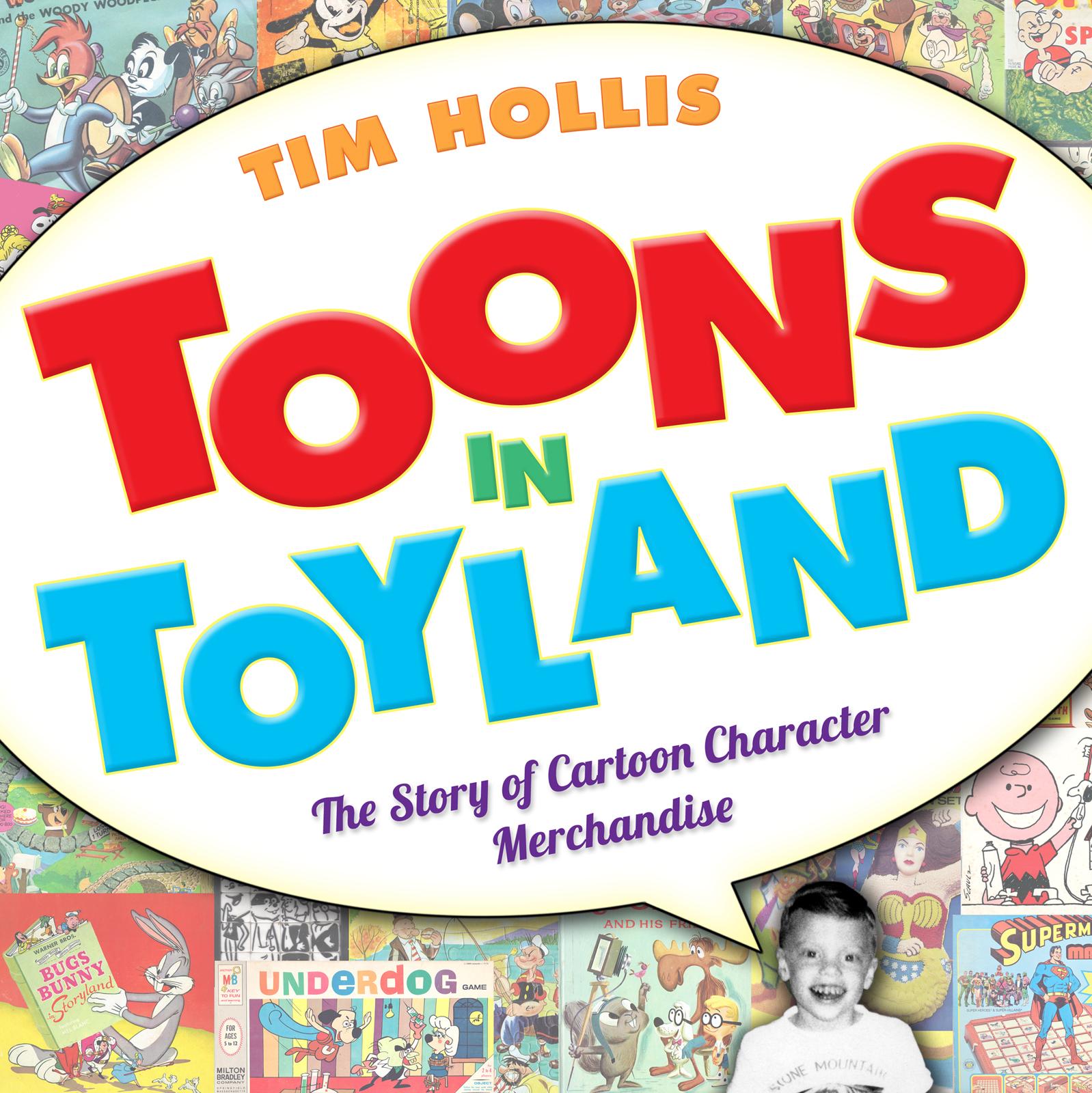
Every living American adult likely prized one childhood toy that featured the happy image of an animated cartoon or comic strip character. There is an ever-growing market for these collectibles, and stacks of books pose as pricing guides. Yet Tim Hollis is the first to examine the entire story of character licensing and merchandising from a historical view.
Toons in Toyland focuses mainly on the post-World War II years, circa 1946-1980, when the last baby boomers were in high school. During those years, the mass merchandising of cartoon characters peaked. However, the concept of licensing cartoon characters for toys, trinkets, and other merchandise dates back to the very first newspaper comics character, the Yellow Kid, who debuted in 1896 and was soon appearing on a variety of items. Eventually, cartoon producers and comic strip artists counted on merchandising as a major part of their revenue stream. It still plays a tremendous role in the success of the Walt Disney Company and many others today.
Chapters examine storybooks (such as Little Golden Books), comic books, records, board games, jigsaw puzzles, optical toys (including View-Master and Kenner's Give-a-Show Projector), and holiday paraphernalia. Extending even beyond toys, food companies licensed characters galore--remember the Peanuts characters plugging bread and Dolly Madison snacks? And roadside attractions, amusement parks, campgrounds, and restaurants--think Yogi Bear and Jellystone Park Campgrounds--all bought a bit of cartoon magic to lure the green waves of tourists' dollars.
Toons in Toyland focuses mainly on the post-World War II years, circa 1946-1980, when the last baby boomers were in high school. During those years, the mass merchandising of cartoon characters peaked. However, the concept of licensing cartoon characters for toys, trinkets, and other merchandise dates back to the very first newspaper comics character, the Yellow Kid, who debuted in 1896 and was soon appearing on a variety of items. Eventually, cartoon producers and comic strip artists counted on merchandising as a major part of their revenue stream. It still plays a tremendous role in the success of the Walt Disney Company and many others today.
Chapters examine storybooks (such as Little Golden Books), comic books, records, board games, jigsaw puzzles, optical toys (including View-Master and Kenner's Give-a-Show Projector), and holiday paraphernalia. Extending even beyond toys, food companies licensed characters galore--remember the Peanuts characters plugging bread and Dolly Madison snacks? And roadside attractions, amusement parks, campgrounds, and restaurants--think Yogi Bear and Jellystone Park Campgrounds--all bought a bit of cartoon magic to lure the green waves of tourists' dollars.
Strony: 312
Kategoria: Film- & Medievetenskap
e-ISBN: 9781626745001
Waga przesyłki: 1.2 kg
Wysyłka w ciągu: 1-2 dni
Płać wygodnie kartą, Klarną, Apple Pay lub Google Pay. Nie jesteś zadowolony? Zawsze masz 14-dniową gwarancję zwrotu pieniędzy. Więcej przeczytasz w naszych warunkach. Masz pytania? Napisz do nas na hello@memmo.org.
Memmo ułatwia naukę – gdziekolwiek jesteś na świecie. U nas znajdziesz podręczniki i sprytne narzędzia do nauki w jednym miejscu: streszczenia, quizy, podcasty i fiszki. A do tego Ted, Twój kumpel do nauki, który odpowie na wszystko, co Cię nurtuje. Ponad 50 000 studentów już tu się uczy – stworzone, byś uczył się szybciej i mniej stresował.
Może Ci się spodobać
Kup książkę0