
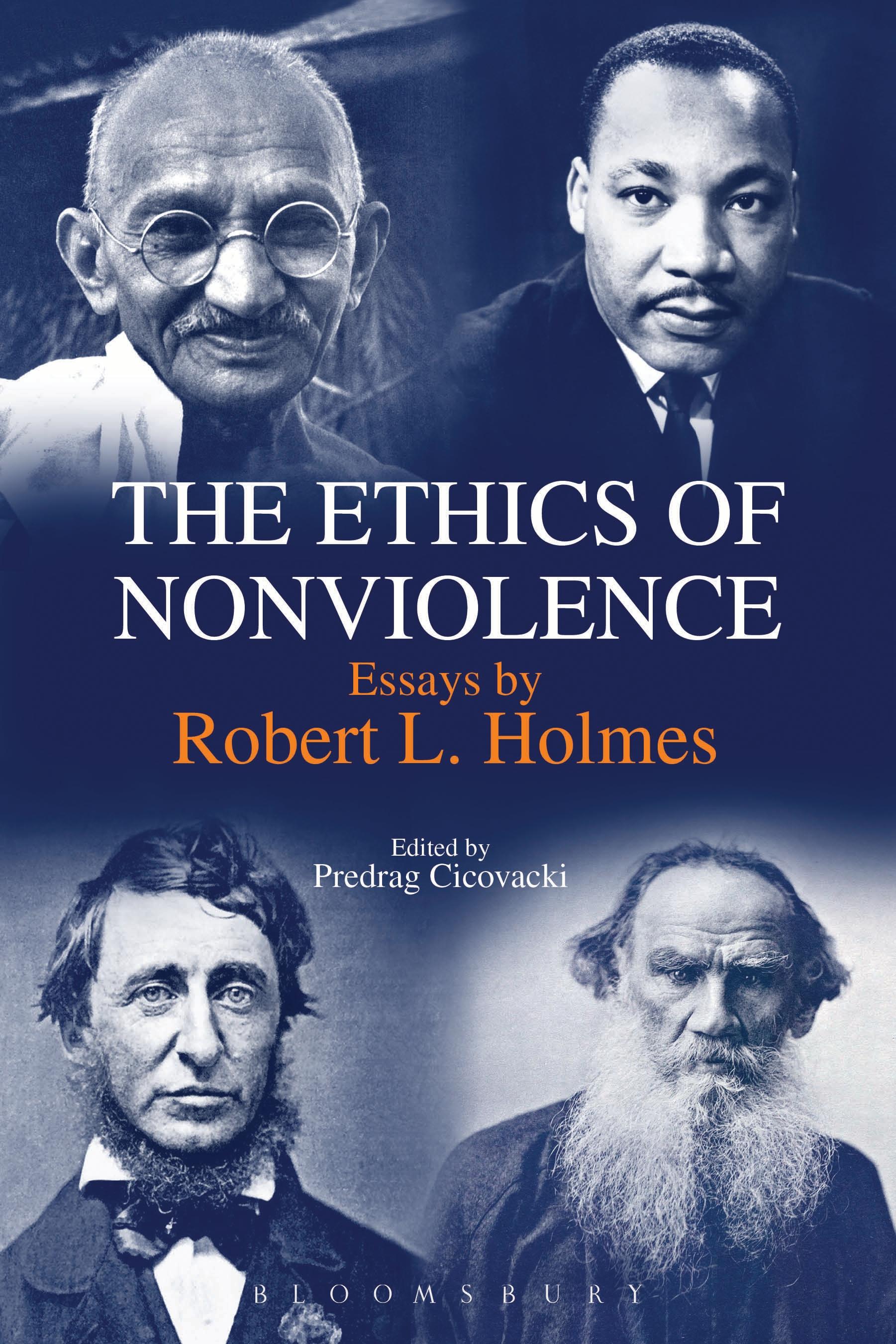
Robert Holmes is one of the leading proponents of nonviolence in the United States, and his influence extends to the rest of the world. However, he has never presented his views on nonviolence in full-length book form. The Ethics of Nonviolence brings together his best essays on the topic, both classic works and more obscure pieces, as well as several important essays that have never been published.
Holmes started his career by following Dewey and James, and then turned toward metaethics. The Vietnam War finally led him toward moral problems related to war and violence. For the last forty years he has been a great proponent of nonviolence and pacifism in the style of Tolstoy and Gandhi.
If ethics is meant to be more than a purely academic exercise, the theoretical ethics of philosophy must be shown to be relevant to applied morality; the ongoing process of making moral judgments must add value to the world we live in. For Robert Holmes, no aspect of reality is more in need of ethical thinking and reform than the culture of war and violence that cannot be ignored. There are morally viable alternatives to this violence, Holmes argues, and he scrutinizes the sources and implications of such positions. Holmes shows that nonviolence and pacifism can lead us toward a more peaceful and humanely dignified world.
Holmes started his career by following Dewey and James, and then turned toward metaethics. The Vietnam War finally led him toward moral problems related to war and violence. For the last forty years he has been a great proponent of nonviolence and pacifism in the style of Tolstoy and Gandhi.
If ethics is meant to be more than a purely academic exercise, the theoretical ethics of philosophy must be shown to be relevant to applied morality; the ongoing process of making moral judgments must add value to the world we live in. For Robert Holmes, no aspect of reality is more in need of ethical thinking and reform than the culture of war and violence that cannot be ignored. There are morally viable alternatives to this violence, Holmes argues, and he scrutinizes the sources and implications of such positions. Holmes shows that nonviolence and pacifism can lead us toward a more peaceful and humanely dignified world.
Płać wygodnie kartą, Klarną, Apple Pay lub Google Pay. Nie jesteś zadowolony? Zawsze masz 14-dniową gwarancję zwrotu pieniędzy. Więcej przeczytasz w naszych warunkach. Masz pytania? Napisz do nas na hello@memmo.org.
Memmo ułatwia naukę – gdziekolwiek jesteś na świecie. U nas znajdziesz podręczniki i sprytne narzędzia do nauki w jednym miejscu: streszczenia, quizy, podcasty i fiszki. A do tego Ted, Twój kumpel do nauki, który odpowie na wszystko, co Cię nurtuje. Ponad 50 000 studentów już tu się uczy – stworzone, byś uczył się szybciej i mniej stresował.