
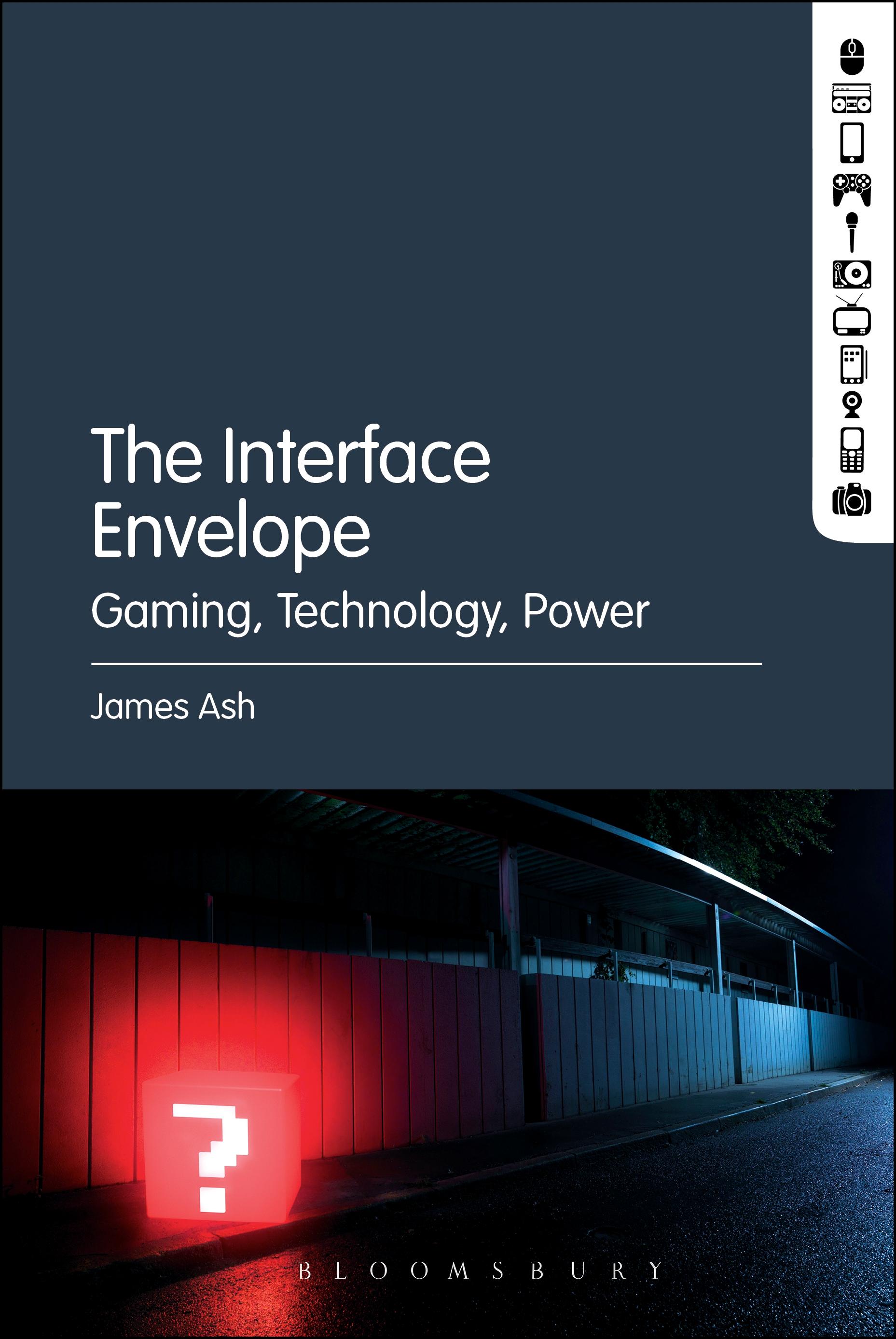
In The Interface Envelope, James Ash develops a series of concepts to understand how digital interfaces work to shape the spatial and temporal perception of players. Drawing upon examples from videogame design and work from post-phenomenology, speculative realism, new materialism and media theory, Ash argues that interfaces create envelopes, or localised foldings of space time, around which bodily and perceptual capacities are organised for the explicit production of economic profit. Modifying and developing Bernard Stiegler's account of psychopower and Warren Neidich's account of neuropower, Ash argues the aim of interface designers and publishers is the production of envelope power. Envelope power refers to the ways that interfaces in games are designed to increase users perceptual and habitual capacities to sense difference. Examining a range of examples from specific videogames, Ash identities a series of logics that are key to producing envelope power and shows how these logics have intensified over the last thirty years. In turn, Ash suggests that the logics of interface envelopes in videogames are spreading to other types of interface. In doing so life becomes enveloped as the environments people inhabit becoming increasingly loaded with digital interfaces. Rather than simply negative, Ash develops a series of responses to the potential problematics of interface envelopes and envelope power and emphasizes their pharmacological nature.
Płać wygodnie kartą, Klarną, Apple Pay lub Google Pay. Nie jesteś zadowolony? Zawsze masz 14-dniową gwarancję zwrotu pieniędzy. Więcej przeczytasz w naszych warunkach. Masz pytania? Napisz do nas na hello@memmo.org.
Memmo ułatwia naukę – gdziekolwiek jesteś na świecie. U nas znajdziesz podręczniki i sprytne narzędzia do nauki w jednym miejscu: streszczenia, quizy, podcasty i fiszki. A do tego Ted, Twój kumpel do nauki, który odpowie na wszystko, co Cię nurtuje. Ponad 50 000 studentów już tu się uczy – stworzone, byś uczył się szybciej i mniej stresował.