
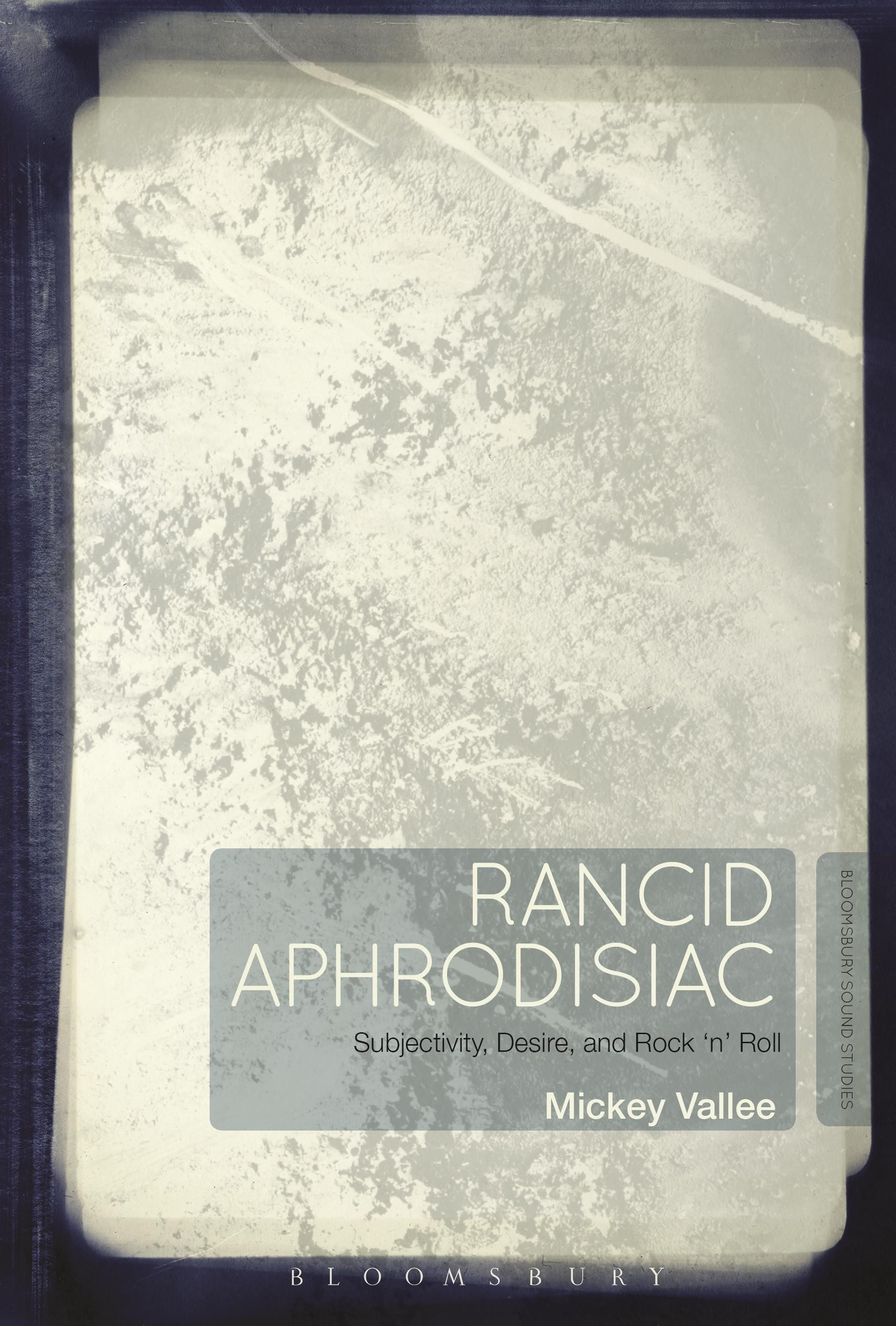
It has been sixty years since Rock 'n' Roll exploded into the mainstream, yet we remain limited in our understanding of how its bawdy excesses absorbed into the annals of mass popularity in such a short amount of time. Mickey Vallee asks: what if the Rock 'n' Roll eruption was nothing less than postwar consumer capitalism at its very best, precisely because it was taken as its very worst?
Vallee explores the emergence of Rock 'n' Roll's from an entirely new theoretical disposition in order to answer this question, drawing mainly from Lacanian cultural psychoanalysis to reveal that Rock 'n' Roll was far more conformist than we are generally led to believe; namely, that it was conformist with emerging liberal principles of freedom from the tyranny of the state. Vallee supports this proposition with detailed analyses of familiar (and not-so-familiar) characters and texts in Rock 'n' Roll to suggest that the disruption of our symbolic economy was symptomatic of a new cultural logic of economic freedom.
While not denying Rock 'n' Roll's role in the pre-civil rights movement, Vallee refuses the possibility to deny that Rock 'n' Roll's symbolic efficacy ultimately coordinated a neoliberal foundation to the ideology of individualism in its rhythm, instrumentation, lyrics, and vocals, where its power was at its most effective and affective.
Vallee explores the emergence of Rock 'n' Roll's from an entirely new theoretical disposition in order to answer this question, drawing mainly from Lacanian cultural psychoanalysis to reveal that Rock 'n' Roll was far more conformist than we are generally led to believe; namely, that it was conformist with emerging liberal principles of freedom from the tyranny of the state. Vallee supports this proposition with detailed analyses of familiar (and not-so-familiar) characters and texts in Rock 'n' Roll to suggest that the disruption of our symbolic economy was symptomatic of a new cultural logic of economic freedom.
While not denying Rock 'n' Roll's role in the pre-civil rights movement, Vallee refuses the possibility to deny that Rock 'n' Roll's symbolic efficacy ultimately coordinated a neoliberal foundation to the ideology of individualism in its rhythm, instrumentation, lyrics, and vocals, where its power was at its most effective and affective.
Strony: 160
Kategoria: Film- & Medievetenskap
e-ISBN: 9781623560140
Waga przesyłki: 1.2 kg
Wysyłka w ciągu: 1-2 dni
Płać wygodnie kartą, Klarną, Apple Pay lub Google Pay. Nie jesteś zadowolony? Zawsze masz 14-dniową gwarancję zwrotu pieniędzy. Więcej przeczytasz w naszych warunkach. Masz pytania? Napisz do nas na hello@memmo.org.
Memmo ułatwia naukę – gdziekolwiek jesteś na świecie. U nas znajdziesz podręczniki i sprytne narzędzia do nauki w jednym miejscu: streszczenia, quizy, podcasty i fiszki. A do tego Ted, Twój kumpel do nauki, który odpowie na wszystko, co Cię nurtuje. Ponad 50 000 studentów już tu się uczy – stworzone, byś uczył się szybciej i mniej stresował.