
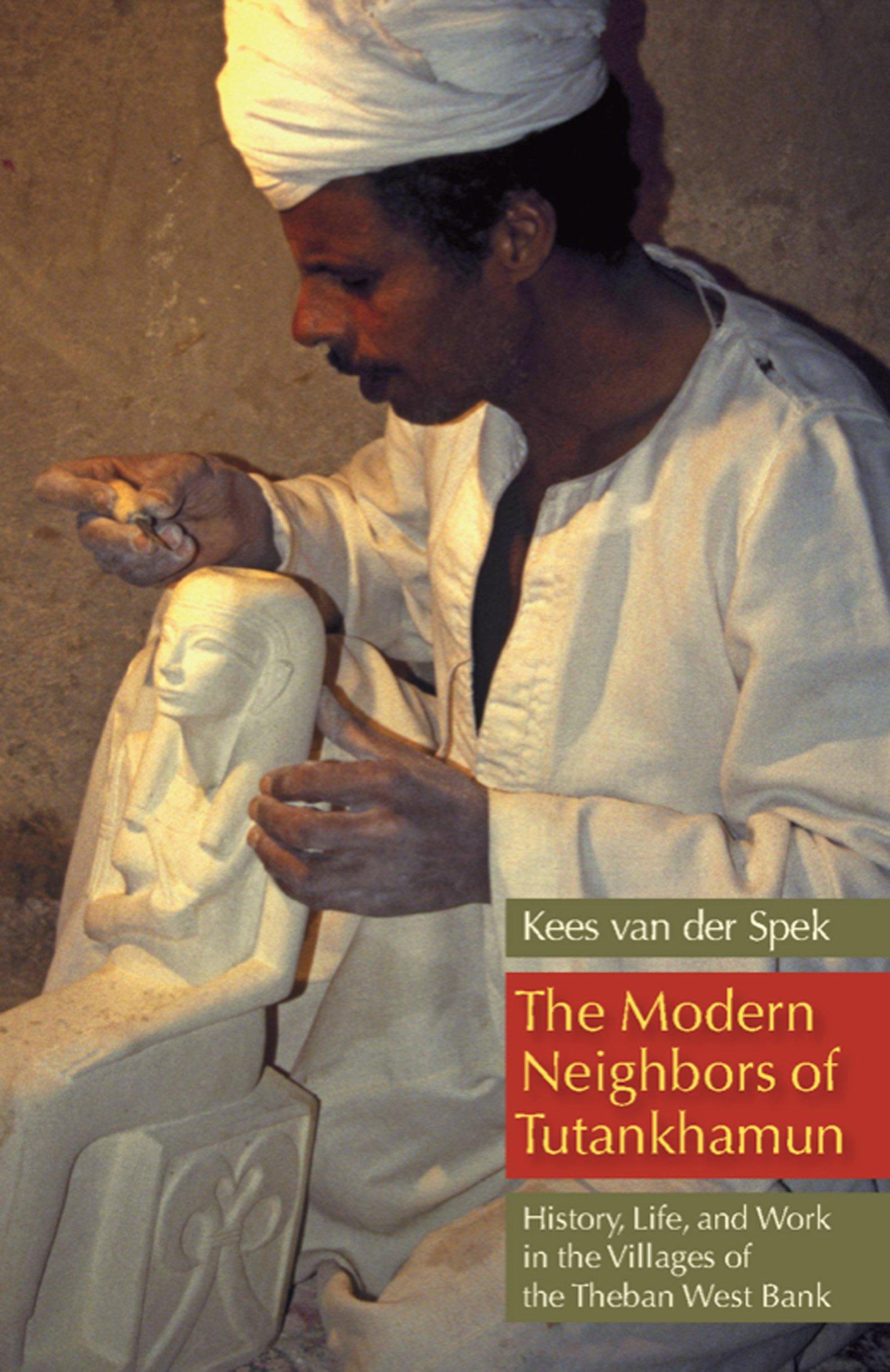
Until their recent demolition, the colorful mud-brick hamlets of al-Qurna village, situated among the Noble Tombs of the Theban Necropolis on the Luxor West Bank, were home to a vibrant community.
Inhabiting a place of intensive Egyptological research for over two centuries, it was inevitable that Qurnawis should become part of the history of Egyptology and the development of archaeological practice in the Theban Necropolis. But they have mostly been regarded as laborers for the excavation teams or dealers in the illicit antiquities trade. The modern people inhabiting the ancient burial grounds have themselves rarely been considered.
By demonstrating the multiplicity of economic activities that are carried out in al-Qurna, this study counters the villagers' stereotypical representation as tomb robbers, and restores an understanding of who they are as people living their lives in the shadow of valued cultural heritage.
Płać wygodnie kartą, Klarną, Apple Pay lub Google Pay. Nie jesteś zadowolony? Zawsze masz 14-dniową gwarancję zwrotu pieniędzy. Więcej przeczytasz w naszych warunkach. Masz pytania? Napisz do nas na hello@memmo.org.
Memmo ułatwia naukę – gdziekolwiek jesteś na świecie. U nas znajdziesz podręczniki i sprytne narzędzia do nauki w jednym miejscu: streszczenia, quizy, podcasty i fiszki. A do tego Ted, Twój kumpel do nauki, który odpowie na wszystko, co Cię nurtuje. Ponad 50 000 studentów już tu się uczy – stworzone, byś uczył się szybciej i mniej stresował.
Może Ci się spodobać
Kup książkę0