
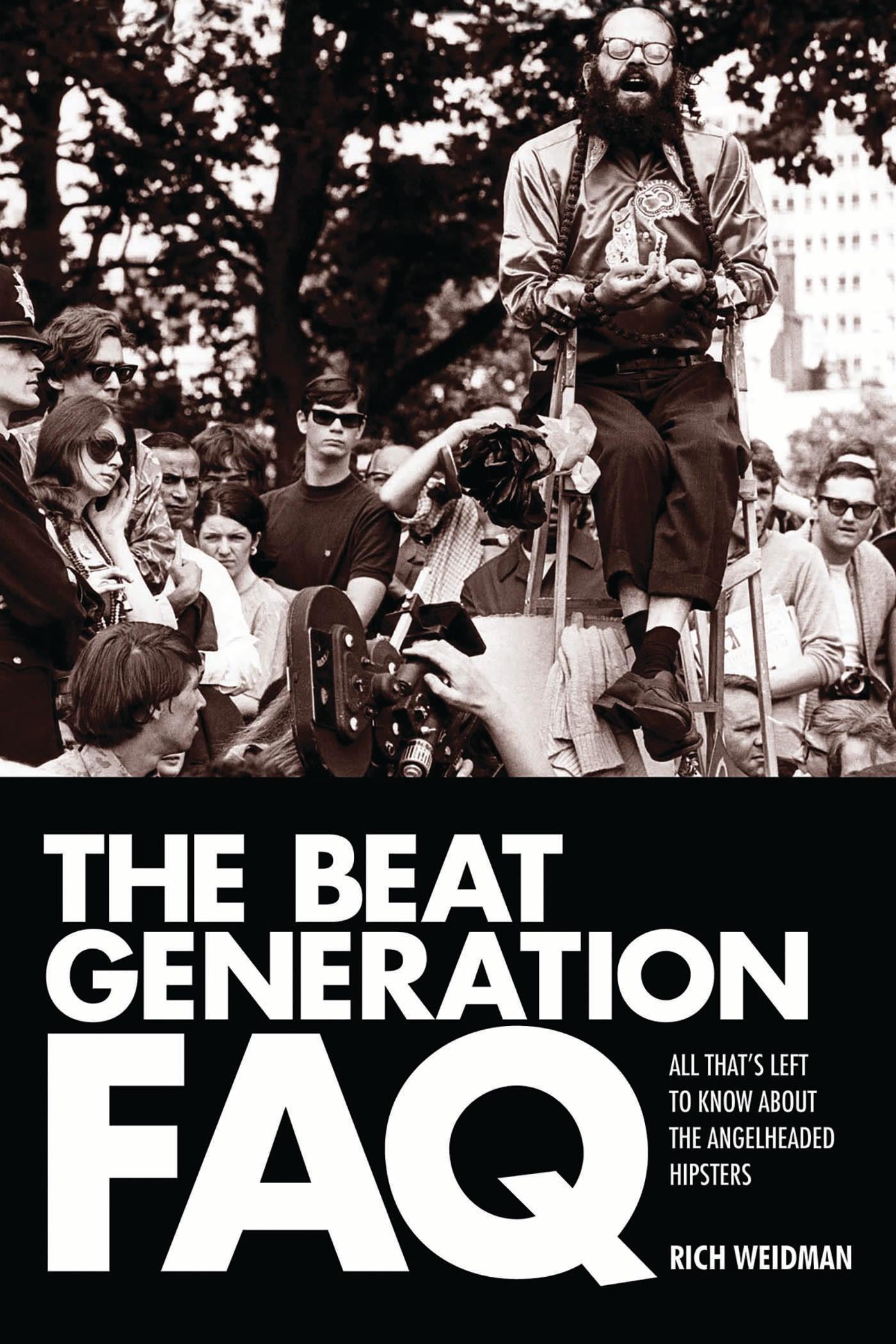
The Beat Generation FAQ is an informative and entertaining look at the enigmatic authors and cutting-edge works that shaped this fascinating cultural and literary movement. Disillusioned with the repression and conformity encompassing post-World War II life in the United States, the Beat writers sought creative alternatives to the mind-numbing banality of modern culture.
Beat Generation writers were no strangers to controversy: Both Allen Ginsberg's prophetic, William Blakean-style poem “Howl” (1956) and William S. Burroughs' groundbreaking novel Naked Lunch (1959) led to obscenity trials, while Jack Kerouac's highly influential novel On the Road (1957) was blamed by the establishment for corrupting the nation's youth and continues to this day to serve as a beacon of hipster culture and the bohemian lifestyle.
The Beat writers shared a vision for a new type of literature, one that escaped the boundaries of academia and employed an organic use of language, inspired by the spontaneity and improvisational nature of jazz music and abstract expressionism (Kerouac coined this writing style “spontaneous prose”). In search of deeper meaning, Beat Generation writers experimented not only with language but also with spirituality, art, drugs, sexuality, and unconventional lifestyles. Although the movement as a whole flamed out quickly in the early 1960s, replaced by the onset of the hippie counterculture, the Beats made an indelible mark on the nation's consciousness and left a long-lasting influence on its art and culture. This book details the movement – its works, creative forces, and its legacy.
Beat Generation writers were no strangers to controversy: Both Allen Ginsberg's prophetic, William Blakean-style poem “Howl” (1956) and William S. Burroughs' groundbreaking novel Naked Lunch (1959) led to obscenity trials, while Jack Kerouac's highly influential novel On the Road (1957) was blamed by the establishment for corrupting the nation's youth and continues to this day to serve as a beacon of hipster culture and the bohemian lifestyle.
The Beat writers shared a vision for a new type of literature, one that escaped the boundaries of academia and employed an organic use of language, inspired by the spontaneity and improvisational nature of jazz music and abstract expressionism (Kerouac coined this writing style “spontaneous prose”). In search of deeper meaning, Beat Generation writers experimented not only with language but also with spirituality, art, drugs, sexuality, and unconventional lifestyles. Although the movement as a whole flamed out quickly in the early 1960s, replaced by the onset of the hippie counterculture, the Beats made an indelible mark on the nation's consciousness and left a long-lasting influence on its art and culture. This book details the movement – its works, creative forces, and its legacy.
Płać wygodnie kartą, Klarną, Apple Pay lub Google Pay. Nie jesteś zadowolony? Zawsze masz 14-dniową gwarancję zwrotu pieniędzy. Więcej przeczytasz w naszych warunkach. Masz pytania? Napisz do nas na hello@memmo.org.
Memmo ułatwia naukę – gdziekolwiek jesteś na świecie. U nas znajdziesz podręczniki i sprytne narzędzia do nauki w jednym miejscu: streszczenia, quizy, podcasty i fiszki. A do tego Ted, Twój kumpel do nauki, który odpowie na wszystko, co Cię nurtuje. Ponad 50 000 studentów już tu się uczy – stworzone, byś uczył się szybciej i mniej stresował.