
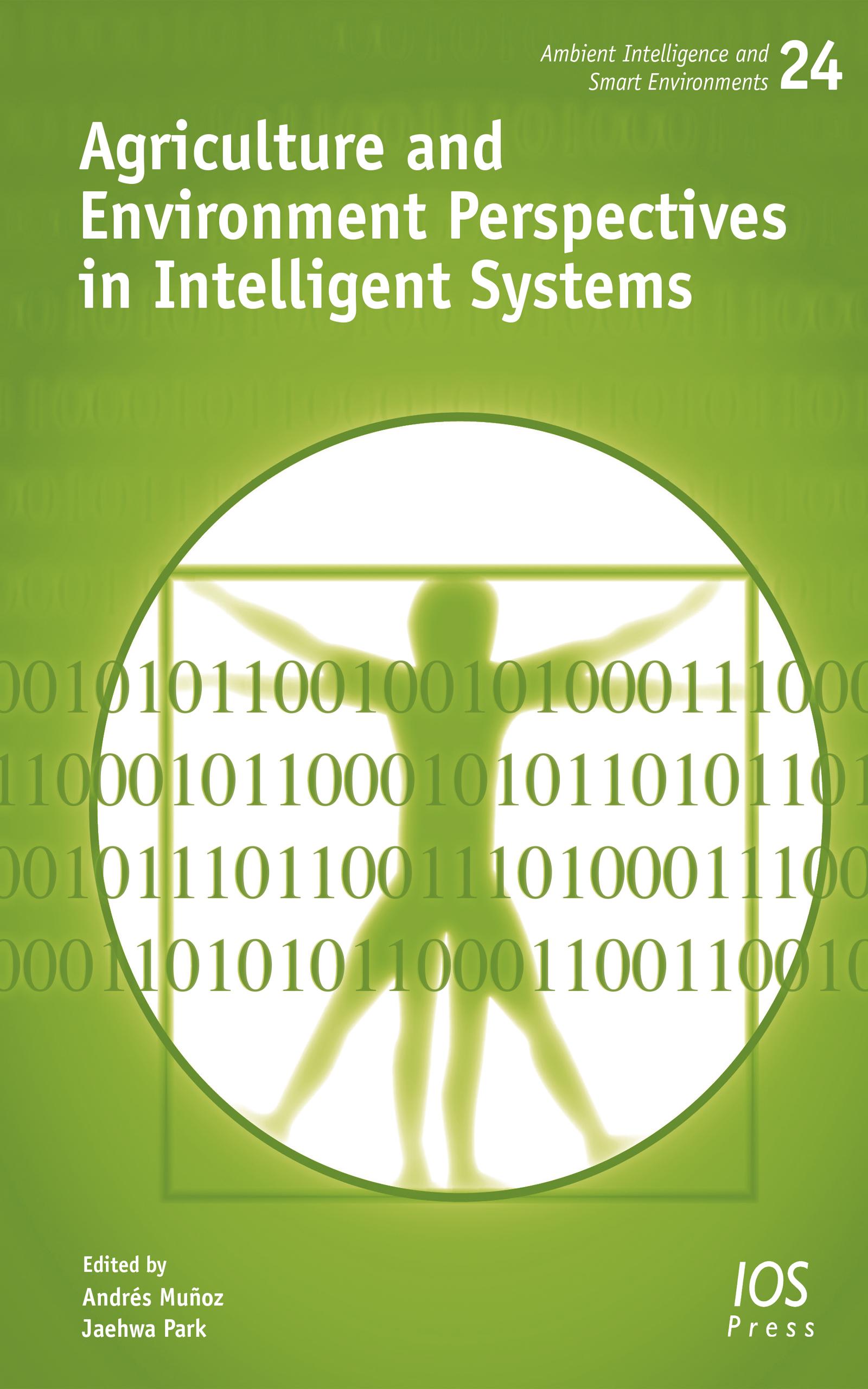
The eventual aim when applying digital technologies in agriculture is to replace or reduce the human labor required for agricultural production. Large amounts of heterogeneous data are essential for integration studies of automated agriculture, and the digitalization of agriculture is helping to fulfill the demand for this data, but management of the data gathered presents its own challenges. That is where the Intelligent Environment (IE) paradigm comes into play to guide the design of the systems, techniques and algorithms able to analyze the data and provide recommendations for farmers, managers and other stakeholders.
This book, Agriculture and Environment Perspectives in Intelligent Systems, is divided into 5 chapters. Chapter 1 explores the use of intelligent systems in Controlled Environment Agriculture (CEA) facilities; Chapter 2 reviews the adoption of intelligent systems in the research field of biomonitoring; Chapter 3 proposes an intelligent system to acquire and pre-process data for precision agriculture applications; Chapter 4 illustrates the use of intelligent algorithms to make more efficient use of scarce resources such as water; and Chapter 5 focuses on the generation of intelligent models to predict frosts in crops in south-eastern Spain.
There is still a need to bridge the gap between the needs of farmers, environmental managers and stakeholders and the solutions offered by information and communication technology. This book will be of interest to all those working in the field.
Płać wygodnie kartą, Klarną, Apple Pay lub Google Pay. Nie jesteś zadowolony? Zawsze masz 14-dniową gwarancję zwrotu pieniędzy. Więcej przeczytasz w naszych warunkach. Masz pytania? Napisz do nas na hello@memmo.org.
Memmo ułatwia naukę – gdziekolwiek jesteś na świecie. U nas znajdziesz podręczniki i sprytne narzędzia do nauki w jednym miejscu: streszczenia, quizy, podcasty i fiszki. A do tego Ted, Twój kumpel do nauki, który odpowie na wszystko, co Cię nurtuje. Ponad 50 000 studentów już tu się uczy – stworzone, byś uczył się szybciej i mniej stresował.