
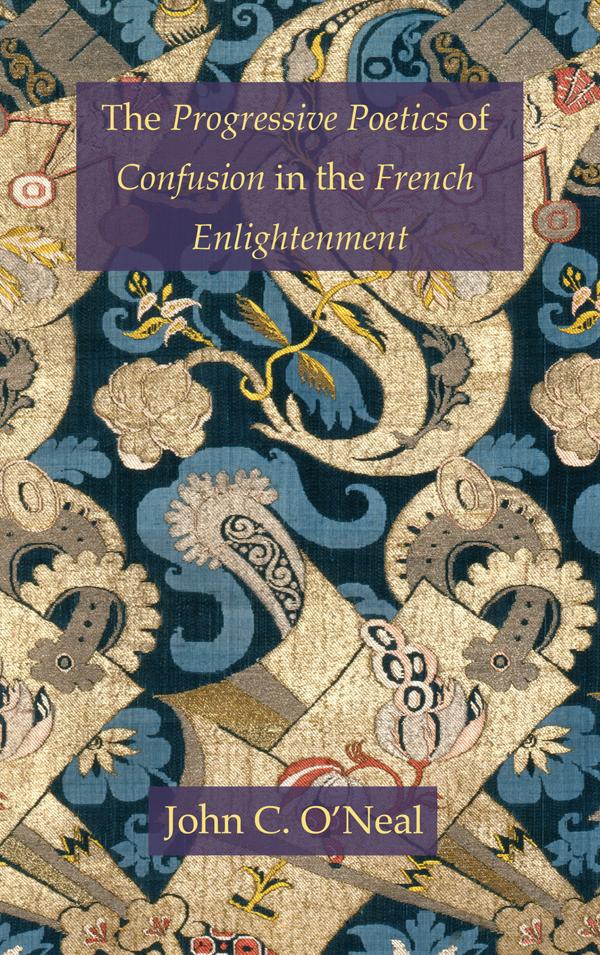
In The Progressive Poetics of Confusion in the French Enlightenment, John C. O'Neal draws largely on the etymological meaning of the word confusion as the action of mixing or blending in order to trace the development of this project which, he claims, aimed to reject dogmatic thinking in all of its forms and recognized the need to embrace complexity. Eighteenth-century thinkers used the notion of confusion in a progressive way to reorganize social classes, literary forms, metaphysical substances, scientific methods, and cultural categories such as taste and gender.
In this new work, O'Neal explores some of the paradoxes of the Enlightenment's theories of knowledge. Each of the chapters in this book attempts to address the questions raised by the eighteenth century's particular approach to confusion as a paradoxical reorganizing principle for the period's progressive agenda. Perhaps the most paradoxical thinker of his times, Diderot occupies a central place in this study of confusion. Other authors include Marivaux, Crébillon, Voltaire, and Pinel, among others. Rousseau and Sade serve as counterexamples to this kind of enlightenment but ultimately do not so much oppose the period's poetics of confusion as they complement it. The final chapter on Sade combines contemporary discussions of politics, society, culture, philosophy, and science in an encyclopedic way that at once reflects the entire period's tendencies and establishes important differences between Sade's thinking and that of the mainstream philosophies. Ultimately, confusion serves, O'Neal argues, as an overarching positive notion for the Enlightenment and its progressive ideals.
In this new work, O'Neal explores some of the paradoxes of the Enlightenment's theories of knowledge. Each of the chapters in this book attempts to address the questions raised by the eighteenth century's particular approach to confusion as a paradoxical reorganizing principle for the period's progressive agenda. Perhaps the most paradoxical thinker of his times, Diderot occupies a central place in this study of confusion. Other authors include Marivaux, Crébillon, Voltaire, and Pinel, among others. Rousseau and Sade serve as counterexamples to this kind of enlightenment but ultimately do not so much oppose the period's poetics of confusion as they complement it. The final chapter on Sade combines contemporary discussions of politics, society, culture, philosophy, and science in an encyclopedic way that at once reflects the entire period's tendencies and establishes important differences between Sade's thinking and that of the mainstream philosophies. Ultimately, confusion serves, O'Neal argues, as an overarching positive notion for the Enlightenment and its progressive ideals.
Strony: 240
Kategoria: Litteraturvetenskap & Teori
e-ISBN: 9781611490251
Waga przesyłki: 1.2 kg
Wysyłka w ciągu: 1-2 dni
Płać wygodnie kartą, Klarną, Apple Pay lub Google Pay. Nie jesteś zadowolony? Zawsze masz 14-dniową gwarancję zwrotu pieniędzy. Więcej przeczytasz w naszych warunkach. Masz pytania? Napisz do nas na hello@memmo.org.
Memmo ułatwia naukę – gdziekolwiek jesteś na świecie. U nas znajdziesz podręczniki i sprytne narzędzia do nauki w jednym miejscu: streszczenia, quizy, podcasty i fiszki. A do tego Ted, Twój kumpel do nauki, który odpowie na wszystko, co Cię nurtuje. Ponad 50 000 studentów już tu się uczy – stworzone, byś uczył się szybciej i mniej stresował.