
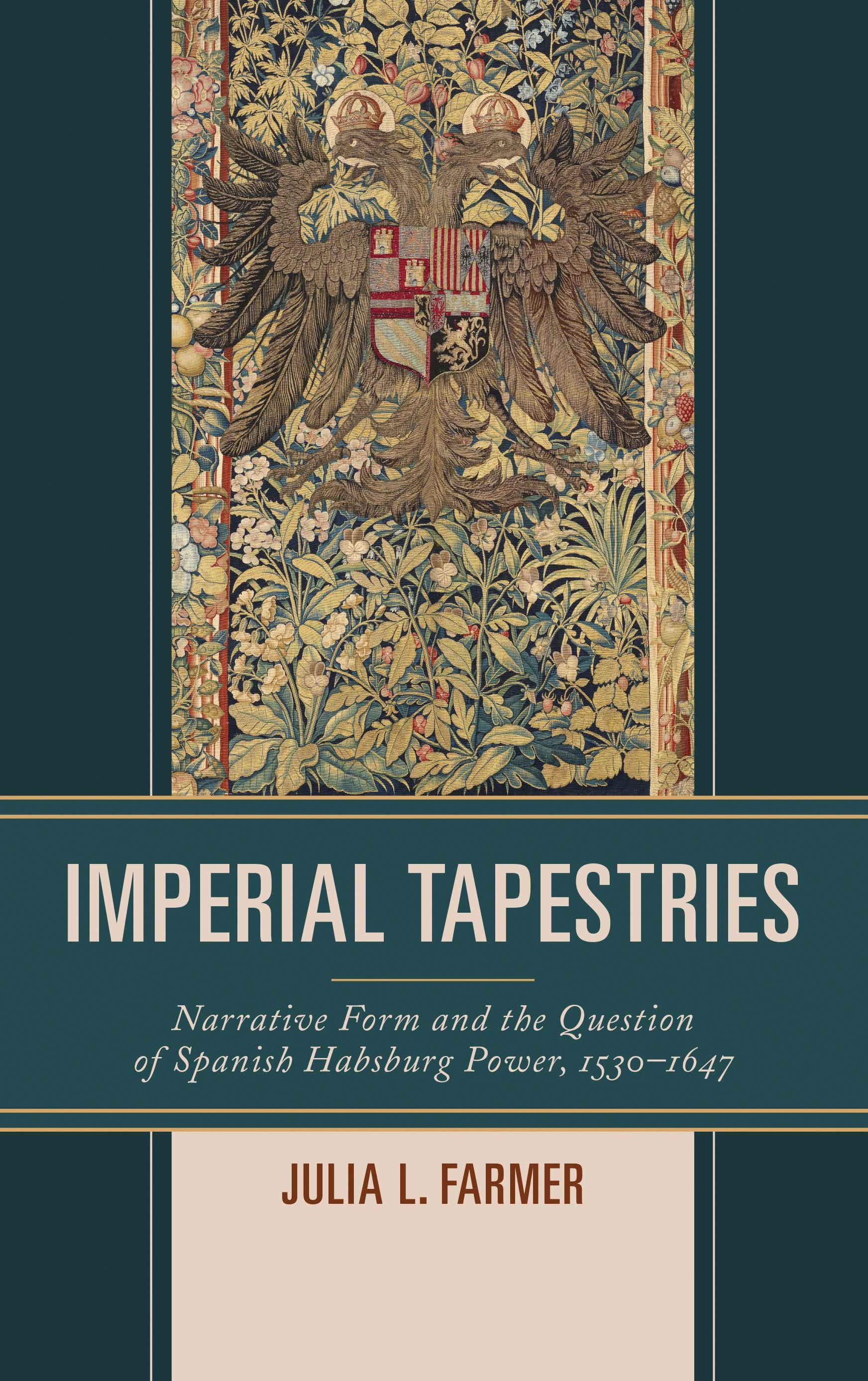
Imperial Tapestries represents a transnational approach to questions of monarchical power and literary form in early modern Europe. In line with Barbara Fuchs’s recent call for considerations of center versus periphery in Old World contexts, it explores the ways in which some of the most significant authors of the early modern era questioned the structures of Spanish Habsburg authority through “imperial texts”—texts that call attention to their organizational process—in order to mirror authors’ perceptions of the structures of Habsburg power.
With a contextual basis in Fuchs’ notion of imperium studies, ideas of self-fashioning, and theories of early modern reading, the study explores the ways in which complex narrative forms in the early modern period reflected the concerns with the structures of Habsburg imperial power subtly portrayed within the narratives themselves. A close reading of the various strands that form the tapestries of the texts at issue reveals a deep undercurrent of misgivings toward various manifestations of Spanish Habsburg power on the part of authors who had experienced its effects first-hand. Whether the complex narrative devices in question cast the Habsburg monarchs as monster, misogynist, sorceress, aloof shepherdess, or mad would-be knight errant, they all have one thing in common: the spatialized forms that they create correspond directly with the ways in which the authors in question perceive the more disillusioning aspects of Habsburg hegemony. Authors studied in the volume include Ludovico Ariosto, Garcilaso de la Vega,Jorge de Montemayor, Miguel de Cervantes, and María de Zayas.
With a contextual basis in Fuchs’ notion of imperium studies, ideas of self-fashioning, and theories of early modern reading, the study explores the ways in which complex narrative forms in the early modern period reflected the concerns with the structures of Habsburg imperial power subtly portrayed within the narratives themselves. A close reading of the various strands that form the tapestries of the texts at issue reveals a deep undercurrent of misgivings toward various manifestations of Spanish Habsburg power on the part of authors who had experienced its effects first-hand. Whether the complex narrative devices in question cast the Habsburg monarchs as monster, misogynist, sorceress, aloof shepherdess, or mad would-be knight errant, they all have one thing in common: the spatialized forms that they create correspond directly with the ways in which the authors in question perceive the more disillusioning aspects of Habsburg hegemony. Authors studied in the volume include Ludovico Ariosto, Garcilaso de la Vega,Jorge de Montemayor, Miguel de Cervantes, and María de Zayas.
Płać wygodnie kartą, Klarną, Apple Pay lub Google Pay. Nie jesteś zadowolony? Zawsze masz 14-dniową gwarancję zwrotu pieniędzy. Więcej przeczytasz w naszych warunkach. Masz pytania? Napisz do nas na hello@memmo.org.
Memmo ułatwia naukę – gdziekolwiek jesteś na świecie. U nas znajdziesz podręczniki i sprytne narzędzia do nauki w jednym miejscu: streszczenia, quizy, podcasty i fiszki. A do tego Ted, Twój kumpel do nauki, który odpowie na wszystko, co Cię nurtuje. Ponad 50 000 studentów już tu się uczy – stworzone, byś uczył się szybciej i mniej stresował.