
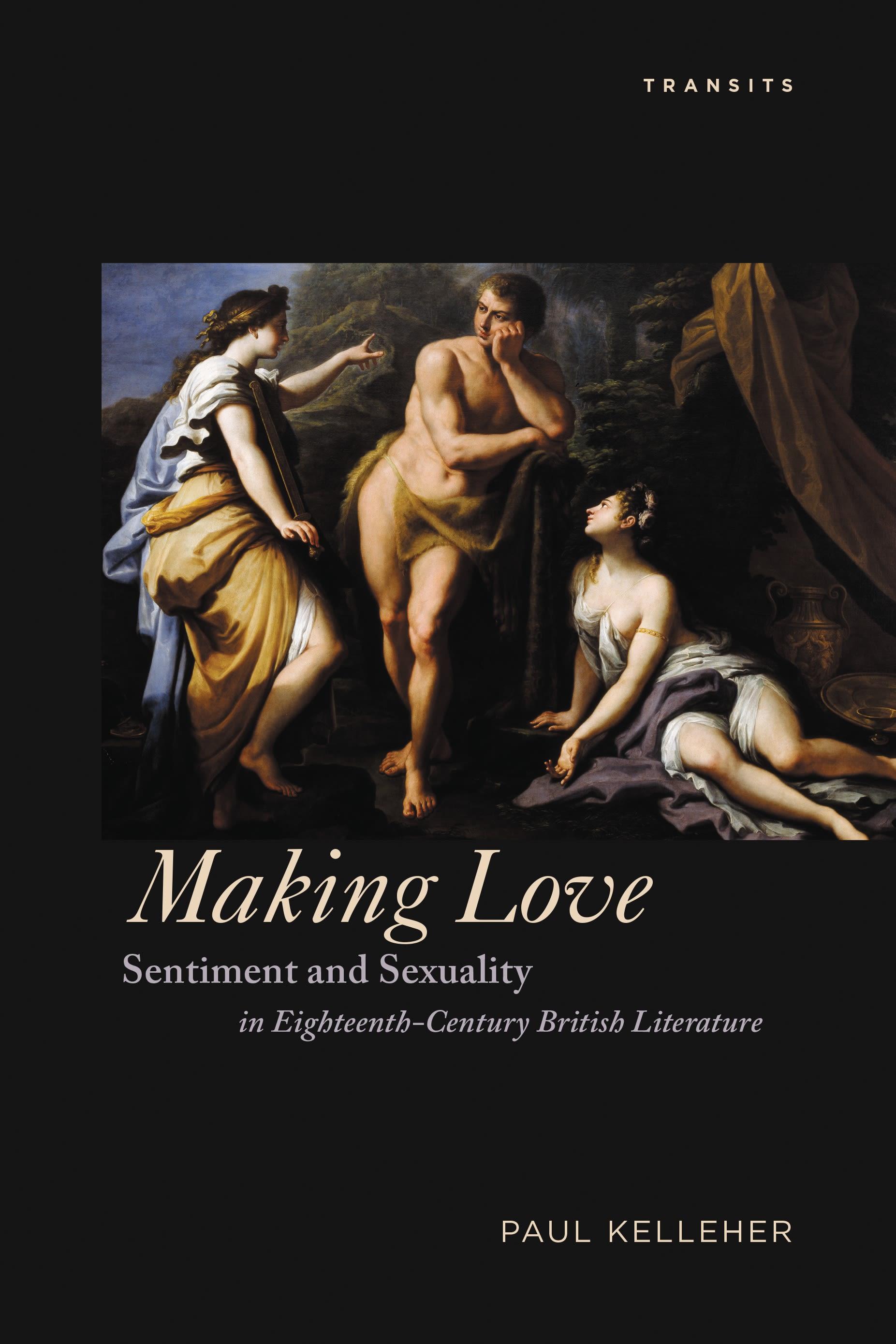
In Making Love: Sentiment and Sexuality in Eighteenth-Century British Literature, Paul Kelleher revises the history of sexuality from the vantage point of the literary history of sentimentalism. Kelleher demonstrates how eighteenth-century British philosophers, essayists, and novelists fundamentally reconceived the relations among sentiment, sexuality, and moral virtue. It is his contention that sentimental discourse, both philosophical and literary, posited heterosexual desire as the precondition of moral feeling and conduct. The author further suggests that sentimental writers fashioned the ideal of conjugal love as an ideological antidote to the theories of self-love and self-interest found in the works of Thomas Hobbes and Bernard Mandeville. Heterosexual desire and its culmination in conjugal love, in other words, were represented as the privileged means for an individual to transcend self-love and to develop a moral sensibility attuned to the thoughts and feelings of others. At the same time, Kelleher suggests, other pleasures and desires—particularly those rooted in same-sex eroticism—were increasingly depicted as antithetical to conjugal love and, thus, were morally devalued and socially disenfranchised. Kelleher's argument unfolds through close readings of a variety of texts, including Shaftesbury’s Characteristics of Men, Manners, Opinions, Times, Joseph Addison and Richard Steele’s the Tatler and the Spectator, Eliza Haywood’s Love in Excess, Samuel Richardson’s Pamela, and Henry Fielding’s Tom Jones. Although these texts embody diverse rhetorical strategies and thematic concerns, he shows how they collectively reinforce an overarching sentimental ideology: on the one hand, heterosexual desire and conjugal love become synonymous with sympathy, benevolence, and moral goodness, while on the other hand, same-sex desire is pathologized as a selfish withdrawal from procreation, domesticity, sociability, and ultimately, “humanity” itself.
Płać wygodnie kartą, Klarną, Apple Pay lub Google Pay. Nie jesteś zadowolony? Zawsze masz 14-dniową gwarancję zwrotu pieniędzy. Więcej przeczytasz w naszych warunkach. Masz pytania? Napisz do nas na hello@memmo.org.
Memmo ułatwia naukę – gdziekolwiek jesteś na świecie. U nas znajdziesz podręczniki i sprytne narzędzia do nauki w jednym miejscu: streszczenia, quizy, podcasty i fiszki. A do tego Ted, Twój kumpel do nauki, który odpowie na wszystko, co Cię nurtuje. Ponad 50 000 studentów już tu się uczy – stworzone, byś uczył się szybciej i mniej stresował.