
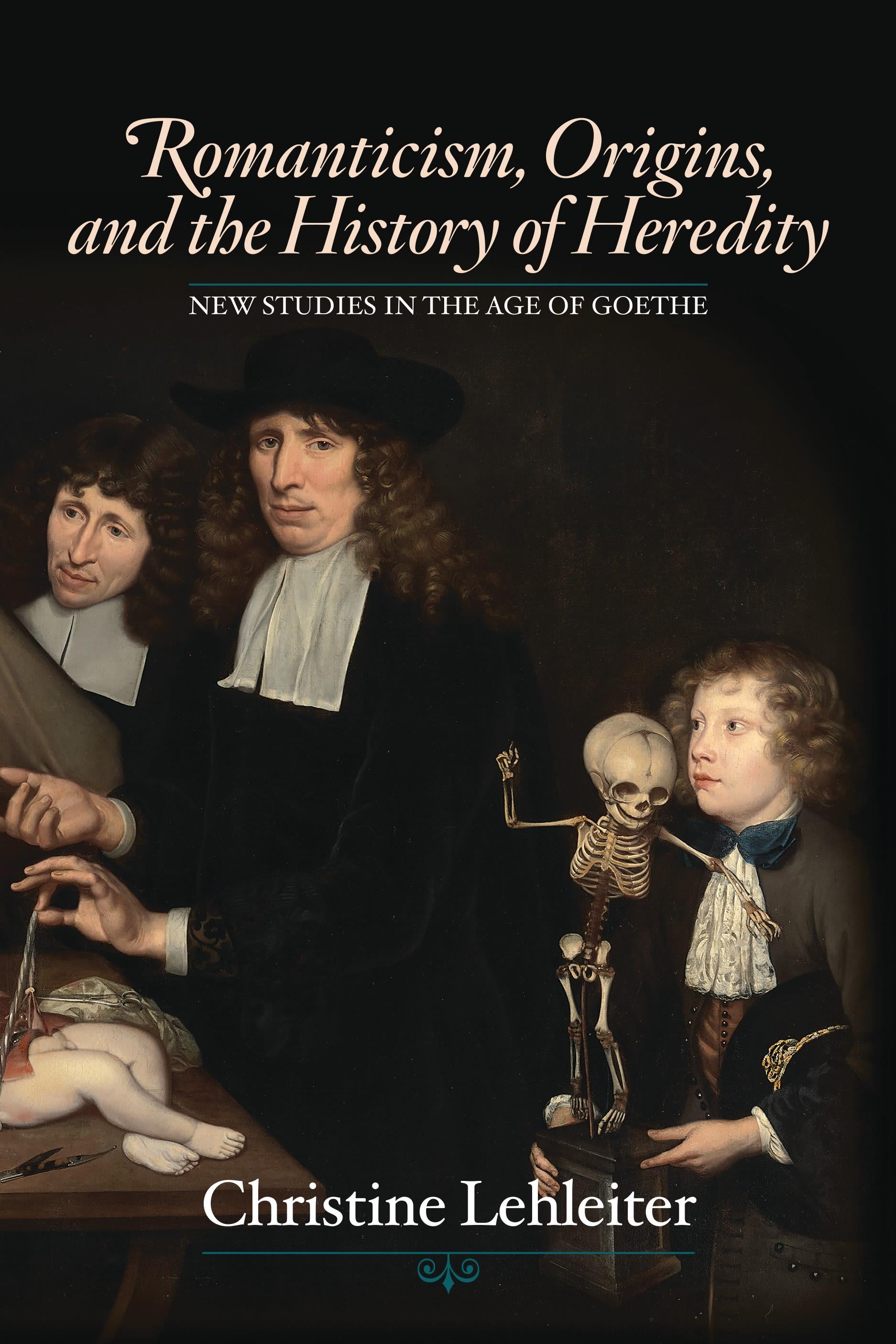
At the turn of the eighteenth century, selfhood was understood as a “tabularasa” to be imprinted in the course of an individual’s life. By the middle of the nineteenth-century, however, the individual had become defined as determined by heredity already from birth. Examining novels by Goethe, Jean Paul, and E.T.A. Hoffmann, studies on plant hybridization, treatises on animal breeding, and anatomical collections, Romanticism, Origins, and the History of Heredity delineates how romantic authors imagined the ramifications of emerging notions of heredity for the conceptualization of selfhood. Focusing on three fields of inquiry—inbreeding and incest, cross-breeding and bastardization, evolution and autopoiesis—Christine Lehleiter proposes that the notion of selfhood for which Romanticism has become known was not threatened by considerations of determinism and evolution, but was in fact already a result of these very considerations. Romanticism, Origins and the History of Heredity will be of interest for literary scholars, historians of science, and all readers fascinated by the long durée of subjectivity and evolutionary thought.
Płać wygodnie kartą, Klarną, Apple Pay lub Google Pay. Nie jesteś zadowolony? Zawsze masz 14-dniową gwarancję zwrotu pieniędzy. Więcej przeczytasz w naszych warunkach. Masz pytania? Napisz do nas na hello@memmo.org.
Memmo ułatwia naukę – gdziekolwiek jesteś na świecie. U nas znajdziesz podręczniki i sprytne narzędzia do nauki w jednym miejscu: streszczenia, quizy, podcasty i fiszki. A do tego Ted, Twój kumpel do nauki, który odpowie na wszystko, co Cię nurtuje. Ponad 50 000 studentów już tu się uczy – stworzone, byś uczył się szybciej i mniej stresował.