
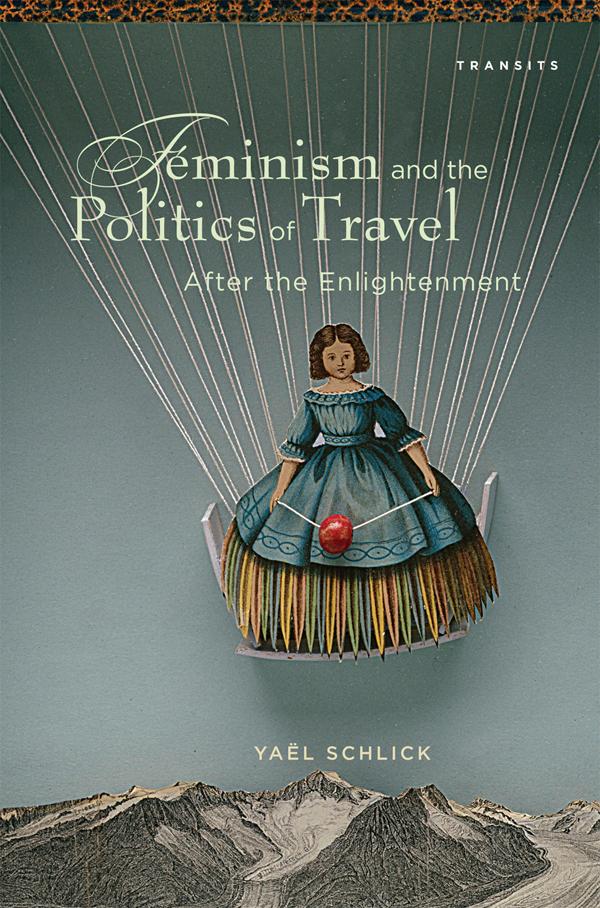
Taking the Enlightenment and the feminist tradition to which it gave rise as its historical and philosophical coordinates, Feminism and the Politics of Travel After the Enlightenment explores travel as a “technology of gender.” It also investigates the way travel’s utopian dimension and feminism’s utopian ideals have intermittently fed off each other in productive ways. With broad historical and theoretical understanding, Yaël Schlick analyzes the intersections of travel and feminism in writings published during the late eighteenth and nineteenth centuries, a period of intense feminist vindication during which women’s very presence in the public sphere, their access to education, and their political participation were contentious issues. Schlick examines the gendering of travel and its political implications in Rousseau’s Emile, and in works by Mary Wollstonecraft, Stéphanie-Félicité de Genlis, Frances Burney, Germaine de Staël, Suzanne Voilquin, Flora Tristan, Gustave Flaubert, and George Sand, arguing that travel is instrumental in furthering diverse feminist agendas. The epilogue alerts us to the continuation of the utopian strain of the voyage and its link to feminism in modern and contemporary travelogues by writers like Mary Kingsley, Robyn Davidson and Sara Wheeler.
Płać wygodnie kartą, Klarną, Apple Pay lub Google Pay. Nie jesteś zadowolony? Zawsze masz 14-dniową gwarancję zwrotu pieniędzy. Więcej przeczytasz w naszych warunkach. Masz pytania? Napisz do nas na hello@memmo.org.
Memmo ułatwia naukę – gdziekolwiek jesteś na świecie. U nas znajdziesz podręczniki i sprytne narzędzia do nauki w jednym miejscu: streszczenia, quizy, podcasty i fiszki. A do tego Ted, Twój kumpel do nauki, który odpowie na wszystko, co Cię nurtuje. Ponad 50 000 studentów już tu się uczy – stworzone, byś uczył się szybciej i mniej stresował.