
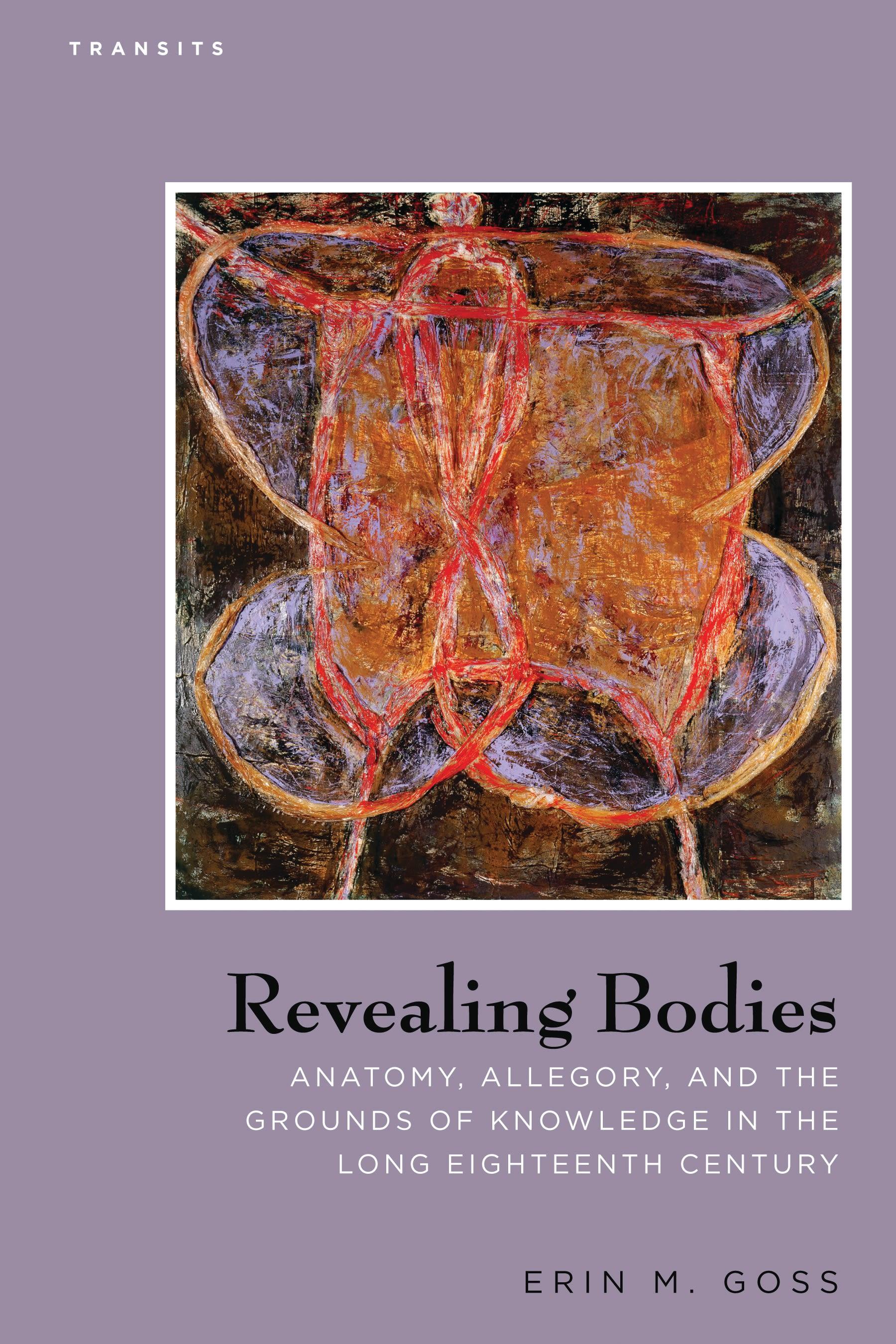
Revealing Bodies turns to the eighteenth century to ask a question with continuing relevance: what kinds of knowledge condition our understanding of our own bodies? Focusing on the tension between particularity and generality that inheres in intellectual discourse about the body, Revealing Bodies explores the disconnection between the body understood as a general form available to knowledge and the body experienced as particularly one's own. Erin Goss locates this division in contemporary bodily exhibits, such as Gunther von Hagens' Body Worlds, and in eighteenth-century anatomical discourse. Her readings of the corporeal aesthetics of Edmund Burke's Philosophical Enquiry, William Blake's cosmological depiction of the body's origin in such works as The [First] Book of Urizen, and Mary Tighe's reflection on the relation between love and the soul in Psyche; or, The Legend of Love demonstrate that the idea of the body that grounds knowledge in an understanding of anatomy emerges not as fact but as fiction. Ultimately, Revealing Bodies describes how thinkers in the eighteenth and nineteenth centuries and bodily exhibitions in the twentieth and twenty-first call upon allegorized figurations of the body to conceal the absence of any other available means to understand that which is uniquely our own: our existence as bodies in the world.
Płać wygodnie kartą, Klarną, Apple Pay lub Google Pay. Nie jesteś zadowolony? Zawsze masz 14-dniową gwarancję zwrotu pieniędzy. Więcej przeczytasz w naszych warunkach. Masz pytania? Napisz do nas na hello@memmo.org.
Memmo ułatwia naukę – gdziekolwiek jesteś na świecie. U nas znajdziesz podręczniki i sprytne narzędzia do nauki w jednym miejscu: streszczenia, quizy, podcasty i fiszki. A do tego Ted, Twój kumpel do nauki, który odpowie na wszystko, co Cię nurtuje. Ponad 50 000 studentów już tu się uczy – stworzone, byś uczył się szybciej i mniej stresował.