
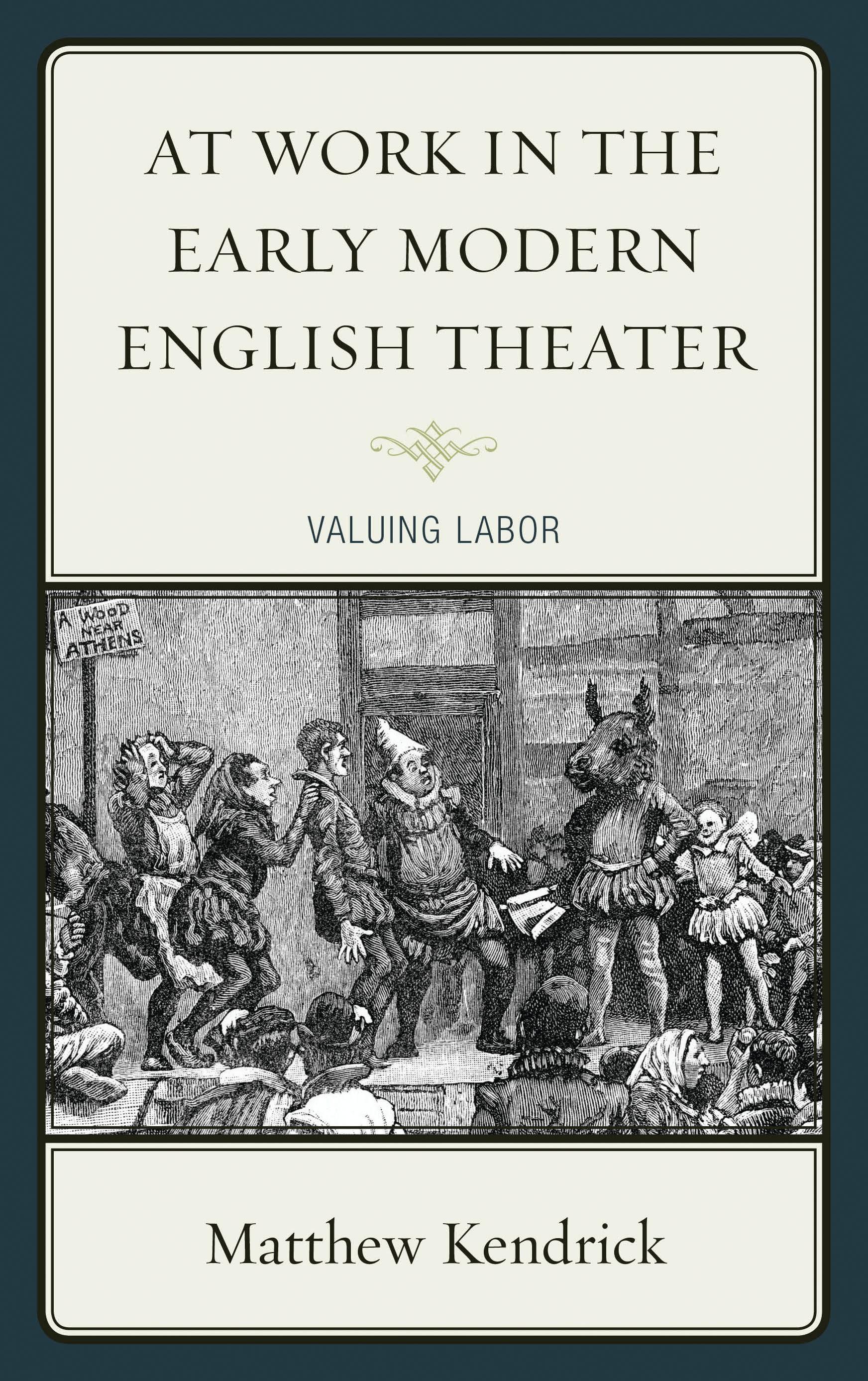
At Work in the Early Modern English Theater: Valuing Labor explores the economics of the theater by examining how drama seeks to make sense of changing conceptions of labor. With the growth of commerce and market relations in sixteenth- and seventeenth-century England came the corresponding degradation and exploitation of workers, many of whom made their frustrations known through petitions and pamphlets. Poverty affected all sectors of society in early modern England and many laborers, even London citizens from more prosperous trades, could expect to experience periods of impoverishment. This group of precarious laborers included actors and playwrights, many of whom had direct connections to London’s more established trades and occupations.
Scholars have argued that dispossessed laborers turned to other forms of labor in lieu of their traditional livelihoods, including brigandage, piracy, begging, and cozening. To this list of alternative communities and applications of labor in the early modern period, Matthew Kendrick’s scholarship adds the London theaters. Each chapter is guided by the central premise that anxiety over the objectification and dispossession of labor in its various forms is enacted on stage, and that drama helps to formulate, by merit of the theater’s socioeconomic identity, an emerging laboring subjectivity engendered by the violent development of capitalism. As the nexus of a declining feudal social structure and an emerging capitalist regime of commodity production, a location in which dispossessed labor intersected with traditions of skilled labor and the unwieldy consumerist energies of the marketplace, the space of the theater was uniquely situated to channel and give dramatic form to the growing antagonisms and tensions that shaped labor. The stage offers a space in which to negotiate the value and meaning of labor in an increasingly exploitative society.
Scholars have argued that dispossessed laborers turned to other forms of labor in lieu of their traditional livelihoods, including brigandage, piracy, begging, and cozening. To this list of alternative communities and applications of labor in the early modern period, Matthew Kendrick’s scholarship adds the London theaters. Each chapter is guided by the central premise that anxiety over the objectification and dispossession of labor in its various forms is enacted on stage, and that drama helps to formulate, by merit of the theater’s socioeconomic identity, an emerging laboring subjectivity engendered by the violent development of capitalism. As the nexus of a declining feudal social structure and an emerging capitalist regime of commodity production, a location in which dispossessed labor intersected with traditions of skilled labor and the unwieldy consumerist energies of the marketplace, the space of the theater was uniquely situated to channel and give dramatic form to the growing antagonisms and tensions that shaped labor. The stage offers a space in which to negotiate the value and meaning of labor in an increasingly exploitative society.
Strony: 228
Kategoria: Drama, Teater & Scenkonst
e-ISBN: 9781611478259
Waga przesyłki: 1.2 kg
Wysyłka w ciągu: 1-2 dni
Płać wygodnie kartą, Klarną, Apple Pay lub Google Pay. Nie jesteś zadowolony? Zawsze masz 14-dniową gwarancję zwrotu pieniędzy. Więcej przeczytasz w naszych warunkach. Masz pytania? Napisz do nas na hello@memmo.org.
Memmo ułatwia naukę – gdziekolwiek jesteś na świecie. U nas znajdziesz podręczniki i sprytne narzędzia do nauki w jednym miejscu: streszczenia, quizy, podcasty i fiszki. A do tego Ted, Twój kumpel do nauki, który odpowie na wszystko, co Cię nurtuje. Ponad 50 000 studentów już tu się uczy – stworzone, byś uczył się szybciej i mniej stresował.