
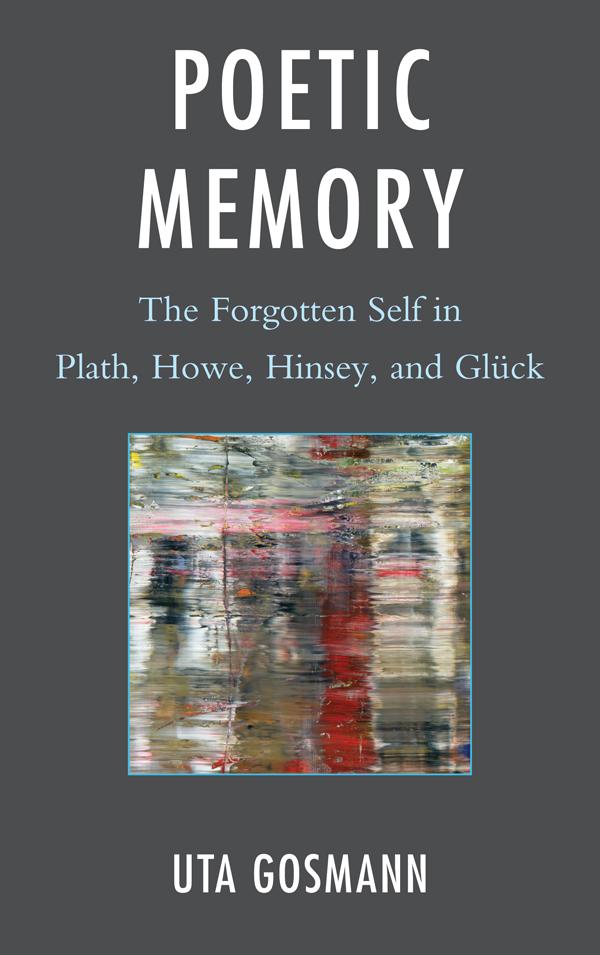
How do poems remember? What kinds of memory do poems register that factual, chronological accounts of the past are oblivious to? What is the self created by such practices of memory? To answer these questions, Uta Gosmann introduces a general theory of “poetic memory,” a manner of thinking that eschews simple-minded notions of linearity and accuracy in order to uncover the human subject’s intricate relationship to a past that it cannot fully know. Gosmann explores poetic memory in the work of Sylvia Plath, Susan Howe, Ellen Hinsey, and Louise Glück, four American poets writing in a wide range of styles and discussed here for the first time together. Drawing on psychoanalysis, memory studies, and thinkers from Nietzsche and Benjamin to Halbwachs and Kristeva, Gosmann uses these demanding poets to articulate an alternative, non-empirical model of the self in poetry.
Płać wygodnie kartą, Klarną, Apple Pay lub Google Pay. Nie jesteś zadowolony? Zawsze masz 14-dniową gwarancję zwrotu pieniędzy. Więcej przeczytasz w naszych warunkach. Masz pytania? Napisz do nas na hello@memmo.org.
Memmo ułatwia naukę – gdziekolwiek jesteś na świecie. U nas znajdziesz podręczniki i sprytne narzędzia do nauki w jednym miejscu: streszczenia, quizy, podcasty i fiszki. A do tego Ted, Twój kumpel do nauki, który odpowie na wszystko, co Cię nurtuje. Ponad 50 000 studentów już tu się uczy – stworzone, byś uczył się szybciej i mniej stresował.