
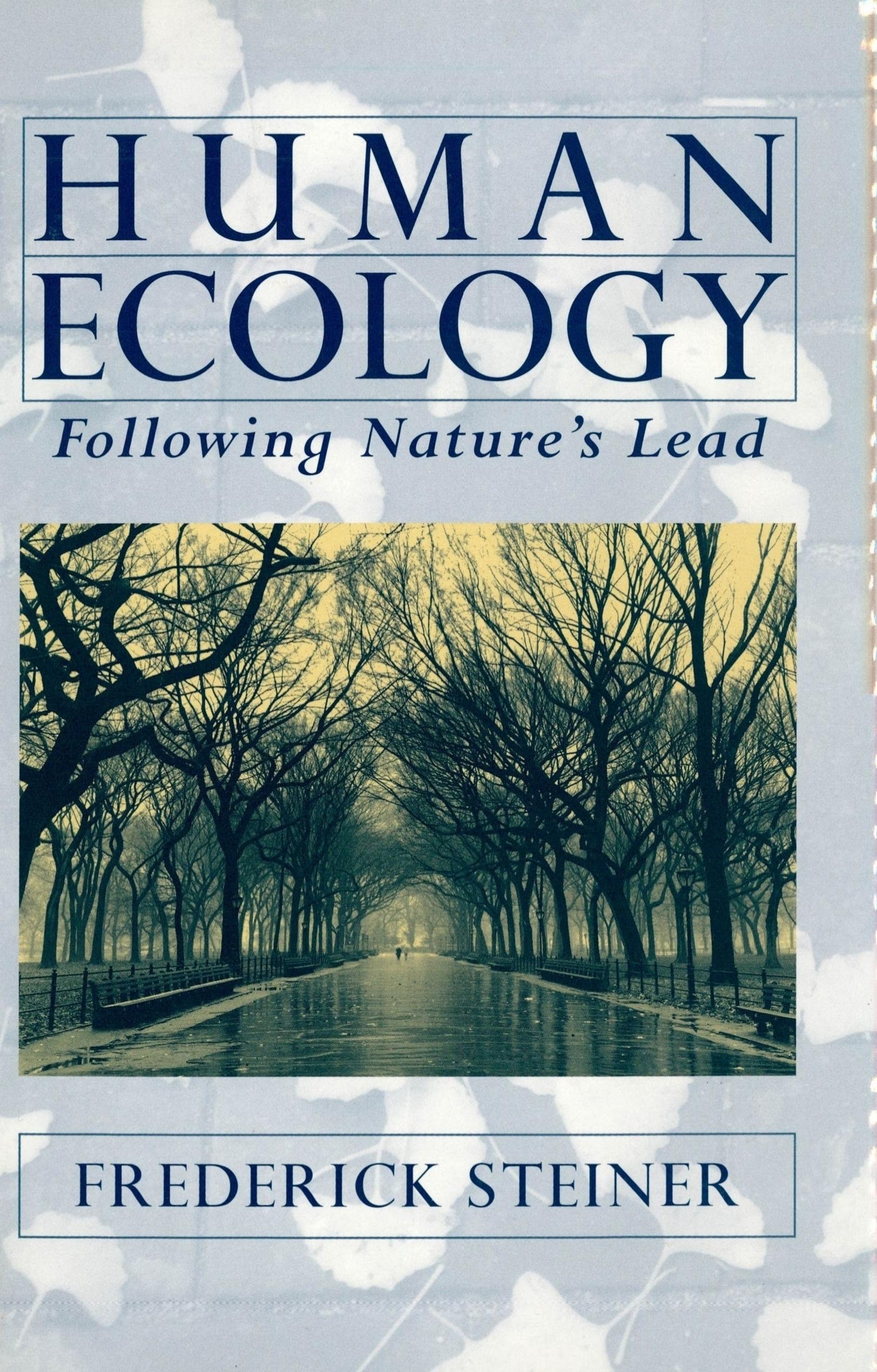
Human ecology is an emerging discipline that studies the interrelationships between humans and their environment, drawing on insights from biology, sociology, anthropology, geography, engineering, architecture, landscape architecture, planning, and conservation. A vast, multidisciplinary literature underscores this approach, and in Human Ecology, noted landscape planner Frederick Steiner synthesizes the work of diverse, sometimes divergent, scholars to illustrate how human interactions can be understood as ecological relationships, using hierarchy as an organizing device.
Steiner builds on the work of leading thinkers including Christopher Alexander, William Cronon, Clifford Geertz, James Lovelock, Eugene Odum, Paul Shepard, Anne Whiston Spirn, E. O. Wilson, Gerald Young, and many others to present a historical and analytical examination of how humans interact with each other as well as with other organisms and their surroundings.
The first two chapters summarize the development of this "new ecology" and the theory of human ecology. The remainder of the book provides an accessible introduction to the major elements of human ecological theory including language, culture, and technology; structure, function, and change; edges and boundaries; interaction, integration, and institution; diversity; and adaptation. The chapters are organized hierarchically from the smallest scale to the largest with each chapter addressing a specific level as an ecosystem. The final chapter probes some of the ethical implications of this new field.
Human Ecology brings together for the first time scholarship from the social and natural sciences as well as the environmental design arts to offer an overview of the field of human ecology and to show how the field may help us to envision our futures. While the approach is largely theoretical, it has broad policy and practical implications, and represents an important new work for anyone concerned with interactions between humans and the environment.
Płać wygodnie kartą, Klarną, Apple Pay lub Google Pay. Nie jesteś zadowolony? Zawsze masz 14-dniową gwarancję zwrotu pieniędzy. Więcej przeczytasz w naszych warunkach. Masz pytania? Napisz do nas na hello@memmo.org.
Memmo ułatwia naukę – gdziekolwiek jesteś na świecie. U nas znajdziesz podręczniki i sprytne narzędzia do nauki w jednym miejscu: streszczenia, quizy, podcasty i fiszki. A do tego Ted, Twój kumpel do nauki, który odpowie na wszystko, co Cię nurtuje. Ponad 50 000 studentów już tu się uczy – stworzone, byś uczył się szybciej i mniej stresował.