
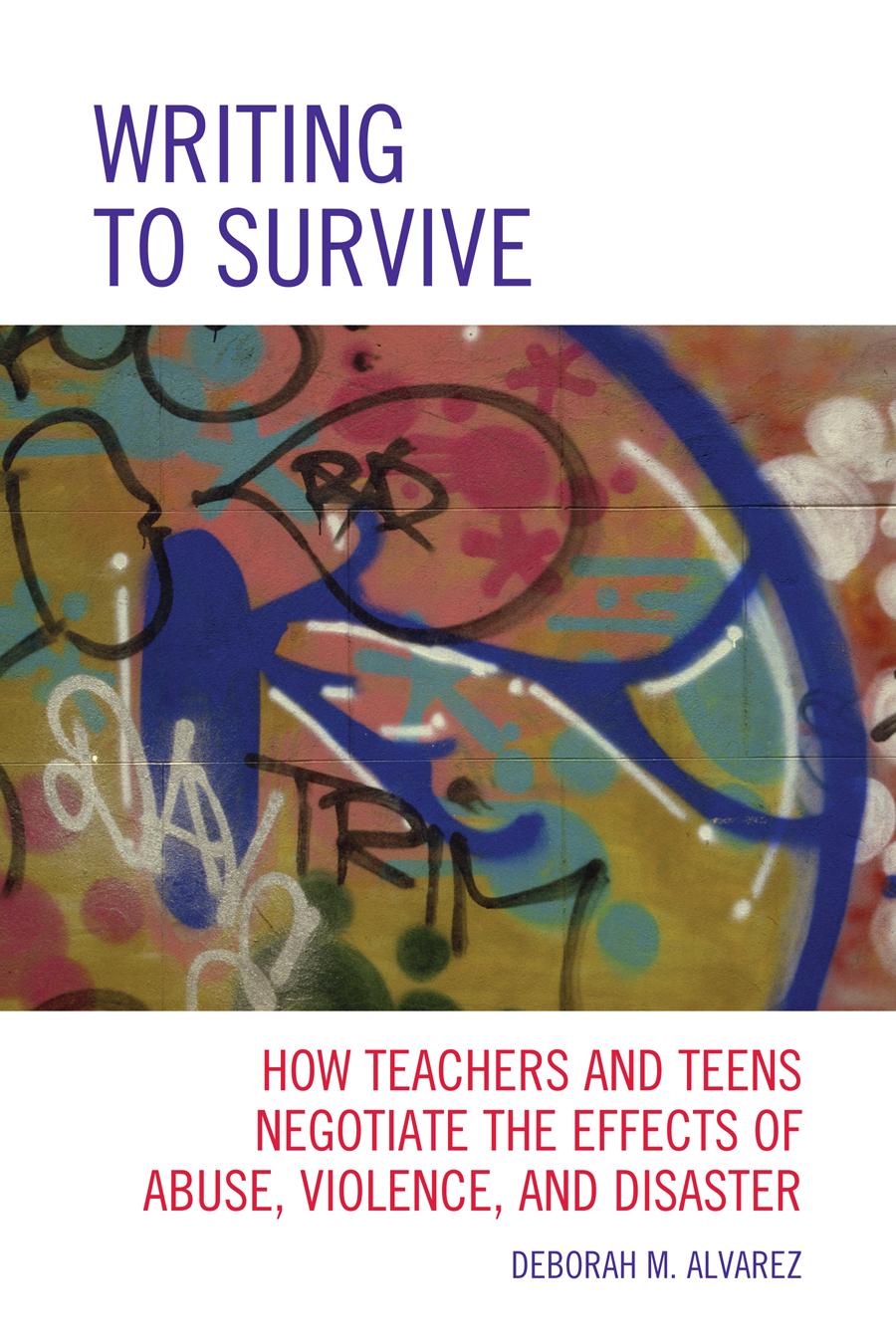
This ethnographic research investigates how adolescents use writing. Deborah M. Alvarez uncovers the hidden abuses and violence that adolescents bore with each school day. In two different research sites, the author follows adolescents through their academic and personal lives to discover how they use writing only to uncover the impact the public and private violence had upon their ability to learn. The author details the writing classroom practices; assignments; and how adolescents adapt, reconstruct and appropriate the lessons of the classroom for their purpose and needs. For the adolescents in the book, writing was a way to address the stresses that plagued the adolescents each day, especially when they had no other way to communicate or tell about their lived experiences.
Alvarez outlines an alternative Expressivist plan for teaching writing to adolescents. This writing program builds upon the evidence from the case studies, brain theory and research on traumatic stresses to offer teachers and thereby their students a more effective way to teach writing with greater impact for those who need it most.
Alvarez outlines an alternative Expressivist plan for teaching writing to adolescents. This writing program builds upon the evidence from the case studies, brain theory and research on traumatic stresses to offer teachers and thereby their students a more effective way to teach writing with greater impact for those who need it most.
Płać wygodnie kartą, Klarną, Apple Pay lub Google Pay. Nie jesteś zadowolony? Zawsze masz 14-dniową gwarancję zwrotu pieniędzy. Więcej przeczytasz w naszych warunkach. Masz pytania? Napisz do nas na hello@memmo.org.
Memmo ułatwia naukę – gdziekolwiek jesteś na świecie. U nas znajdziesz podręczniki i sprytne narzędzia do nauki w jednym miejscu: streszczenia, quizy, podcasty i fiszki. A do tego Ted, Twój kumpel do nauki, który odpowie na wszystko, co Cię nurtuje. Ponad 50 000 studentów już tu się uczy – stworzone, byś uczył się szybciej i mniej stresował.