
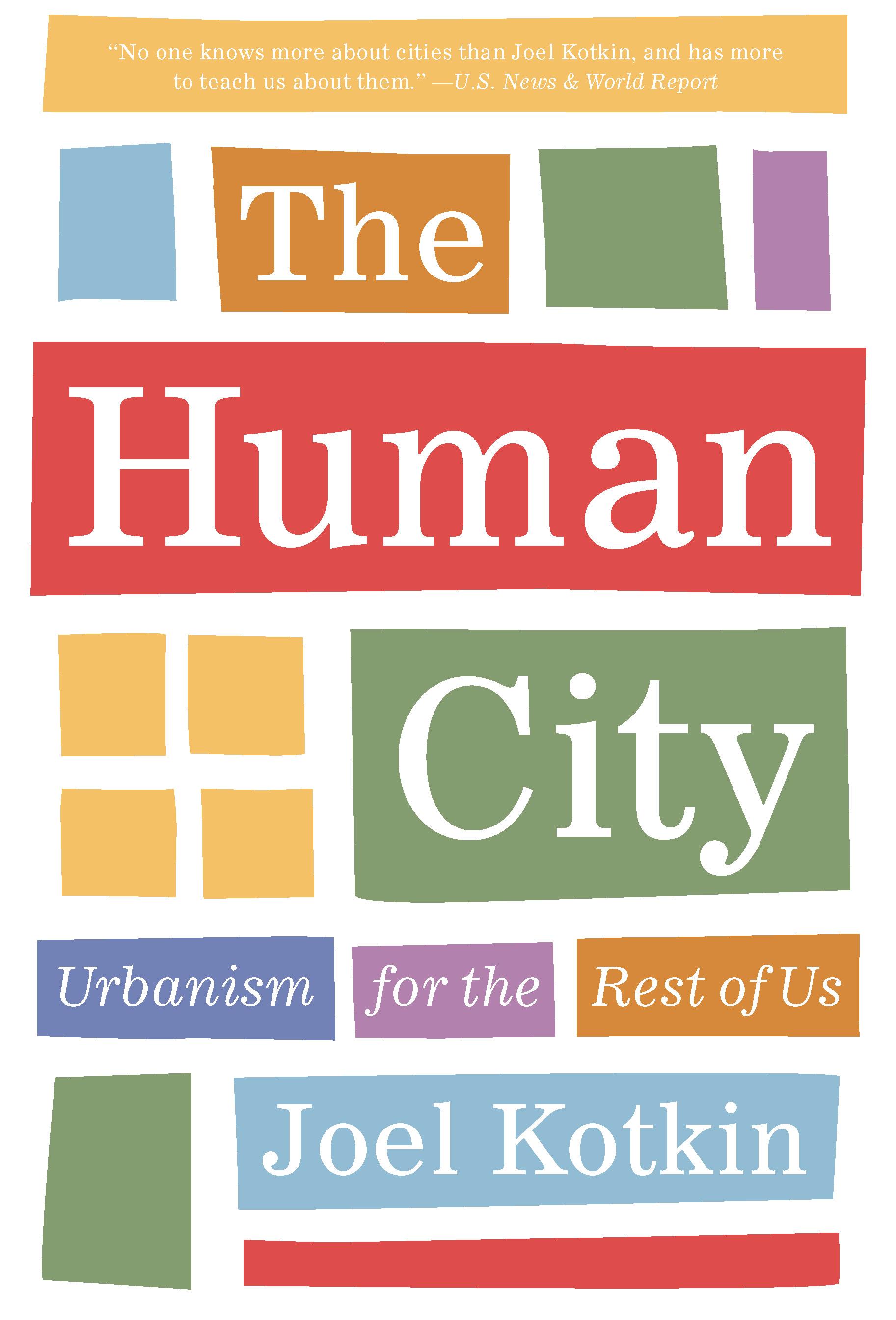
"The Human City presents the most cogent, evidence-based and clear-headed exposition of the pro-suburban argument. . . . enriching our understanding of what cities are about and what they can and must become.” —Wall Street Journal
Around the globe, most new urban development has adhered to similar tenets: tall structures, small units, and high density. In The Human City, Joel Kotkin—called “America’s uber-geographer” by David Brooks of the New York Times—questions these nearly ubiquitous practices, suggesting that they do not consider the needs and desires of the vast majority of people. Built environments, Kotkin argues, must reflect the preferences of most people—especially those of families—even if that means lower-density development.
The Human City ponders the purpose of the city and investigates the factors that drive most urban development today. Armed with his own astute research, a deep-seated knowledge of urban history, and a sound grasp of economic, political, and social trends, Kotkin pokes holes in what he calls the “retro-urbanist” ideology and offers a refreshing case for dispersion centered on human values.
This book is not anti-urban, but it does advocate a greater range of options for people to live the way they want at all stages of their lives.
Around the globe, most new urban development has adhered to similar tenets: tall structures, small units, and high density. In The Human City, Joel Kotkin—called “America’s uber-geographer” by David Brooks of the New York Times—questions these nearly ubiquitous practices, suggesting that they do not consider the needs and desires of the vast majority of people. Built environments, Kotkin argues, must reflect the preferences of most people—especially those of families—even if that means lower-density development.
The Human City ponders the purpose of the city and investigates the factors that drive most urban development today. Armed with his own astute research, a deep-seated knowledge of urban history, and a sound grasp of economic, political, and social trends, Kotkin pokes holes in what he calls the “retro-urbanist” ideology and offers a refreshing case for dispersion centered on human values.
This book is not anti-urban, but it does advocate a greater range of options for people to live the way they want at all stages of their lives.
Płać wygodnie kartą, Klarną, Apple Pay lub Google Pay. Nie jesteś zadowolony? Zawsze masz 14-dniową gwarancję zwrotu pieniędzy. Więcej przeczytasz w naszych warunkach. Masz pytania? Napisz do nas na hello@memmo.org.
Memmo ułatwia naukę – gdziekolwiek jesteś na świecie. U nas znajdziesz podręczniki i sprytne narzędzia do nauki w jednym miejscu: streszczenia, quizy, podcasty i fiszki. A do tego Ted, Twój kumpel do nauki, który odpowie na wszystko, co Cię nurtuje. Ponad 50 000 studentów już tu się uczy – stworzone, byś uczył się szybciej i mniej stresował.
Może Ci się spodobać
Kup książkę0